Five billing friction points agencies overlook



 Copied to clipboard.
The tools are already in place. QuickBooks is connected. Xero is syncing. There's a project management platform tracking hours. And yet, at the end of every month, you still spend hours correcting invoices, manually recalculating fees that shifted mid-engagement, and following up on payments that should have collected themselves.
That disconnect, between having automation tools and eliminating manual billing work, is where most agencies lose time and revenue. Specific operational failure points like scope creep, retainer variability, proposal-to-invoice gaps, delayed payment collection, and reconciliation overhead keep agencies from billing accurately and on time, even after they put automation tools in place.
Certain friction points survive automation entirely, hiding inside workflows that look functional until the billing cycle hits.
There are five of them. Each one has a name, a specific failure mode, and a measurable cost. Identifying them is the first step toward making your billing process deliver what it promises.
Key takeaways
- Scope creep is a revenue leak when agencies lack a structured billing mechanism to capture and invoice out-of-scope work immediately.
- Retainer fees tied to headcount or usage require manual recalculation every billing cycle, making variability one of the most overlooked sources of billing delay.
- Disconnecting the billing engine from the signed client agreement is the structural root cause of most agency invoicing errors and omissions.
- Collecting payment after invoice delivery, rather than at the point of agreement, can drive significant monthly time loss to chasing receivables.
- Generic billing tools may fail agencies because they treat invoicing as a standalone task, with no mechanism linking it to the original client agreement.
Why agency billing breaks differently
Agency billing differs from subscription billing because a single client roster can contain three billing models at once, each with its own invoice trigger, fee calculation, and failure point.
A SaaS company sends the same invoice on the same date every month. The fee is fixed, the trigger is a calendar date, and the only variable is whether the payment clears. Agency billing works nothing like that. Scope shifts between clients. Fees vary by deliverable volume, headcount, or hours logged. Agreements are negotiated individually.
Most agencies run three billing models simultaneously:
- Fixed retainers bill on a schedule but often carry variable components that require recalculation before the invoice goes out.
- Project-based fees trigger on milestones or completion, which means the billing clock is tied to delivery status.
- Time-and-materials work invoices based on logged hours and expenses, so the amount is unknown until the work period closes.
Each model needs a different action to generate an accurate invoice, and most agencies manage all three across their client list at the same time.
That complexity costs money. 57% of agencies lose between $1,000 and $5,000 every month on unbilled work, according to Ignition's 2025 Agency Pricing and Cash Flow Report. That figure reflects what happens when billing complexity outpaces the processes designed to manage it.
1. Scope creep that never reaches an invoice
Scope creep is the most common source of unbilled revenue in agencies, and the problem has nothing to do with doing the extra work. The leak happens because that work never reaches an invoice.
The sequence is predictable. A client requests something outside the original agreement. The team delivers it informally, often without a change order. The billing cycle closes. No one raises a new line item in time, and the work disappears from the record entirely.
By the time someone notices, the billing window has passed. Chasing it retroactively is awkward at best and often abandoned. The revenue is simply gone.
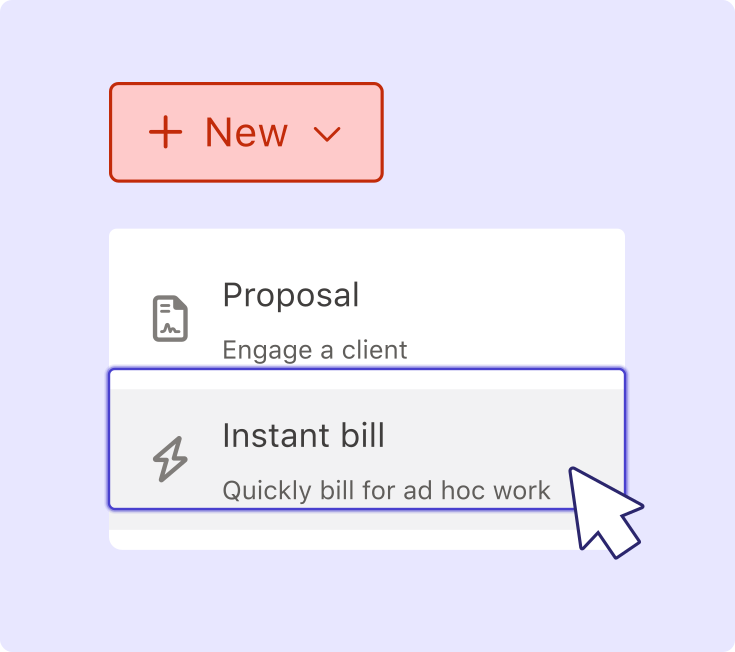
The fix is capturing the charge at the moment of delivery. Ignition's Instant Bill capability lets you create an immediate charge for out-of-scope work without modifying the existing client agreement. The original retainer stays intact, and the extra work gets billed on the spot, before the cycle closes and the opportunity disappears.
Stop letting scope creep go unbilled
See how agencies are closing the gap between delivery and payment.
2. Retainer variability requiring manual recalculation
Variable retainers delay billing because their charges must be recalculated before each invoice can go out. Unlike a fixed monthly fee, a variable retainer ties the billable amount to something that changes, like headcount, usage volume, or the number of deliverables that month.
That means every billing cycle starts with a manual task. Someone pulls the current headcount from payroll, checks usage figures, or counts deliverables, then updates the invoice amount before it can be sent. When that step slips, the invoice slips too. When the calculation is wrong, the invoice is wrong.
This is a different problem from unplanned scope creep. Retainer variability is planned and expected. It's built into the agreement. The friction is purely operational. The fee structure is legitimate, but the process of arriving at the correct number each month is still manual.
Ignition's Smart Billing removes that manual step. It syncs directly with Gusto, Xero, and QuickBooks Online to pull the relevant data and auto-calculate variable charges before the invoice is issued. Headcount changes in Gusto flow through automatically. Usage or volume data from Xero or QuickBooks Online feeds the calculation without a spreadsheet in between.
If you manage multiple variable retainers, that means less invoice automation overhead each month.
3. The proposal-to-invoice gap
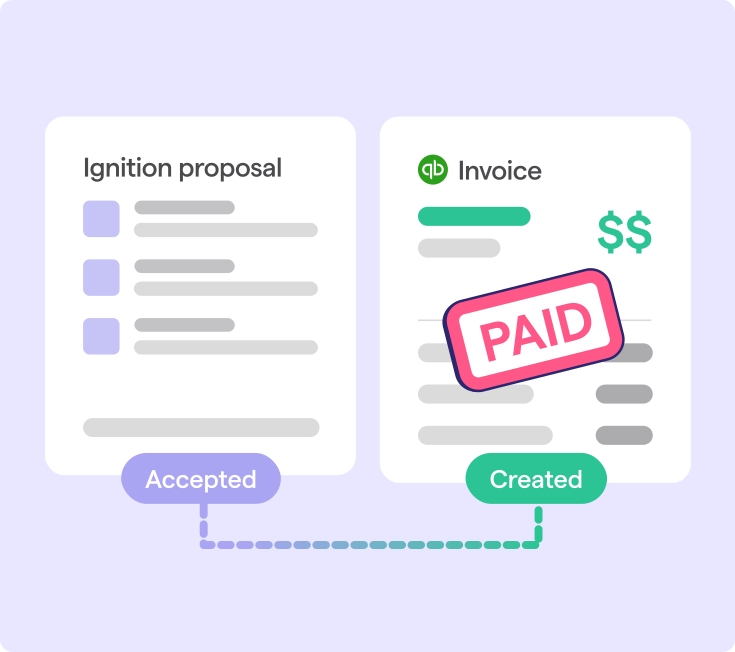
The proposal-to-invoice gap creates billing errors because scope, fee, and timing details must be transferred manually from a signed agreement into a separate billing workflow.
A client signs a proposal in one tool. Someone then opens a separate billing system and recreates the invoice from memory or by referencing the original document. That manual transfer is where errors enter the workflow.
Scope, fee, and timing are the three details most exposed to this kind of omission. A deliverable gets left off. A fee reflects last month's rate instead of the updated one in the signed agreement. An invoice goes out on the wrong date because the billing schedule was entered manually and nobody caught the discrepancy.
Each error is small on its own. Across a client roster of 20 or more, they compound quickly.
Ignition's agreement-led billing removes the handoff entirely. When a client accepts a proposal in Ignition, invoice generation and payment collection are triggered automatically from that accepted agreement. The scope, fee, and billing schedule defined at sign-off are the same ones that drive the invoice. There's no re-entry step or opportunity for a detail to get lost between systems.
4. Payment collection handled after the fact
Collecting payment after invoice delivery creates avoidable receivables work because clients have no authorized payment method on file when the invoice becomes due. Without that authorization, every unpaid invoice becomes a manual follow-up task.
That follow-up adds up. 71% of agencies report at least one in four invoices is paid late, and 84% spend 3–10+ hours per month chasing those payments. That's time pulled directly from billable work.
The structural fix is to capture payment details at the point of agreement. Ignition Payments embeds payment collection into the proposal acceptance step. When a client signs the proposal, their payment method is already authorized. There's no gap between agreement and billing authorization.
If you're still sending invoices and then waiting, the problem is structural. The most reliable fix is removing the authorization gap before work begins.
5. Reconciliation overhead across QuickBooks and similar tools
Reconciliation stays manual when invoice creation, payment collection, and the accounting record each live in a different tool. That's a billing architecture problem. Accounting can't solve it alone.
An invoice goes out from one platform, payment is collected through another, and then someone on your team manually updates Xero or QuickBooks Online to reflect what came in. At 20 clients, that's manageable. At 50, each payment creates its own opportunity for a duplicate entry, a timing mismatch, or a reconciliation that simply gets missed.
The operational drag compounds when clients pay at different times or through different methods. Every exception requires a separate manual action to keep the accounting record accurate.
Ignition connects invoice creation, payment collection, and reconciliation directly with Xero and QuickBooks Online. When a client pays, the accounting record updates automatically. There's no manual entry or cross-referencing between tools, and no end-of-month cleanup to reconcile what was billed against what was received.
If you manage a large client roster, that connection pays off on every transaction. Automated invoice creation for professional services only delivers its full value when the payment and reconciliation steps are part of the same workflow.
Why generic billing tools miss these friction points
Generic billing tools leave agency workflow gaps in place because they treat invoicing as a back-office task that runs separately from the signed client agreement. The invoice lives in one system. The agreement lives somewhere else. Nothing connects them automatically.
That separation means every billing cycle still needs a manual trigger. Someone pulls up the signed proposal, confirms the scope and fee, transfers the details into the billing tool, and sends the invoice. Even when the tool automates delivery, the data entry that precedes it stays manual.
Scope changes, retainer adjustments, and ad hoc charges each require the same transfer process. Automation at the delivery stage doesn't eliminate the overhead upstream.
Agreement-led billing removes that upstream step entirely. When a client accepts a proposal, that acceptance becomes the billing trigger. Invoice generation and payment collection initiate automatically based on what was scoped and agreed, with no manual data transfer between systems.
- Manual workflow: Proposal signed, details transferred manually, invoice created, invoice sent, payment chased separately
- Agreement-led workflow: Proposal accepted, invoice generated automatically, payment collected based on the agreed schedule
Billing at scale for 50-plus retainer clients
Agencies managing 50 or more retainer clients need billing workflows that eliminate per-client manual intervention entirely. At that volume, the operational math changes.
A single annual fee increase applied one client at a time is no longer a billing inconvenience. Across 50 clients, it becomes hours of administrative work, and across 100, it becomes a recurring operational cost that pulls the team away from client work every time pricing needs to move.
Three capabilities become non-negotiable at this scale:
- Bulk price updates. AutoPricing applies fee increases across multiple client agreements in one action, removing the need to open, edit, and resend each agreement individually.
- Variable fee calculation. Smart Billing supports variable retainers at scale.
- Immediate out-of-scope billing. Instant Bill supports out-of-scope charges at scale.
The right billing platform handles exceptions without creating new manual steps, keeps variable fees accurate without spreadsheet intervention, and makes price changes systematic. That's what sustainable billing looks like at 50-plus clients.
Fix the friction before it compounds further
The five friction points covered in this post don't operate in isolation.
Unbilled scope creates revenue gaps. Variable retainers introduce manual calculation at the start of every billing cycle. A broken proposal-to-invoice handoff means approved work gets delayed or lost before it ever reaches a client. Delayed payment collection turns completed work into a collections problem.
Reconciliation overhead compounds all of it, eating hours that should go toward client work. Fix one without addressing the others, and margin still leaks every month.
The structural fix is connecting billing directly to the signed client agreement, so what was scoped is what gets billed, automatically, without manual handoffs at each step.
Put your billing on autopilot
Connect agreements, invoicing, and payment collection into one workflow.
Frequently asked questions
-
Most billing automation fails agencies because the billing engine is disconnected from the signed client agreement. Every invoice still requires a manual handoff, transferring scope, fee, and timing details from the proposal tool into the billing platform. That gap is where revenue leaks, and 57% of agencies lose between $1,000 and $5,000 monthly on unbilled work, even when automation tools are in place, according to Ignition's 2025 Agency Pricing and Cash Flow Report.
-
The most common mistake is automating the invoice delivery step while leaving the upstream workflow manual. Agencies that automate sending invoices but still manually calculate variable fees, track scope changes, and collect payment details after the fact haven't eliminated the friction. They've just moved it earlier in the cycle, where it still compounds month over month.
-
Mixed billing models need a platform that can handle multiple fee structures within the same billing cycle, without treating each as a separate manual process. Retainer fees tied to headcount or deliverable volume need automatic recalculation each month, while project fees need a discrete trigger tied to milestone completion or agreement acceptance. Platforms purpose-built for professional services, like Ignition, connect both billing types directly to the signed client agreement, so each invoice reflects exactly what was scoped.
-
Effective billing automation syncs invoice creation, payment collection, and reconciliation directly with QuickBooks Online or Xero, so the accounting record updates automatically when a client pays. Without that direct integration, agencies end up with duplicate entries, timing mismatches, and manual reconciliation tasks that offset the time saved elsewhere. Partially connected tools remain one of the most persistent sources of ongoing billing overhead for agencies managing large recurring client rosters, because each disconnected step reintroduces the manual work that automation was meant to eliminate.
-
The most reliable way to reduce time spent chasing payments is to collect payment details at the point of agreement, before work begins. Ignition embeds payment collection into the proposal acceptance step, so a client's payment method is authorized when they sign. According to Ignition's 2025 research, 84% of agencies spend between 3 and 10 or more hours per month chasing late payments, a figure that can drop significantly when collection is tied to agreement acceptance.