From proposal to payment: closing the late-payment loop



 Copied to clipboard.
A signed engagement should lead to predictable payment, yet month-end often reveals completed client work, issued invoices, and a bank balance that hasn't caught up. A 40-client bookkeeping business can still find its team sending overdue reminders by hand every Friday while hiring and vendor payments remain on hold.
Learning how to get clients to pay on time starts with a structured payment process that includes clear terms, payment authorization before work begins, and automated billing, reminders, and collection. This prevents late payments at their source instead of chasing invoices manually after work is delivered.
For accounting and bookkeeping businesses managing dozens of recurring relationships, that structure protects staff time and makes incoming revenue more predictable. A connected proposal-to-payment workflow gives you practical control over when clients authorize charges, how payments are collected, and what happens when a balance becomes overdue.
Key takeaways
- Late payments often stem from unclear terms, missing stored payment methods, or inconsistent follow-up, not client unwillingness.
- Collecting payment authorization at proposal signing reduces the need to send invoices manually and chase clients later.
- Automated reminder sequences before and after due dates can replace routine manual chasing, even at scale.
- Bringing existing overdue invoices from Xero or QuickBooks Online into automated collection can help clear invoice backlogs faster.
- Billing for out-of-scope work immediately, rather than waiting for a new proposal, prevents unbilled revenue from slipping through.
Why client invoices go overdue
Many overdue invoices reflect gaps in the payment process. Vague expectations, no payment method on file, and irregular follow-up all make due dates easier to miss.
Start by identifying which of these gaps applies, then fix the workflow before sending another reminder. If discomfort enforcing otherwise clear terms is part of the problem, these practical strategies can help you handle overdue payments and get paid faster.
Why manual follow-up breaks down at scale
Manual follow-up becomes unreliable as your business grows because reminders depend on staff memory instead of a repeatable workflow. Spreadsheets, inbox flags, and calendar notes become harder to manage as client volume increases.
When reminders slip, overdue balances pile up. Your team ends up checking invoice status, deciding who should follow up, and sending the same email again while cash flow becomes harder to predict.
Tracking days sales outstanding (DSO) each month gives you a clear read on whether the process is improving. A falling DSO means you're collecting faster, while a rising one signals it's time to tighten the workflow.
Plug the revenue leaks in collections.
Learn practical ways to stop overdue balances from piling up at scale.
Set payment terms clients understand
Clear payment terms spell out the due date, accepted payment methods, late fees, and consequences, with clients agreeing to them before work begins.
Put these terms directly in the proposal or engagement letter rather than burying them in a separate document or follow-up email. Add a dedicated payment terms section and require the client to accept the full agreement. That creates a clear record and reduces disputes with clients who say they missed something.
Clear terms also protect your business more broadly. Proposed reforms in the U.K. would strengthen small business payment rights, reflecting a broader focus on fair payment practices. Review your terms regularly to make sure they reflect the current rules in your jurisdiction.
Collect payment authorization before work starts
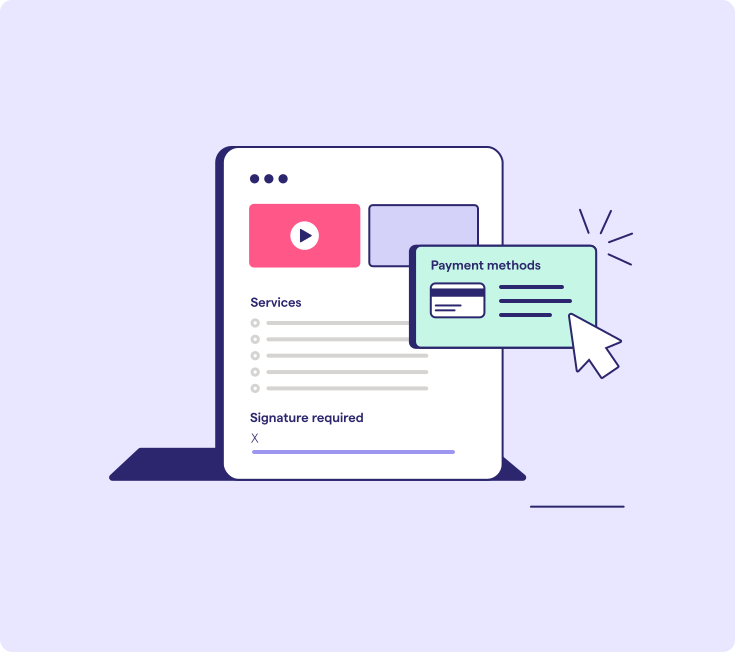
Collecting payment authorization at signing allows your business to process agreed charges automatically. There’s no invoice to send manually or separate payment request to chase after the work goes out the door.
With Ignition Payments & Collections, clients pre-approve a payment method when they accept the proposal. Charges then process automatically on the agreed schedule. Around 78% of Ignition customers report reduced late payments using its proposal, billing, and payment automation.
How upfront authorization stops late payments
Upfront authorization shifts payment from a post-delivery request into a transaction the client has already approved.
With traditional invoicing, payment happens after you finish the work. You send an invoice, wait, and follow up if nothing arrives. Define the fees and billing schedule in the proposal instead, then require payment details at signing. That shift removes many awkward collection conversations, reduces reliance on additional client action, and gives you a more predictable cash flow.
Automate payment reminders and follow-ups
An automated pre-due, on-due, and overdue reminder sequence gives every invoice consistent follow-up without relying on manual staff tracking. Once set up, these reminders replace one-off emails and prevent overdue balances from sitting unnoticed.
Set up three reminders:
- A pre-due notice confirming the amount and due date (around five business days before the due date)
- An on-due reminder with payment instructions (day of due date)
- An overdue follow-up stating what happens next (one business day after due date)
You can continue overdue follow-ups at seven and 14 days if needed, adjusting the timing to match the terms in each accepted agreement. Every reminder needs enough information for the client to pay without calling your team. Include the invoice number, amount, due date, payment instructions, and the right contact for questions. Keep the wording direct and consistent.
Best practices for automated payment reminders
To get the most from your automated reminders, set them up with these guardrails and considerations in mind:
- Separate routine reminders from escalation. Early messages can assume an oversight, while later ones can reference the agreed terms and request immediate action. Stop the sequence once payment is received so clients don't get unnecessary follow-ups.
- Assign an owner for exceptions automation can't resolve. That person handles disputed invoices, incorrect contact details, and failed payment methods. A shared status for each exception stops multiple team members from contacting the same client.
- Set a clear escalation point if reminders don't produce payment. The next step might be a phone call, a payment plan conversation, or a review of the engagement. Any pause in work or late fee should follow the terms the client already accepted.
- Review the sequence regularly using payment status and DSO. If clients consistently pay after the same reminder, adjust earlier messages or tighten the payment terms. If specific invoice types keep going overdue, investigate the process behind them.
Consistency makes payment expectations harder to overlook and gives every client the same follow-up experience. Recent data shows payment times improving as new measures aim to strengthen accountability, reinforcing the value of structured reminders.
Turn overdue invoices into automated collections
AutoCollect brings outstanding invoices from connected accounting platforms into a structured collection workflow. That gives you a practical way to recover an existing backlog while reducing staff follow-up.
Connecting Xero and QuickBooks Online invoices
Connect Xero or QuickBooks Online to surface outstanding invoices inside Ignition for collection without entering each one manually. You can continue creating invoices in your existing accounting platform while managing collection through Ignition. This keeps the workflow connected and reduces the need for manual exports, status checks, and follow-up.
Stop scope creep from unpaid work
Every unbilled request, extra report, or unexpected task is a direct revenue leak. Businesses that wait to bill out-of-scope work risk losing it entirely, either because the work gets absorbed or because the client forgets they requested it.
Address extra work as soon as it comes up. Confirm that it falls outside the agreed scope, communicate the charge, and bill it once approved. This keeps scope creep visible and stops completed work from disappearing into the next invoice cycle.
Ignition's Instant Bill closes this gap by letting you charge for approved out-of-scope work immediately without drafting a new proposal. Capture the revenue while the request and approval are still fresh.
Make paying easy for every client
Payment should be the easiest part of the client relationship. Here are a few ways to keep the process as simple as possible for the client and your team:
- Put the available payment methods in the proposal so clients choose before they accept the agreement. The method they choose can then feed directly into the billing schedule, with no separate payment setup conversation after work begins.
- Confirm the correct billing contact before the first charge. The person signing the engagement isn't always the one managing accounts payable. Record the billing contact and any details the client needs, such as a purchase order number or invoice reference, before work begins.
- Keep payment instructions consistent across the proposal, invoice, and reminder sequence. Conflicting due dates or account details create avoidable back-and-forth.
- Plan for failed payments before they happen. Notify the client promptly and give them a clear way to update their payment details or retry the charge. Escalate the issue to a team member if it remains unresolved.
- For recurring work, revisit stored payment details at renewals or major agreement changes. Confirm the billing contact, payment method, schedule, and authorization before the next service period kicks off.
Ignition supports credit card and bank payment options, including ACH in the U.S. and direct debit where available, processed securely through Stripe. Availability varies by region, but offering clients an appropriate choice removes friction that can delay payment.
Build a payment process that actually sticks
Preventing late payments is an ongoing cash flow discipline. Businesses that collect consistently aren't chasing harder; they've built a process that removes the friction before it becomes a problem.
Set clear terms, capture payment details upfront, automate reminders and collection, and bill out-of-scope work as soon as it's approved. Ignition Payments & Collections and Billing connect the workflow from signed proposal to cleared payment, helping your team spend less time chasing and more time serving clients.
Make every payment method effortless.
Capture payment details upfront and automate reminders so collection keeps moving.
Frequently asked questions
-
Getting clients to pay on time doesn't require an uncomfortable conversation about money. Collecting payment authorization at proposal signing means the client already agreed to the schedule before work began. This removes the need to ask for payment later, which protects the relationship rather than straining it.
-
A pattern of repeated late payment usually signals a deeper process gap rather than a difficult client. Businesses in this position should move the client onto stored payment authorization or automated collection rather than continuing manual reminders. If a client still resists structured payment terms, it may be worth revisiting whether the engagement is worth the ongoing cash flow risk.
-
A declined card or failed ACH transfer doesn't have to mean a return to manual invoice chasing. Automated collection workflows can retry the charge, send the client an update, and prompt them to update their payment details without business involvement. This keeps the payment process moving forward even when the first attempt doesn't go through.
-
Days sales outstanding is a useful metric for tracking payment collection performance over time. It measures the average number of days between issuing an invoice and receiving payment, so a downward trend shows that invoices are being collected faster. Tracking this metric monthly also helps businesses spot backsliding before overdue invoices pile up again.
-
Late fees can reinforce payment terms, but they work best as a backup rather than the primary strategy for on-time payment. Businesses that rely mainly on penalties still have to detect the late payment, invoice the fee, and chase that amount too, which adds administrative work. A stronger approach is preventing late payment through upfront authorization and automated collection, the model behind Ignition's Payments & Collections product.