How to reduce DSO: a guide for professional services and accounting firms



 Copied to clipboard.
The work is done. The client signed off. And the invoice is sitting in accounts receivable, aging. For firm owners managing 30 or more recurring clients, that gap between delivery and deposit is one of the most persistent cash flow problems in professional services. That gap has a name: days sales outstanding, or DSO, the average number of days a firm takes to collect payment after delivering the work. A lower DSO means faster cash collection and a healthier cash position.
This guide gives firm owners and operations leads a benchmarkable DSO metric, a structural diagnosis of what drives collection delays, and eight tactics to act on before year-end. Each tactic addresses a specific point of friction in the billing and collection cycle, with practical detail on how to implement it.
Key takeaways
- Elevated DSO in professional services is a structural billing problem, not a client behavior problem: payment requested after delivery makes collection a separate, friction-filled step that competitors never address.
- Collecting payment authorization at proposal signing can eliminate DSO at the source, before any invoice is ever issued or chased.
- Firms accepting online payments may see clients pay meaningfully faster than those relying on checks or manual transfer methods.
- Outstanding A/R balances unresolved before year-end inflate reported DSO and reduce cash available for the following quarter's operations.
- Agreement-led billing automation may reduce dispute-driven payment delays by ensuring invoice amounts match what clients already signed off on.
Why professional services firms carry high DSO
Elevated DSO in professional services is a structural problem built into the billing model itself. When a firm requests payment after delivering the work, collection becomes a separate conversation rather than a natural outcome of the engagement. A product business collects payment at the point of sale. A professional services firm completes the work, then starts the payment process.
Three factors make payment delays particularly challenging for accounting and bookkeeping firms:
- Post-service invoicing: Firms typically send invoices only after completing the work, delaying payment collection.
- No stored payment methods: Without a payment method on file, clients must manually initiate each payment.
- Time-consuming follow-ups: Manually chasing payments becomes difficult to manage as the client base grows, consuming valuable team capacity.
According to the Hackett Group's 2026 research, DSO worsened for the third consecutive year, rising by 2.1 days and deteriorating across 40 of 50 industries. Receivables grew 11% while revenue grew only 6%. That makes it a systemic pressure, not an isolated firm issue.
For practical steps on managing the cash flow impact, see cash flow strategies for accountants.
How to calculate your DSO
DSO formula: (Accounts receivable ÷ Total credit revenue) × Days in the period
A bookkeeping firm with 40 recurring clients carries $45,000 in outstanding receivables over a 90-day quarter, with $150,000 in total credit revenue billed during that period. That gives a DSO of 27 days.
Now calculate the best possible DSO (BPDSO): Take only current, not-yet-overdue receivables and run the same formula. If $30,000 of that $45,000 is still within terms, BPDSO comes out to 18 days.
The nine-day gap between actual DSO and BPDSO is where the real diagnostic work begins. A difference that small suggests a mostly structural delay tied to billing cycles. A wider difference points to client payment behavior or collection workflow problems worth addressing directly.
See where your own DSO numbers don't add up.
This webinar breaks down where collection delays typically originate and how to close them.
What is a good DSO benchmark for professional services?
A healthy DSO target for professional services firms is your stated payment terms plus no more than five to seven days. Generic cross-industry benchmarks don't apply here because they blend manufacturers, retailers, and transactional businesses with billing models that look nothing like a recurring retainer practice.
Your billing model sets the floor. A firm collecting payment authorization at proposal signing should see DSO well below 15 days. A firm billing on net-30 terms after delivery has a structurally higher floor, but still shouldn't exceed 35 to 37 days before the shortfall becomes a workflow signal rather than normal variance.
If your DSO runs more than five to seven days past your stated terms, the delay stems from your own collection process. That's the shortfall the sections below address directly. Tightening how you create and send invoices for professional services is one of the fastest ways to start closing it.
1. Collect payment authorization at proposal signing

Upfront payment authorization eliminates DSO at the source. Other approaches manage the delay after it has already started. This one prevents it from existing.
When a client signs a proposal through Ignition, they provide payment details and authorize future charges in the same step.
The difference in practice is significant:
- Before: You deliver the work, send an invoice, and wait for the client to take action. That gap between delivery and payment is your DSO.
- After: The signed proposal includes payment authorization, so Ignition collects invoices automatically on schedule without requiring any further action from the client.
Around 78% of Ignition customers report reduced late payments, a direct result of removing the payment ask from the client relationship entirely.
2. Set clear payment terms in every engagement letter
Vague or absent payment terms are a direct cause of elevated DSO. If a client doesn't know when payment is due, the collection clock never starts cleanly.
Every engagement letter needs three things stated explicitly: a due date expressed as a specific number of days from the invoice date, the accepted payment methods, and the consequences of late payment. Ambiguity at this stage compounds into collection delays later.
Clear terms also give follow-up a defined starting point. Northstar Financial Advisory's A/R guidance links structured escalation sequences with defined triggers to collecting 12% to 18% more revenue than firms without one.
When a firm embeds payment terms in a signed agreement, automated billing can enforce them without manual follow-up. Ignition Contracts and Engagement Letters connects signed terms directly to proposals and billing, so the agreed due date becomes the trigger for automated collection rather than a detail buried in a PDF no one revisits.
3. Automate recurring billing tied to signed agreements
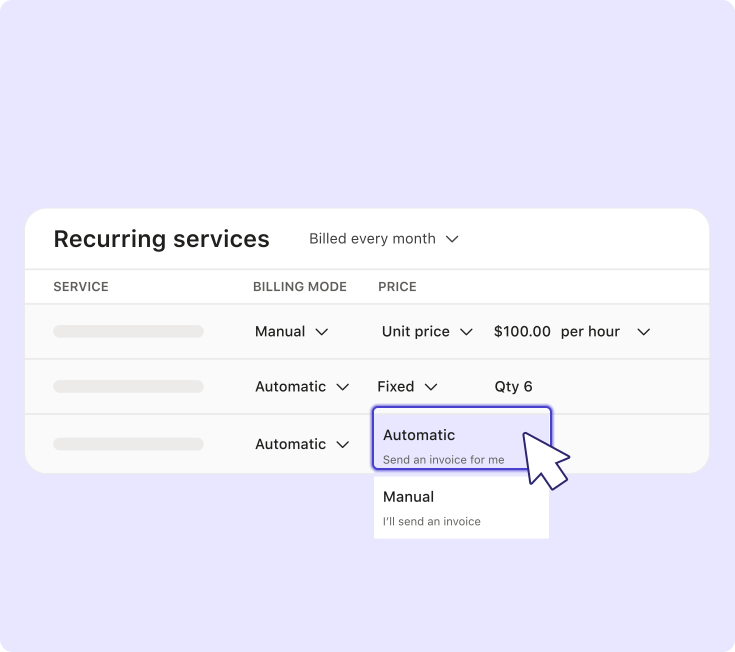
Every day that a recurring invoice sits ungenerated adds to your DSO before a client has seen a single number. When billing runs each month manually, internal delays in preparing and sending invoices inflate collection timelines by default.
Ignition Billing removes that delay by triggering charges directly from signed client agreements. Billing matches exactly what the signed agreement scoped, with no manual preparation step between delivery and invoice.
Variable billing is where manual overhead creates the most DSO risk. Headcount-based fees, payroll-linked charges, and usage-based retainers all require calculation before an invoice can go out. Ignition Billing's Smart Billing feature eliminates that step by syncing with Gusto, Xero, and QuickBooks Online to auto-calculate variable charges and generate the correct invoice automatically.
Fewer manual touchpoints mean fewer errors, and fewer errors mean fewer disputes that delay payment. See invoice automation for more on reducing billing lag.
4. Eliminate manual invoice follow-up with AutoCollect
Outstanding invoice backlogs in QuickBooks Online or Xero won't shrink through better future billing alone. Those existing balances need an active collection workflow to move.
AutoCollect lets firms import outstanding invoices directly from QuickBooks Online or Xero into Ignition's automated payment collection workflow. Once imported, AutoCollect collects payments automatically without manual follow-up for each invoice.
AutoCollect represents a structural change, not a communication tactic. It brings existing balances into the same automated collection workflow that governs new engagements, running payment collection directly through Ignition rather than as a reminder email sequence that nudges clients toward paying.
For firms approaching year-end with an accounts receivable (AR) backlog, that distinction is important. Clearing outstanding balances before books close requires a mechanism that works at scale without adding staff hours. For more on how to get clients to pay on time, Ignition's guide covers the full picture alongside AutoCollect's role in it.
5. Accept online payments to accelerate collection
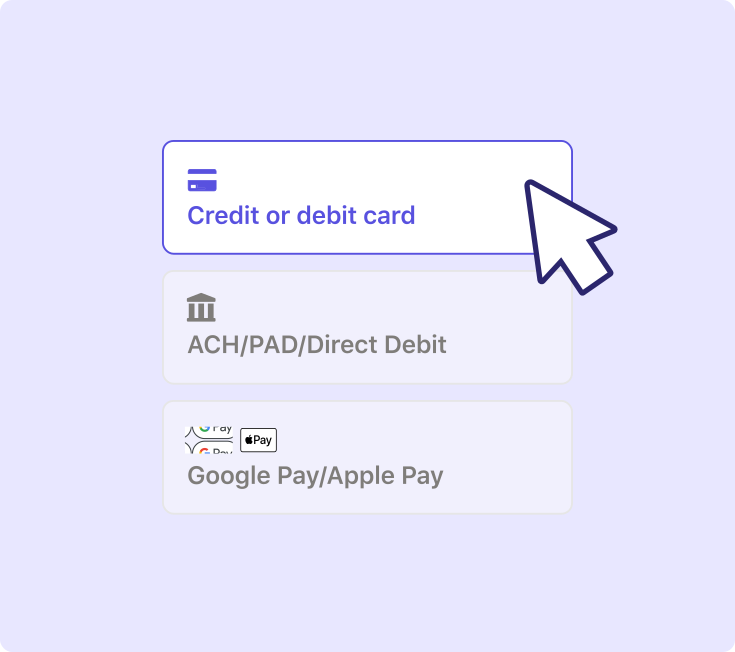
Firms that accept online payments collect faster. Northstar Financial Advisory reports that clients pay eight to 12 days faster when online payment options are available, compared to paying by check. That difference can translate directly into lower DSO without changing your billing schedule at all.
Check-dependent collection adds delays that have nothing to do with the client's willingness to pay. Clients need to locate a checkbook, initiate a transfer, or log into a separate banking portal. Each step is a reason for payment to sit pending another day.
Ignition Payments supports card, direct debit, ACH, Apple Pay, and Google Pay. Offering multiple methods removes the friction of any single option being inconvenient. For more on structuring payment options to protect cash flow, see smart credit card payment strategies that maximize cash flow and client satisfaction.
6. Prioritize your A/R backlog before year-end
Prioritize the highest-value invoices in the oldest aging bands first to lower reported DSO and release more cash before year-end. Outstanding balances left unresolved when books close inflate your reported DSO and reduce the cash available for Q1 operations. Clearing your backlog before year-end requires a deliberate order of attack, not a blanket chase.
Start by segmenting outstanding invoices into four aging bands: current, 30 days, 60 days, and 90-plus days. Then layer in client value. The result is a simple priority matrix: highest-value invoices in the oldest bands go first. A $15,000 invoice at 90-plus days outranks a $500 invoice at 30 days every time.
Once you've identified those priority balances, AutoCollect lets you act on them before books close: import outstanding invoices in bulk from Xero or QuickBooks Online and collect on a large backlog without chasing each client down manually.
For a broader look at reducing accounts receivable beyond the year-end window, the complete guide to reducing accounts receivable covers the full lifecycle.
7. Resolve billing disputes before they delay payment
A disputed invoice stops collection entirely. Unlike a slow-paying client, a disputing client is withholding payment for a specific reason, and no reminder will move that balance until the underlying issue is resolved.
The most common triggers are preventable: scope ambiguity, charges for out-of-scope work the client wasn't expecting, and invoice amounts that don't match what the client recalls agreeing to. Each one originates at the agreement stage, not the billing stage.
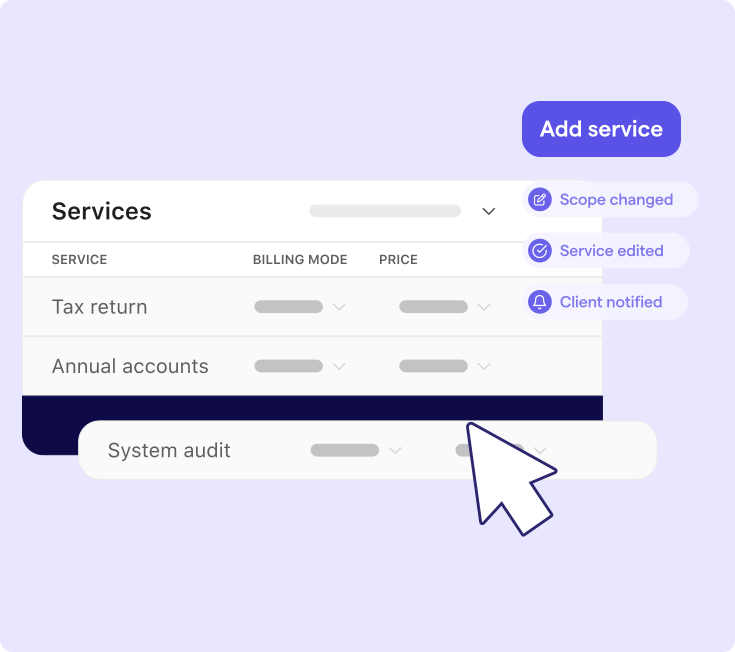
Agreement-led billing removes those triggers before they become disputes. When Ignition generates an invoice directly from a signed engagement letter containing the agreed services, price, and billing schedule, the client has already confirmed the charge. What was signed and what arrives in their inbox match exactly. With Ignition Billing connected to signed agreements, that match is automatic.
For disputes already in progress: reference the signed agreement, acknowledge the specific concern, and offer a clear resolution path. Prevention is the real lever here.
8. Measure DSO after changing your collection workflow
A collection workflow change has reduced DSO only when the same-period calculation falls from its baseline without harming revenue per client or retention. Record your DSO using the formula from the calculation section before making any changes, so you have a baseline to measure against.
Choose a measurement interval, 30, 60, or 90 days, and hold it constant. Switching from a 30-day to a 90-day window between measurements will distort the comparison and hide whether the change worked.
Track three metrics alongside DSO to confirm the improvement is real:
- Average revenue per client confirms faster collection isn't coming at the cost of smaller engagements
- Client retention rate confirms the workflow change hasn't strained client relationships
- Time spent on billing administration confirms the operational gain is real
A falling DSO alongside stable or improving numbers across these three metrics is a reliable signal that the workflow change is working.
Finally, compare your actual DSO against your best possible DSO (BPDSO). If the shortfall persists after implementing changes, the remaining delay is either structural, tied to billing timing, or client-driven, and each requires a different fix.
Stop chasing invoices and start collecting upfront
Every tactic in this guide moves DSO in the right direction. But most of them still assume the payment ask happens only after the firm finishes the work. That's the structural problem none of the other approaches actually fix.
Collecting payment authorization at proposal signing fixes that structural problem.
If you're in Q3 or Q4 right now, the practical path is two-pronged. Use AutoCollect to pull outstanding invoices from QuickBooks Online or Xero into Ignition's collection workflow and clear what's already overdue. Then connect Ignition Proposals and Ignition Payments so every new engagement captures payment details at signing, and next year's receivables look nothing like this year's.
Ignition ties proposals, payment authorization, billing, and automated collection into one workflow, so the distance between signed agreement and collected payment closes at the source.
Stop managing collection delays manually.
Put upfront payment authorization to work for your firm.
Frequently asked questions
-
DSO measures how long a firm actually takes to collect payment, while best possible DSO (BPDSO) represents the theoretical minimum if every client paid exactly on agreed terms.
The gap between the two figures reveals whether collection delays are structural, meaning your billing workflow is the problem, or client-driven, meaning specific clients are consistently paying late. Firms with a large gap between actual DSO and BPDSO typically have a workflow fix available, not just a client conversation to have.
-
Outstanding A/R balances unresolved before year-end inflate a firm's reported DSO and directly reduce the cash available for Q1 operations, including payroll, software renewals, and staffing decisions.
For accounting firms, the problem compounds because Q4 often coincides with tax season prep, when capacity is already stretched, and manual collection follow-up competes with billable work. Clearing the backlog before books close is both a cash flow move and an operational one.
-
Reducing DSO for existing clients is possible without a full billing model overhaul, but the gains are limited compared to changing the upstream payment structure. Tactics like accepting online payments may help existing clients pay eight to 12 days faster than those using checks or manual transfers, according to Northstar Financial Advisory.
For deeper, more durable DSO reduction, firms eventually need to collect payment authorization at the engagement stage, which is where structural improvement happens.
-
Firms aiming to reduce DSO should accept card payments, direct debit, ACH, and digital wallet options like Apple Pay and Google Pay, since each method removes a specific friction point that delays manual payments.
Check and bank transfer payments require client-initiated action at every billing cycle, which adds days to collection without any workflow benefit for the firm. Storing a client's preferred payment method on file at proposal signing, so future charges are processed automatically, has the potential to eliminate that delay entirely.
-
Reducing DSO through workflow automation doesn't require additional AR headcount, and in many cases it reduces the administrative burden on existing staff.
Automated recurring billing tied to signed agreements, combined with tools that import and collect outstanding invoices from platforms like Xero or QuickBooks Online, replaces the manual follow-up that typically consumes staff time. The efficiency gain comes from removing human touchpoints from the collection cycle, not from adding people to manage them.