How to automate your pricing process from start to finish



 Copied to clipboard.
Pricing shouldn’t feel like a full-time job. If you’re spending hours in spreadsheets, chasing approvals, and revising quotes, your team is stuck in reactive mode while potential clients wait.
Pricing automation changes that. With the right system, you can generate professional proposals faster, capture payment details upfront, and protect consistent margins without adding more manual work.
The bigger benefit is how pricing connects to the rest of your revenue process. Instead of treating proposals, contracts, billing, and payments as separate, repetitive tasks, automation links them in one repeatable workflow. That saves valuable time, reduces errors, and helps clients move from proposal to payment with less friction.
Automated pricing is the bridge between scoping services and getting paid. Below, we’ll break down how it works, how to implement it, and which platform features matter most.
Key takeaways
- Pricing automation replaces manual calculations and spreadsheet updates with rules-based systems that generate accurate quotes in minutes, freeing service professionals to focus on client relationships and competitive pricing.
- The most effective automated pricing connects proposals, contracts, billing, and payments into a single workflow, eliminating handoffs that delay revenue collection.
- Service businesses that automate pricing see measurable improvements in cash flow because payment details are captured at proposal acceptance, not weeks later.
- Successful implementation starts with mapping existing services and value drivers before loading templates into a platform. Technology alone doesn’t fix unclear pricing structures.
- Ignition stands apart by uniting pricing templates, e-signatures, and automatic payment collection in one platform designed specifically for accountants, agencies, and professional services firms.
Why manual pricing keeps service businesses stuck
Even small pricing tasks can quickly create delays and confusion across your team.
One proposal gets recalculated three times when someone changes a line item. Another team member sends a slightly different quote. By the time it’s ready, the client has already moved on—or worse, questions your numbers.
For agencies, accountants, and professional services, the impact is harder to control. Vague pricing strategies invite scope creep, while chasing signatures and approvals drags on for days. Recurring services can also slip through the cracks, chipping away at revenue.
Manual pricing slows progress at every stage. Teams work on time-consuming corrections instead of moving deals forward, and clients feel the inefficiencies. Automation tools remove those bottlenecks, turning scoped services into polished proposals and payments with far less effort.
What automated pricing means for businesses
Pricing automation gives you a more consistent way to handle quotes, proposals, and invoices without starting from scratch each time. You define your services, pricing rules, packages, and billing terms once, then reuse them across every client.
Templates alone aren’t enough. They still need manual updates, which can introduce errors or delays. Automation connects pricing to contracts, billing, and payments, so everything moves forward once a proposal is approved.
That’s especially valuable for service businesses where pricing depends on scope, bundled services, ongoing work, and client-specific needs. Without structure, it’s easy for pricing to vary or drift over time.
An automation solution keeps everything aligned from the start. Services are packaged consistently, and approved proposals move straight into billing and payment collection without extra steps.
Core benefits of pricing automation for service businesses
Pricing automation changes how work moves through your business. Instead of rebuilding proposals for every new client or request, your team can respond faster with fewer revisions. There’s also less internal back-and-forth before anything reaches the client.
It also closes common revenue gaps. When pricing is standardized, there’s less risk of undercharging or inconsistent discounting. Packaging services into tiers makes upsells more natural, while capturing payment details upfront avoids the usual lag between approval and cash in the bank.
Clients feel the difference, too. Clear pricing reduces questions, and structured proposals set expectations early, so projects start with fewer misunderstandings.
Behind the scenes, the biggest shift is standardization. Quotes follow the same structure every time, and delays between approval and payment disappear. Renewals and scope changes trigger billing automatically rather than relying on someone to remember.
Steps to automate pricing from scoping to payment
Automating pricing starts with clarity, not software. Before anything can run smoothly, you need a complete view of your services, including how they’re priced and what drives value for your clients.
Once you have that foundation in place, automation becomes much easier to implement. Here’s how to turn your pricing into a structured process that moves cleanly from scoping through to payment.
Map services, scope, and value drivers
If your services live in past proposals and scattered files, it’s hard to build consistency into pricing. Start by laying out everything you currently offer, includingL
- Core services
- Common variations
- Add-ons
- “Custom” work that shows up more often than expected
These details are usually buried in past proposals, making them harder to standardize later.
Next, look at what drives your pricing decisions. Factors like complexity, timeline, deliverables, and client size act as key data points that shape the final price more than the service name itself. Defining these upfront makes it easier to build rules that reflect how work is really scoped and how pricing aligns with customer demand.
This process often surfaces inconsistencies, like similar work being priced differently depending on who scoped it. It’s worth resolving those gaps before an automation pricing tool locks them in.
Define pricing rules and tiered packages
Once you map your services, the next step is turning them into transparent pricing models or rules. Think in simple terms: if a project includes a certain scope and timeline, it leads to a defined price. This removes guesswork and keeps pricing reliable, no matter who builds the proposal.
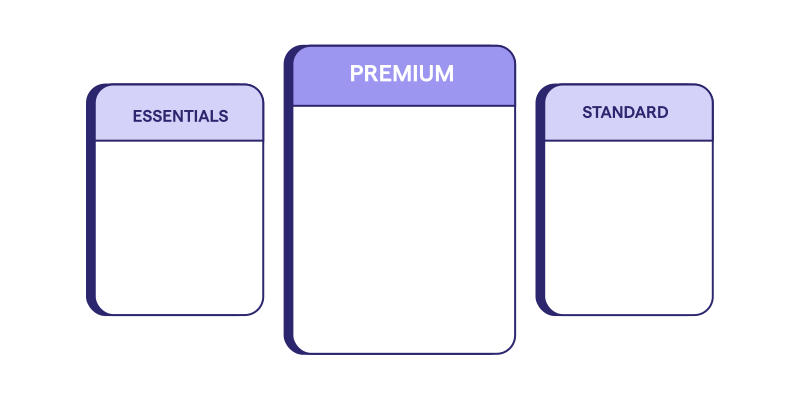
From there, group services into tiered packages. Options like Essential, Professional, and Premium give clients a clear way to choose while helping you protect margins. Each package has predefined components, making it easier to automate without rebuilding quotes.
Tiered pricing also supports natural upsells. When options are clearly laid out, clients often choose a middle tier that balances cost and value. Features like Ignition’s Price Insights can help validate pricing decision-making with data-backed benchmarks, so you’re not relying on instinct alone and can better optimize pricing over time.
Load templates into a pricing automation platform
With pricing rules in place, it’s time to put them into an automation system that can apply them reliably. Look for a platform that supports flexible templates with variable fields, so your team can fill in client details without rewriting an entire proposal.
Strong templates include more than pricing. They should also cover scope descriptions, timelines, and terms, so every proposal is complete and ready to send without extra edits. This keeps expectations clear from day one.
Centralized template management is just as important. As your services evolve, updates should happen in one place, so each new proposal reflects the latest pricing and structure.
Platforms like Ignition are built for this, with pre-configured templates designed specifically for accountants, agencies, and other service businesses.
Integrate contracts, invoicing, and payment collection

Pricing automation only goes so far if everything after the proposal still runs manually. When those steps aren’t connected, work can stall between approval, contracts, and payment collection.
E-signatures help keep things moving. Instead of sending documents back and forth or waiting for approvals, your client can review and sign in one step. That momentum is easy to lose otherwise.
Capturing payment details at the same time closes another common gap. Without it, teams often start work and then circle back to collect billing information later, delaying cash flow.
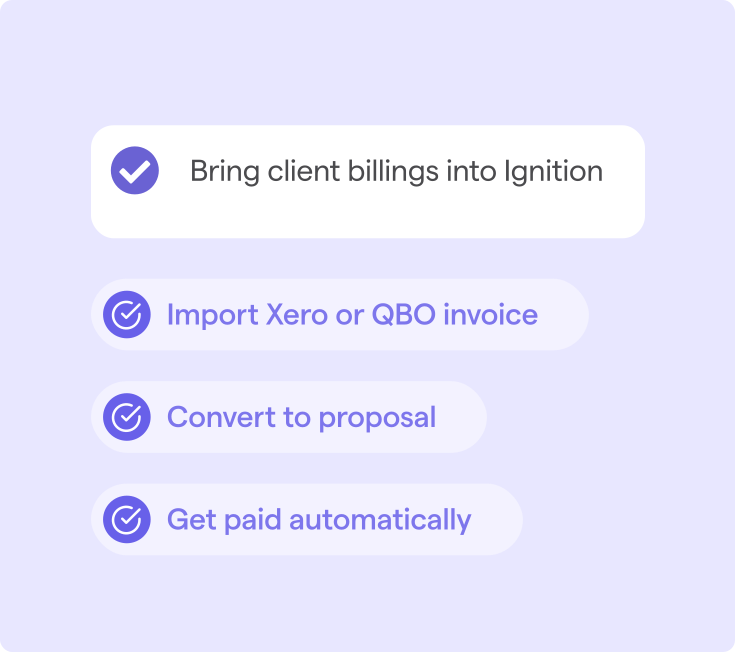
With Ignition, these steps are connected. Proposals become signed agreements, and those agreements trigger billing. The platform also collects payments automatically without extra follow-up.
Monitor performance and refine
Once your pricing workflow is live, tracking performance is key. Automation isn’t set-and-forget. It’s a system that improves when you pay attention to the right signals and use data analysis to guide decisions.
Start by tracking a few metrics that show where your process needs attention:
- Proposal acceptance rates: Low numbers can indicate unclear pricing or packages
- Time from proposal to payment: Long gaps signal bottlenecks in approvals or billing
- Revenue per client: Drops may reveal underpriced services or missed upsell opportunities
Engagement data adds another layer. Seeing which sections clients spend time on or skip entirely can highlight where proposals need clearer language or stronger positioning.
Review your pricing rules regularly to know when to adjust or increase prices. Costs, services, market conditions, and broader market trends shift over time, so keeping rules updated helps your system continue to drive steady revenue.
Essential features in an automated pricing platform
The best platform depends on your business needs. But some features and core functions are essential for keeping proposals, billing, payments, and client work running smoothly.
Template management and version control
When team members pull from different files or old proposals, inconsistencies can slip in, like outdated rates or missing add-ons. Even small differences in how a service is described can cause problems. Centralized templates fix this by keeping everyone on the same page.
Templates also need to stay current. If a new service package is added or timelines change, updating the master template automatically applies those changes to every proposal built from it. Teams don’t have to dig through old files or chase colleagues to make sure they’re using the latest version.
Control over those updates matters, too. Role-based permissions ensure only managers or leads can modify master templates, preventing accidental changes. Platforms like Ignition provide pre-built templates for agencies and accountants, giving teams a strong starting point while maintaining full version control.
Integrated billing and payments
Integrated billing and payments are what set pricing automation apart from a simple template or spreadsheet. It connects your proposals directly to how you get paid.
Capturing payment details when a client accepts a proposal makes a significant difference. You can secure a deposit or full payment upfront instead of sending invoices later and waiting for responses. With 97% of agencies chasing late payments, that’s a meaningful step toward steady cash flow for your business.
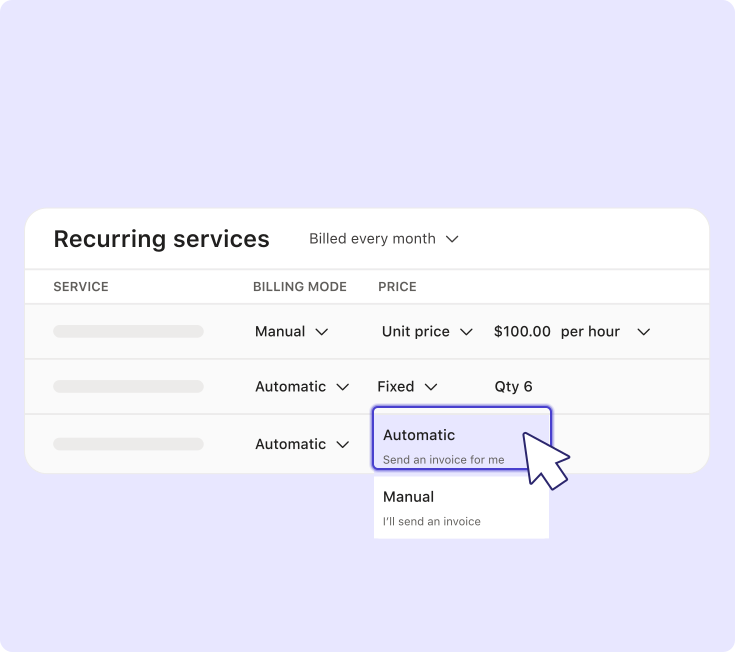
For recurring work, like monthly retainers or ongoing projects, it keeps revenue coming in without extra steps.
The right platform also supports multiple payment methods, so clients can pay in the way that’s easiest for them. Some might prefer credit cards, while others use ACH transfers or digital wallets. Supporting these options helps avoid delays from failed payments or manual transfers and keeps cash flow predictable.
Real-time engagement analytics
Seeing how clients interact with your proposals is like having a window into their thinking. You can tell which sections they spend time on and which pricing options catch their attention. You can also see where they hesitate or drop off.
That kind of insight shows what’s working and where clients feel uncertain. For example, clients might spend extra time on the premium package but not select it. In that case, you may need to clarify its value or reframe the features to make the benefits clearer.
Analytics also reveal patterns across clients. Maybe certain add-ons get ignored repeatedly, or one package is consistently chosen first. With this data, you can make price changes or adjust service packaging based on actual customer behavior.
Scope change and renewal workflows
Projects often expand in scope. A client might add a last-minute feature, or timelines stretch beyond the original agreement. Without a system in place, billing can lag, and extra work goes unpaid.
Automated workflows handle these changes as they happen. When a service is added, an invoice is triggered automatically. Your team doesn’t have to track every adjustment, and clients are charged accurately for the value they receive.
Recurring engagements get the same treatment. Automated renewal reminders and bulk renewal tools make it easy to keep contracts current, avoiding missed deadlines or lost revenue. For example, monthly retainer clients are renewed on schedule without manual processes.
With Ignition, built-in tools handle scope change and renewals, preventing revenue loss and allowing teams to focus on delivering work.
Accounting and CRM integrations
A pricing platform only works well if it connects to the tools your team already uses. Linking with accounting systems like QuickBooks or Xero, customer relationship management (CRM) systems, and project management apps keeps data flowing.
Integrations eliminate double data entry. Rather than manually transferring prices, client details, and invoice information, data flows directly into your financial reporting and CRM. This reduces errors and keeps revenue data accurate and up to date.
For example, when a client accepts a proposal, the invoice can appear in your accounting system instantly. Client records are also updated in your CRM without manual effort.
Ignition supports integrations with leading business apps, making it easier to connect pricing, billing, and client management into a single workflow.
Automated pricing optimization after go-live
After launching your pricing automation process, it begins generating valuable data you can act on. You can see which proposals get accepted quickly and where clients spend extra time reviewing details.
Engagement data adds another layer. It highlights areas that need attention, whether service descriptions aren’t clear or packages aren’t communicating their value. Small adjustments, like rewording deliverables or repositioning a package, can improve client understanding and acceptance.
Analyzing acceptance by service type or client segment reveals hidden opportunities. Clients might frequently select a basic package, for example, signaling a chance to restructure the mid-tier to drive more upsells.
Ongoing optimization is also important because it supports long-term profitability. Ignition’s Price Insights benchmarks services against fresh proposal data and provides tailored recommendations with clear explanations. Over time, service businesses can refine their approach and drive revenue growth.
Accelerate revenue and client trust with Ignition
Managing pricing can take up valuable time—recalculating quotes, chasing approvals, waiting on payments, and tracking renewals. These manual steps slow down revenue and create gaps that are easy to miss.
Ignition connects every stage, from proposals and contracts to billing and payments, in one streamlined workflow. Pre-built templates help you send proposals faster, payments are captured at approval, and changes or renewals trigger billing automatically. Your team spends less time on admin while maintaining consistency across every client engagement.
The result is a pricing process that runs as a system, not a series of tasks. Your team can focus on higher-value work, and clients move from proposal to payment with greater clarity and speed, leading to predictable cash flow.
Want to streamline pricing and keep revenue flowing?
Ignition connects proposals, contracts, and payments so every quote becomes a revenue-driving system.
FAQs
-
Automated pricing works alongside customization. Templates handle standard components, while variable fields accommodate client-specific details, reducing manual work without sacrificing flexibility.
-
Most service businesses see immediate time savings on proposal creation, with measurable cash flow improvements within the first billing cycle as payments are collected at acceptance.
-
Clients respond positively to clear, professional pricing. Automation ensures consistency and transparency, which builds trust rather than creating friction.
-
Pricing automation uses predefined rules to generate consistent quotes for service engagements, while dynamic pricing adjusts in real time based on demand. This approach is common in ecommerce but rarely applies to professional services.
-
Yes. Platforms like Ignition integrate with QuickBooks, Xero, and other accounting tools, so automated pricing data flows directly into existing financial workflows without requiring a system overhaul.