Why manual client onboarding breaks (+ how to scale)



 Copied to clipboard.
Landing a new client feels great. That feeling fades fast when manual onboarding drags the project launch out.
Handling proposals, intake forms, initial payments, and kickoff tasks manually adds hours to every project. Skipping those steps to get to the deliverables faster usually creates more work as the project progresses. And when your team is buried in admin, taking on more clients becomes nearly impossible.
Standardize your onboarding process and you'll launch projects faster, cut admin follow-up, and give clients a better experience from the start. Here's how to automate onboarding and build a business that scales.
Key takeaways
- Scaling client onboarding starts with removing manual steps that delay work, create admin bottlenecks, and slow how quickly you start getting paid.
- The handoff between the signed proposal and active onboarding is often where momentum stalls and where unclear scope can start to affect profitability.
- Standardized proposals and engagement letters with conditional logic can help businesses onboard clients more consistently without relying on founder-led coordination.
- Digital intake forms and connected workflows may reduce client effort, shorten time-to-value, and keep onboarding moving without constant follow-up.
- To scale client onboarding during busy periods, businesses need clear metrics, automated billing triggers, and repeatable processes that can support higher client volume.
When onboarding becomes the bottleneck
Onboarding becomes the bottleneck when you have more new clients than your team can process. When project timelines drag, service delivery usually isn't the problem. The real issue is the administrative work between a signed agreement and your first deliverable.
Many teams manage onboarding with static spreadsheets and forms. Finding the right documents, emailing them to clients, and processing responses can take days or even weeks, even when the tasks seem simple. Manual onboarding pulls time away from revenue-generating work and limits how fast your business can grow.
How manual onboarding delays revenue realization
A slow onboarding process hits your cash flow directly. After a client accepts the proposal, work still has to follow your defined process: request documents, exchange questions, revise the engagement letter, collect payment details, and book the kickoff. Only then can work actually begin.
Without a defined onboarding process, you end up with back-and-forth email chains clarifying project scope after you've already started, or manually chasing overdue payments. Over time, that throws off your billing schedule and revenue stops matching initial projections.
Manually processing intake forms, contracts, and payment details can take weeks when you're relying on email, spreadsheets, and manual document generation. The longer your onboarding process, the longer before clients see value from working with you.
Digitizing the onboarding process can cut that timeline by approximately 25%, according to research. Manual onboarding may work for your first few clients, but digital automation keeps the entire process moving as your business grows.
Leave manual onboarding behind
Ignition helps you automate proposals, engagement letters, payments, and onboarding workflows
The proposal-to-onboarding handoff is where the momentum dies
When you're working to win a prospect, things move quickly. You're racing to build trust and put together a proposal that meets their needs before a competitor does.
Once the client accepts, though, momentum tends to stall. Documents need finalizing, systems need setting up, and every step requires back-and-forth between your team and the new client. Without a standardized, automated onboarding process, those steps create administrative roadblocks that push back your internal timelines.
Manual onboarding can also seriously hurt the client experience. Seventy-three percent of people will leave a brand after just one poor customer service interaction. A single missed email can send a potential client looking at competitors.
What happens between ‘client said yes’ and work actually starting
Once a new client accepts your proposal, you need to collect everything required to start work. That means finalizing the contract, collecting payment information, and getting ready to send the first invoice. Depending on the project, clients may also need to complete an intake form and confirm the scope.
Then the project moves to your operations or customer success team. You may need to brief the team, assign tasks, set timelines, and schedule the kickoff call. When those steps involve multiple people, departments, and tools, duplicate documents and conflicting spreadsheet entries create confusion fast.
Every one of these steps protects your business and keeps the project running smoothly. Managing them manually turns onboarding into days of back-and-forth emails and check-in calls.
You can automate many parts of client onboarding. With the right tools, you'll cut the need for manual follow-up, keep onboarding documents organized, and help the team work more efficiently.
Scope creep starts here, not later
Scope creep in client projects often starts earlier than you'd expect. When your team doesn't clearly define deliverables, expected response times, and required client input before the project kicks off, small requests expand beyond the agreed scope.
Without a structured onboarding process, sales or leadership teams can make verbal promises that never get documented. By the time the project reaches the operations team, nobody's sure what was actually committed to. Confusion at key moments leads to unbilled work and revenue left on the table.
What scalable client onboarding actually looks like
A repeatable client onboarding process prevents operational bottlenecks. Scalable onboarding uses clear milestones, automation, and pre-built templates to collect the information you need and create a consistent client experience.
When you stop digging through files and email chains, you onboard new clients faster. Taking on new projects stops feeling like it requires an unsustainable amount of admin.
Ignition helps you scale onboarding through automation, branded templates, integrated pipeline management, and reporting. Here's what scalable onboarding looks like in practice.
Standardized engagement letters with conditional logic

Ignition's conditional engagement letter templates help you adapt each contract to your business model without starting from scratch on every project. Getting everything in writing from the start helps prevent scope creep and leads to better results for clients.
Each template starts with legally compliant language for your industry, and you can adjust based on project scope, fees, and timeline. You and your clients are aligned before the project even begins.
Automations with conditional logic speed up the process of finalizing engagement letters. You can set up different templates for specific service offerings or client types, then automatically generate an engagement letter from the client information already in your systems.
Once the engagement letter is ready, it goes out automatically to all stakeholders for e-signatures. The signed letter gets stored in your systems for future reference. Getting this step right protects your revenue from the start.
Digital intake forms that reduce client effort
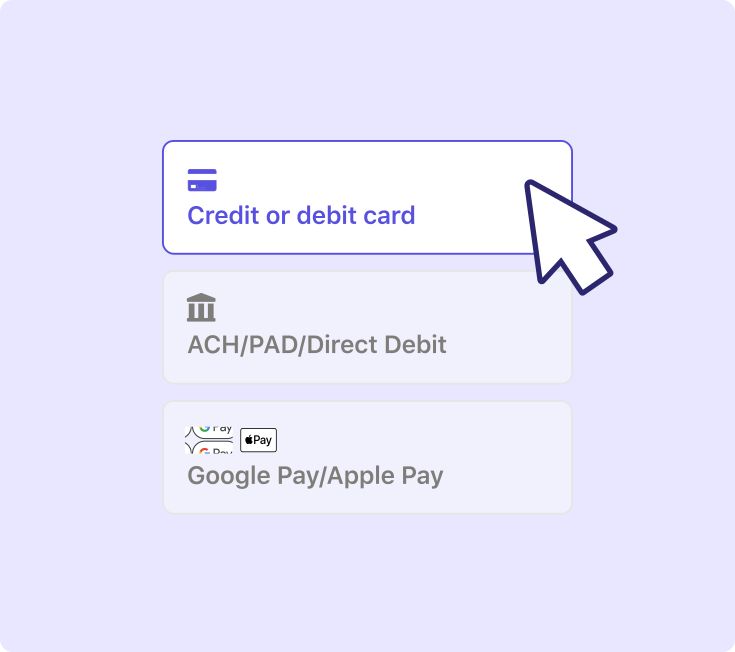
Intake forms are another essential part of scaling client onboarding. With intake forms, you have the client information you need before the project starts, so you're not chasing answers under tight deadlines.
Ignition lets you create branded intake forms and send them directly to clients as soon as they hit the right stage in your sales pipeline. Ignition's engagement letters also include important intake features to keep projects moving. Clients must provide their payment information before finalizing their signature, so you have what you need before getting started.
Keep your initial intake form concise. Ask for only the minimum information you need to start work, then create follow-up forms for specific project types.
If your intake form is too long, clients delay or abandon it, slowing the project right when you're ready to move. This matters most during tax season and other busy periods, when even a small delay can throw off your entire schedule.
Automated billing triggers tied to onboarding completion
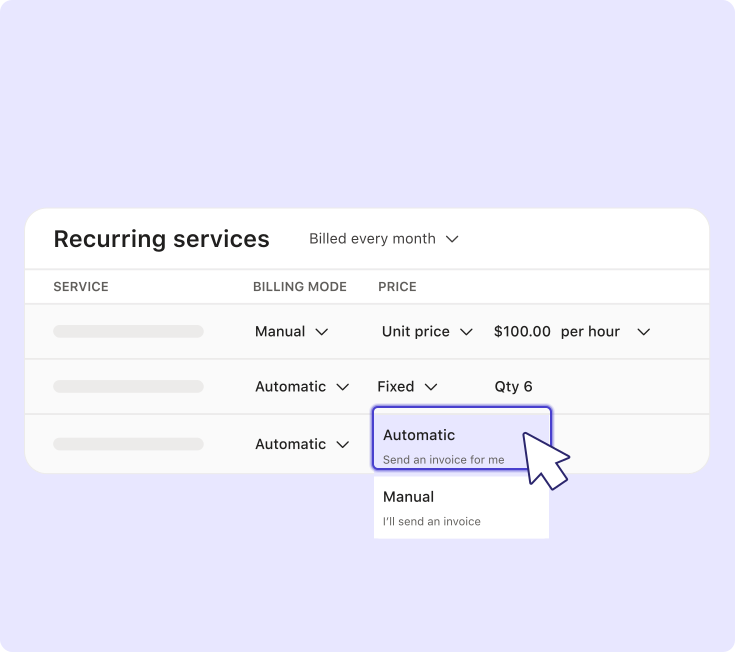
Managing billing manually increases the risk of late payments and cash flow stress. Ignition lets you set up automated invoicing and client payments during onboarding instead.
Clients provide payment information at the start of the project in order to sign the engagement letter. As the project progresses, they receive an invoice showing the amount, services included, and payment date.
Ignition then automatically collects payment on the invoice due date, using the payment method the client already provided. Automating billing and payment collection means busy clients don't have to pay invoices manually, and your team spends less time chasing late payments.
How to measure onboarding performance
To find out whether your onboarding strategy is working, track a few key metrics:
- Engagement letter turnaround: The amount of time it takes for clients to finalize and sign your engagement letter.
- Intake form completion rate: The percentage of clients who complete your intake form without manual reminders.
- Days to first deliverable: The amount of time from contract signing to the first deliverable completion.
- Billing trigger lag: The percentage of late payments or payment issues that happen during the initial onboarding process.
- Client effort score: How much effort a client puts in to interact with your business. A simple online survey measures this.
If these metrics improve over time, your onboarding strategy is working. If you're not seeing meaningful changes, manual administrative tasks are still slowing you down. Fine-tune the process, then track and repeat.
Start tracking these metrics as soon as you launch your new onboarding strategy. Intentional tracking and performance measurement help you catch issues and find opportunities for even faster post-sales revenue generation.
Scaling onboarding during seasonal volume spikes
Many service-based businesses deal with significant seasonal fluctuations in client volume. This rings especially true for accounting and financial services businesses. They often need to onboard dozens of clients in a six-to-eight-week window to prepare for tax season.
Trying to handle seasonal spikes manually will quickly overwhelm your team with administrative tasks, leaving little time for project management and high-value work.
Use the slower season to set up an automated onboarding process. It's the right time to fine-tune your engagement letter templates, intake forms, and payment setup. If you need more complex workflow automations, use the extra time to experiment and find what works. When your busy season arrives, your team can send templates in bulk, queue reminders, and save high-touch onboarding for larger or more complex clients.
Stop losing time to onboarding admin and start scaling your firm with Ignition
Ignition takes the headache out of onboarding for service-based businesses, with professional templates, bulk sending, and workflow automations in one platform. Ignition's templates let you create engagement letters, proposals, intake forms, and invoices in a few clicks, all tailored to your industry.
With workflow automations, you can send documents, collect signatures, and request payment automatically when work starts. Every step triggers on its own, so onboarding keeps moving. Ignition's smart billing integrates with QuickBooks and Xero, so you can process payments with the systems you already use.
Build a client onboarding process that scales
Use Ignition to standardize proposals, engagement letters, payments, and onboarding workflows in one platform.
FAQs
-
The biggest bottlenecks usually appear between signed agreement, intake completion, and billing setup, where manual handoffs slow work and delay revenue. If the owner still approves every step or drafts each engagement letter from scratch, growth stays tied to headcount instead of process.
-
Start by segmenting clients by service type and complexity, then standardize proposals, engagement letters, and intake requests for each onboarding path. That approach may help teams automate repeatable steps, reduce drafting time, and keep scope clear before delivery work begins.
-
Map the critical path and separate internal tasks from client-dependent tasks, because each group needs different fixes. Pre-built templates, digital intake forms, and automated agreement workflows can remove avoidable delays and help clients complete requirements with less effort.
-
Track time to onboarding completion, intake completion rate, days to first deliverable, and early retention by cohort. A simple client effort score after each milestone can reveal friction before it turns into dropped work or delayed payment.
-
Seasonal volume is easier to manage when you use standardized templates, bulk sending, and one intake flow for similar engagements. Ignition helps firms move from one-by-one onboarding to a repeatable proposal, agreement, billing, and payment workflow in one platform. That has the potential to protect cash flow and reduce admin pressure during tax season or any high volume period.