9 proven client advisory services best practices for growth



 Copied to clipboard.
For many accounting firms, relying on compliance work alone is no longer enough. Tax prep, filings, and routine bookkeeping still matter, but they’re increasingly standardized and price-sensitive. This work keeps revenue moving, but does little to drive long-term growth or stronger client loyalty.
Client advisory services (CAS) offer a different path. Instead of focusing only on past performance, CAS helps clients plan what comes next through forecasting, business strategy, and ongoing financial insight.
Accounting firms that expand into advisory often build steadier year-round revenue and stronger client retention. That shift reflects changing expectations. Businesses aren’t just looking for a tax preparer—they want a partner who can support sharper decision-making and help them navigate growth with more confidence.
Moving into advisory is a practical way to stay relevant, protect margins, and grow with intention. The best practices below show how to make that shift in a clear, repeatable way.
Key takeaways
- Firms with a formal CAS business plan achieve higher median annual client revenue, making strategic planning the foundation for advisory success.
- Targeting clients with financial complexity and a growth mindset allows firms to deliver deeper value and convert compliance relationships into advisory engagements.
- Value-based pricing with fixed recurring fees replaces uncertainty from hourly billing, improving margins while giving clients predictable costs and clearer expectations.
- Automating agreements, invoicing, and payment collection reduces administrative friction and accelerates cash flow.
- Dedicated CAS teams with ongoing training in technical and soft skills enable firms to deliver high-value services like outsourced CFO roles and strategic planning.
1. Formalize a CAS business plan
Businesses that document their CAS plan tend to build a stronger advisory practice, increase client revenue, and reduce internal guesswork.
Start by defining the core components of your plan:
- Your ideal client profiles
- Service offerings
- Pricing approach
- Staffing needs
- Key performance indicators (KPIs)
Clearly separating advisory from compliance and other accounting services helps your team and clients understand what’s included and what’s not.
Pricing is where many businesses get stuck, often because of timing. It’s easier to get pricing right after you’ve defined your ICP and services, but before packaging and launching. At that stage, you can assess the outcomes you deliver, the level of effort required, and market benchmarks, then decide how to structure pricing through tiers, bundles, or retainers.
Your goal is advisory pricing that reflects the value of the work, aligns with the client base you want to serve, and supports consistent revenue and margins.
Set prices too early, and they may not hold as services evolve. Set them too late, and it’s easy to underprice or build offerings without a clear structure.
Define clear targets, review progress quarterly, and adjust the plan to keep it practical and relevant.
2. Focus on defined industry niches

Trying to serve every type of client can stretch your team thin and make advisory work harder to scale. Firms that narrow their focus are better positioned for sustainable growth while delivering insights more reliably.
Many firms already have a natural starting point—industries where they know the clients or understand the work. For example, a firm might focus on local construction companies, supporting cash flow forecasts or project profitability. This makes it easier to create templates, reports, checklists, and dashboards that can be reused across clients.
That kind of specialization also builds deeper expertise. You start spotting patterns faster and advising on industry-specific challenges, while marketing more directly to businesses that need those insights.
Starting with one or two niches is usually enough. Once you have a process that works, you can expand into other industries without overloading your team.
3. Identify and onboard ideal advisory clients
Not every client is a fit for advisory work, especially when working with small businesses at different stages of growth. The clients who benefit most typically have complex finances, a growth mindset, and values that align with your firm’s culture.
A good place to start is with your existing compliance clients. Look for those who ask strategic questions or show interest in growth opportunities. Offering a short, introductory advisory session helps demonstrate the value you can deliver—and gives both sides a clear way to evaluate whether a full advisory relationship makes sense.
It’s also the right time to set up payment collection as part of onboarding. Tools like Ignition make it easier to transition seasonal clients into year-round advisory arrangements, keeping billing consistent and predictable.
For clients who aren’t the right fit, letting them go frees up time and energy to focus on higher-value client relationships. This gives you more capacity to help the right clients tackle growth challenges, improve cash flow, and make more informed decisions.
4. Scope and price using value rather than hours
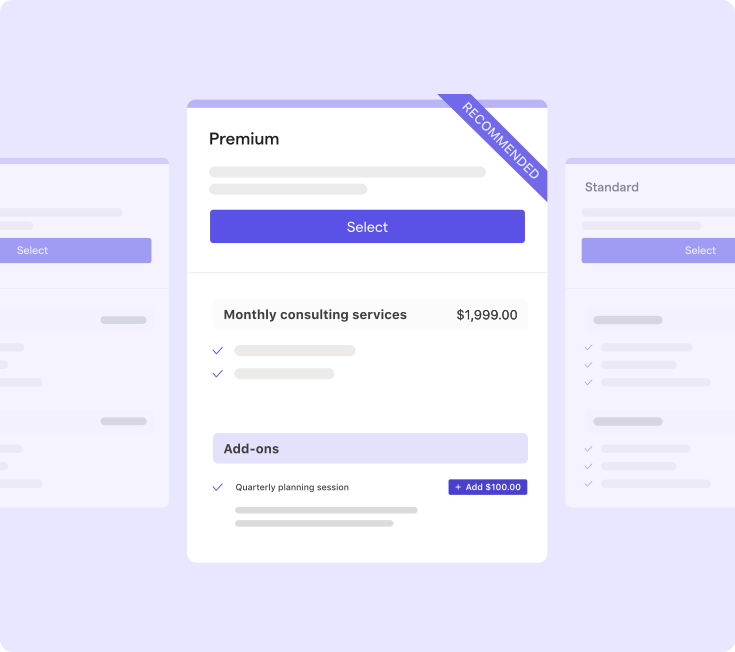
Many firms charge by the hour, but that doesn’t always reflect the work you do or the results clients get. Value-based pricing ties your fees to outcomes, rather than hours worked. Clients pay for results and the value they receive, not time spent. More complex services, like those in CAS, are largely value-based work, and the hours spent on them may not reflect their true value.
Start with a clear, defined scope. In some instances, it might be most prudent to keep advisory work separate from compliance tasks so everyone understands what’s included. Tiered packages work well here—such as a monthly check-in for some clients and full strategy sessions for others—while helping protect your margins.
Being upfront about scope also reduces billing questions and sets clearer expectations.
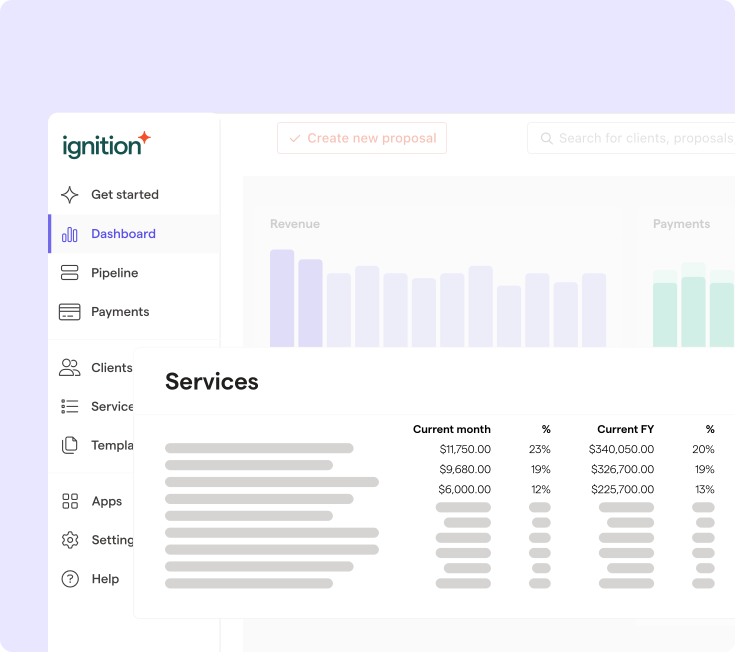
Platforms like Ignition make pricing and packaging advisory services easier. Ignition’s AI-powered Price Insights shows how services are performing, highlights underpriced work, and surfaces opportunities to refine packages, optimize pricing, or expand services. It also helps prevent scope creep (e.g., extra reports or ad hoc analysis) and makes it easier to align pricing with measurable outcomes, such as improved cash flow or stronger business performance.
5. Automate agreements, invoicing, and payments
Managing proposals, client engagements, and invoices by hand can take a surprising amount of time and slow down cash flow. Tracking signatures and following up on unpaid invoices pulls your team away from higher-value advisory work.
Bringing these steps into a single platform simplifies the process. Firms that automate these tasks report collecting the majority of payments automatically, with little need for accounts receivable. This consistency keeps cash flowing and reduces manual follow-ups.
Automation also frees your team to focus on client relationships. Ignition’s platform manages the full client lifecycle, from proposals to payments, in one place, all while integrating with most apps in an accounting firm’s tech stack.
With Ignition, each client engagement starts with clear terms and automatic billing, so invoices go out on time and payments arrive as expected. That reliability gives your team more capacity to focus on strategic guidance and growth opportunities.
6. Build a dedicated CAS team and upskill continuously
Advisory work is most effective when staff are focused on it full-time. It’s harder to deliver consistent guidance and build deep expertise when your team splits time between compliance and advisory.
A dedicated CAS team lets your staff build closer relationships with clients and handle more complex financial challenges. Invest in ongoing training to keep your team confident and capable. This includes both technical skills (forecasting, tax planning, cash flow management) and soft skills (proactive communication and empathetic listening).
Cross-training is also a smart move. It helps maintain coverage without losing specialization, so clients still receive knowledgeable support even during absences or transitions.
7. Leverage real-time data for proactive insights
Your accounting advisory work delivers the most value when you have timely financial data. Catching cash flow gaps, cost overruns, or performance risks early lets you guide business owners before they grow and help inform better decision-making.
To do that, you need access to real-time financial data and automated financial reporting. These tools put up-to-date numbers at your fingertips, so you can spot trends, highlight opportunities, and flag risks while keeping clients informed.
Rather than relying on scheduled check-ins, tie conversations to data triggers. This makes outreach more relevant and positions your firm as a trusted partner.
8. Standardize workflows to curb scope creep
Scope creep can eat into margins when projects expand beyond the original agreement. It puts pressure on your team and makes deadlines harder to meet.
Clear service packages with defined deliverables create boundaries everyone can rely on. For example, a firm might offer monthly bookkeeping with no additional reports, or standard dashboard reporting without custom analyses.
Change-order processes built into agreements make it easier to manage additional work. Platforms like Ignition can trigger automatic billing for out-of-scope services, ensuring you get paid fairly without awkward conversations.
Take control of scope creep
Streamline workflows, automate out-of-scope billing, and protect your margins.
9. Monitor feedback and refine service packages
Regular feedback helps you understand what’s working and where gaps exist. Surveys, check-ins, and engagement reviews can highlight which services deliver the most value. For example, clients may ask for more frequent cash flow forecasting or simpler dashboard reports.
Reviewing this input over time helps you refine your offerings with more precision. You might retire underused services or introduce new ones based on client demand and evolving needs.
Revisiting your service packages every year keeps them relevant. It helps your team focus on what matters most and creates opportunities to introduce services that drive meaningful results.
Technology foundations for scalable CAS delivery
Choosing the right CAS tech stack helps your team serve more clients without adding extra hours. With key information readily available, your team can focus on insights instead of chasing details.
These foundational tools support consistent, scalable advisory delivery, allowing your team to spend less time on manual work and more time guiding clients.
Integrated practice management and accounting tools
Selecting practice management software that connects directly to your accounting system keeps everything flowing smoothly. Your team avoids duplicate entries and works with accurate, up-to-date information.
These systems make real-time reporting more accessible. Advisors can identify trends, monitor performance, and deliver timely recommendations, helping clients feel confident in your guidance.
Strong integrations also reduce errors that can slow workflows or create frustration, such as mismatched invoices or missing client data. Flexible API capabilities matter as well. They allow your tech stack to grow with your business, supporting the adoption of new technology without disrupting existing processes.
Agreement and payment automation platforms
Manually sending contracts and chasing payment details can slow onboarding and delay revenue. It also takes time away from advisory work.
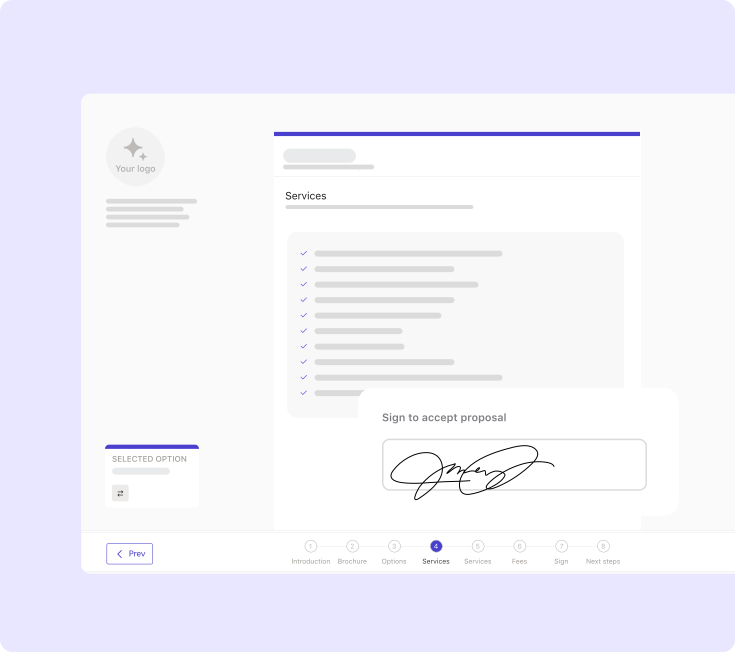
Using a platform that combines proposals, contracts, e-signatures, and payment collection streamlines the process. With Ignition, you can send proposals, capture signatures, and collect payment details upfront in a single workflow.
Ignition also supports bulk renewals and automatic price increases, so you don’t have to worry about missed payments or delays during contract updates. The platform integrates with your accounting and practice management tools, keeping all your data connected and your workflows seamless.
Analytics and KPI dashboards
Tracking engagement, revenue per client, and service usage reveals patterns over time. You might notice one service is used more than expected, or a client’s engagement begins to drop. Dashboards bring this into focus, showing which services drive profitability and where attention is needed.
This visibility supports more data-driven decisions. It becomes easier to adjust pricing and prioritize where your team’s time will have the most impact, so you’re working from real data instead of guesswork.
A quick weekly review keeps your data current, allowing you to catch small shifts early and address them before they become larger issues.
Key metrics to track CAS success
It’s easier to improve your advisory work when you can see how it’s performing. A focused set of KPIs gives you a clear picture without unnecessary complexity.
| Metric | What it shows |
| Median revenue per CAS client | How much value each advisory client generates |
| Client retention rate | Whether clients stay engaged over time |
| Advisory vs. compliance revenue | How much your firm is shifting toward higher-value work |
| Average engagement value | The typical size of your advisory relationships |
| Time from proposal to signed agreement | How quickly new work turns into revenue |
These metrics become more useful when tracked consistently. Start with a baseline, then review progress monthly or quarterly to see where things are improving or slipping. Benchmarks from the AICPA/CPA CAS Benchmark Survey can also provide helpful context for how your numbers compare.
Accelerate advisory growth and cash flow with one platform
Building a strong CAS practice comes down to getting a few key elements right: clear scope, consistent pricing, the right team, and systems that support how you deliver advisory work. When these pieces are aligned, growth becomes more predictable and revenue more consistent.
Ignition brings these elements together in one platform. It manages proposals, contracts, billing, and payments in a single workflow, with every engagement starting on clear terms. Payment details are collected upfront, reducing the need to chase invoices. Built-in scope management ensures additional work is billed automatically as client needs evolve. This structure supports the full client lifecycle and frees your team to focus on delivering high-value advisory services.
Simplify CAS growth and cash flow
See how Ignition creates more predictable revenue and a better client experience.
FAQs
-
Yes, advisory engagements require distinct agreements that define scope, deliverables, and pricing separately from compliance work. Platforms like Ignition offer customizable templates to simplify creating and managing multiple engagement types.
-
Small firms can launch advisory services by upskilling existing team members and automating administrative tasks to free up capacity. Start with a focused niche and a few high-potential clients rather than trying to serve everyone at once.
-
Clearly define deliverables and boundaries in written agreements, and build change-order processes that trigger automatic billing for additional work. Ignition enables instant invoicing for out-of-scope requests, helping protect margins without awkward client conversations.