Guide: AI for service descriptions you can actually use



 Copied to clipboard.
Another proposal deadline means rewriting last year's bookkeeping or tax scope language from memory, hoping nothing got left out.
Using AI for service descriptions means using artificial intelligence to turn structured details about deliverables, exclusions, timing, and client responsibilities into client-facing scope language for proposals and engagement letters. It can speed up the first draft, but a professional needs to verify it reflects the engagement.
That gap between speed and accuracy is where firms save hours or create unpaid work. Compare generic AI prompts with platform-built workflows to see which keeps scope tight and billing accurate from the first proposal.
Key takeaways
- AI for service descriptions can help firms draft clear scope language faster, which may reduce the time spent building proposals and engagement letters.
- Vague service descriptions often lead to scope creep, inconsistent client expectations, and unbilled work, so clarity at the proposal stage matters.
- The strongest AI for service descriptions starts with structured inputs like deliverables, exclusions, frequency, and client responsibilities, rather than a generic prompt alone.
- AI can support first drafts, but professional judgment is still needed to review accuracy, refine tone, and confirm the scope reflects the engagement.
- Purpose-built AI for service descriptions has more value when it lives inside a platform like Ignition, where approved scope can connect directly to billing and payments.
What a service description is (and why it matters more than you think)
A service description is the client-facing source of truth that connects promised work to pricing, delivery expectations, and the accepted engagement.
It's not marketing copy meant to sell the relationship, nor is it an internal task list for staff. It's the specific language a client reads and agrees to before any invoice goes out.
That language sits inside the proposal and carries into the engagement letter, where it becomes the accepted scope. From there, it anchors recurring billing, gives staff a reference point for client questions, and sets the baseline for any future scope-change conversations.
The cost of vague service descriptions
Vague service descriptions create unpaid work, slower approvals, and harder billing conversations because the firm and client lack a shared boundary for the engagement. A broad, undefined label leaves staff guessing and clients assuming, which erodes scope control and revenue predictability at once. Explicit deliverables and boundaries give everyone a shared reference before work starts rather than after a dispute.
Scope creep starts with unclear language
Unclear language causes scope creep when deliverables, limits, response times, or exclusions are left open to interpretation before any work begins. A one-line entry like "monthly bookkeeping" reads as complete but says nothing about what falls outside it.
Take a new bookkeeping client whose books are 12 months behind. Nothing in the original scope excludes historical cleanup, so the client assumes it's included, and hours of unpaid catch-up work land on your team before recurring billing even starts.
The missing boundary was a stated cutoff: current-period work only, with historical cleanup priced separately. Before drafting anything with AI, pull your recurring service descriptions and flag every line that doesn't name its limits, similar to how getting engaged before advisory work begins protects both sides.
Inconsistency across staff and clients
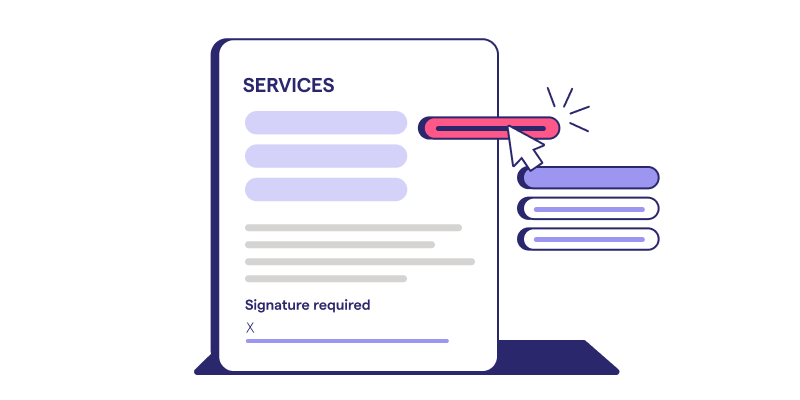
Inconsistent descriptions of the same service create mixed promises that get harder to control as more staff draft proposals. One team member writes "monthly bookkeeping and reconciliations," another writes "full-service bookkeeping support," and a third writes "bookkeeping, payroll, and light advisory." Each version implies a different scope, deliverable list, and price point, even though the underlying work is identical.
Clients compare notes, especially during renewals or referrals, and the gaps surface as confusion or pushback.
Standardizing one AI-assisted description in a shared service library removes the guesswork. Every proposal, change order, and invoice pulls from the same approved language, so pricing and packaging stay consistent no matter who builds the quote.
How AI fits into writing service descriptions
AI is best-suited as a drafting assistant that quickly organizes scope details while leaving accuracy, risk, and engagement decisions to the professional. That's different from AI handling client-facing customer service; here, the output still needs a firm's sign-off before it reaches a proposal. Adoption is accelerating, with AI use among tax firms nearly doubling in one year.
What AI does well: Drafting structured scope language fast
AI is effective at turning concise details about recurring work into a structured first draft with clearer deliverables, timing, limits, and client tasks. Feed it a service name, cadence, and a few boundaries, and it returns organized scope language much faster than writing from scratch.
Before: "Monthly bookkeeping services."
After: "Monthly bank and credit card reconciliations for up to two accounts, delivered by the 10th business day, based on records the client uploads by the 5th. Excludes historical cleanup and payroll processing."
Compare the two versions and ask whether the deliverables and boundaries are easier to identify. The draft adds speed and completeness, while professional judgment about what belongs in the engagement remains the reviewer's responsibility.
What still requires your professional judgment
A professional must verify every AI-generated description for accuracy, boundaries, tone, and risk before it reaches a client. An ICAS study confirms AI cannot replace human judgment in accounting, which makes review mandatory rather than optional polish.
Run each draft through a checklist before approval: verify that every deliverable matches what was sold, test the stated exclusions against real client requests, confirm that timing and dependencies are accurate, strip out unsupported promises or tax and compliance language that AI shouldn't generate, and sign off on the final wording yourself.
This step protects client trust and shields the firm from liability tied to language nobody approved.
How to write better service descriptions using AI
Better AI-generated service descriptions come from a repeatable three-step process: supply the service name and core deliverables, define what's included and excluded, then specify frequency, format, assumptions, and client responsibilities before approving a draft.
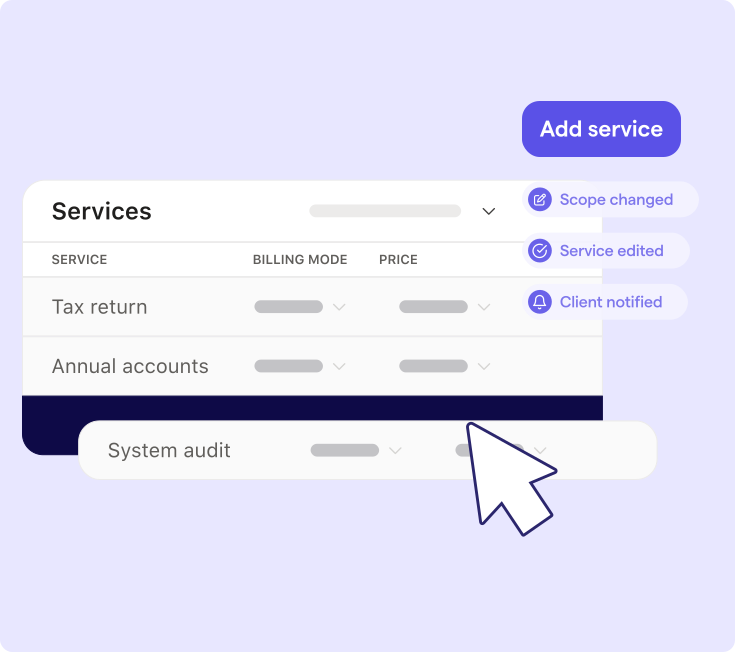
Apply this in any AI tool for bookkeeping, tax, payroll, advisory, or agency proposals. Ignition has AI-powered service descriptions built directly into its proposal builder. The "Suggest description" feature drafts scope language the moment a service name is entered, so the result stays inside the workflow where it gets reviewed, approved, and sent.
Start with the service name and core deliverables
The strongest first draft starts with a specific service name and concrete deliverables, because those two inputs stop AI from defaulting to generic promises like "support" or "assistance."
Feed three things into the prompt, in order: the exact service name, the deliverables the client receives, and the outcome stated plainly.
A sample prompt for monthly bookkeeping might read: "Monthly bookkeeping: reconcile bank and credit card accounts, deliver a profit-and-loss statement and balance sheet by the 10th, and categorize transactions weekly. Outcome: accurate books ready for tax filing."
Named outputs replace vague labels every time.
This same discipline carries into client-facing scope language, the way a marketing agency client agreement names each line item rather than bundling work under one broad heading.
Inside Ignition, the "Suggest description" feature can generate a first draft the moment a service name is entered, so writing a unique prompt from scratch usually isn't necessary.
AI-powered service descriptions, built into your proposals
Ignition's AI drafts scope language inside your proposal builder and connects it directly to billing and payments.
Define what is and is not included
An AI-generated description sets stronger boundaries when inclusions, exclusions, and measurable limits appear as separate, explicit lines rather than one blended paragraph. Ask the AI draft to list what's covered, then list what's excluded, so each boundary can be checked on its own.
Add caps wherever the work could reasonably expand: a transaction count for bookkeeping, a filing count for tax, and a meeting limit for advisory calls. Ignition's service framework of deliverables, timeframe, and limitations is built for this, giving cleanup work, amended filings, and extra meetings a defined home outside the base scope.
Test the draft by asking a single question: Would a staff member and the client reach the same conclusion about a borderline request? If the answer isn't an obvious yes, the boundary needs sharper language before it reaches a proposal.
Specify frequency, format, and client responsibilities
A usable AI draft must state cadence, delivery format, turnaround assumptions, and client responsibilities so timing and ownership are clear before billing begins. For a recurring accounting service, prompt the AI to state that reports are delivered monthly by the 10th, sent as a PDF through the client portal, and based on records the client submits by the 5th.
Late records shift everything downstream. If the client sends receipts or approvals after the deadline, the delivery date moves too, and that dependency needs to appear in the description itself.
Generic AI prompts skip this unless told to include it. Type "monthly" alone and the draft won't mention who owes what, or by when.
Why purpose-built AI outperforms generic tools for this job
Purpose-built AI delivers more workflow value than a generic chatbot because the draft lives inside the same system that turns approved scope into a proposal, agreement, and invoice.
Generic AI tools | Ignition | |
| Where the draft lives | Separate window, outside the proposal workflow | Inside the proposal builder, tied to the client record |
| Getting scope into a proposal | Manual copy-paste | Flows directly, no copy-paste step |
| Connection to billing | None — scope and billing are disconnected | Approved scope carries into billing schedules and payment collection automatically |
| Version history | Not tracked; drafts live in chat history, separate from the client record | Tied to the client record alongside the proposal |
| Consistency across staff | Depends on each person's prompt | Same service framework (deliverables, timeframe, limitations) every time |
| Professional review | Still required | Still required |
A generic tool requires typing a prompt into a separate window, copying the result, and pasting it into a proposal, disconnected from version history and billing once scope is approved. Ignition's Suggest description feature drafts inside the proposal builder, keeps that language tied to the client record, and carries it straight into e-signature, billing schedules, and payment collection.
That connection matters more than model quality alone. According to research on AI value levers, proactive use of AI for standardized scope can outperform passive experimentation, particularly when descriptions feed directly into billing and payments. Integration builds consistency, but a professional still reviews every draft before it reaches a client, as part of broader investment strategies for firm growth.
Stop writing service descriptions from scratch every time
Service descriptions don't have to be rebuilt from scratch every time. A tighter drafting process closes the gaps that let scope quietly drift. A recurring engagement that expands until nobody remembers what was originally promised is the type of drift this process prevents. AI-assisted service descriptions won't stop every ambiguous request, but they give proposals a consistent baseline to fall back on, so the review process relies on judgment rather than memory.
Next time a scope conversation starts feeling fuzzy, draft the service description first, then negotiate around it. That single habit protects more revenue than any clause added after the fact.
Ignition keeps that habit easy to maintain, since the same platform that generates those descriptions also handles the subsequent proposal, e-signature, billing, and payment collection. The workflow stays in one tool, keeping context intact between steps.
Stop rewriting the same scope language from memory
Frequently asked questions
-
A service description is the client-facing scope language that explains what work will be delivered, how often it will happen, and what the client can expect. In a proposal or engagement letter, it creates a shared reference point that can reduce misunderstandings, support consistent pricing, and make handoffs across the team clearer.
-
Yes, AI can produce a strong first draft when it receives specific details about the service name, deliverables, exclusions, timing, and client responsibilities. A professional must still review the draft for accuracy, risk, tone, and alignment with the firm's actual delivery process before it reaches a client.
-
A useful AI-generated service description should include the service name, core deliverables, inclusions, exclusions, frequency, delivery format, timelines, assumptions, and client responsibilities. These details keep delivery, billing, and expectations aligned and make the scope easier for both staff and clients to review.
-
Clear service descriptions help prevent scope creep by documenting boundaries before work begins. When deliverables, limits, exclusions, timing, and client responsibilities are explicit, teams can identify extra requests sooner and discuss additional fees or scope changes with less friction.
-
The best option for most service-based firms is an AI capability that works inside the proposal workflow where the description will be reviewed, approved, and used. A platform-native option can reduce copy-pasting and version issues while connecting approved scope to agreements, billing, and payments, although every draft still requires professional review.