What solo bookkeepers need to grow beyond solo capacity


 Copied to clipboard.
A solo bookkeeper juggling dozens of clients in spreadsheets may have plenty of demand, but still lose a prospect because sending the proposal takes too long. Growing a bookkeeping business beyond solo capacity means standardizing pricing and connecting proposals, engagement letters, billing, and payment collection so client volume can increase without the same increase in administrative work.
For established bookkeepers, growth is no longer about writing a business plan or earning another certification. It’s about creating a repeatable system that helps you package services profitably, move clients from quote to first payment faster, and keep billing accurate as volume rises.
Key takeaways
- Disconnected proposal, contract, and billing tools create administrative drag as a bookkeeping business adds clients.
- Tiered retainer packages built around client complexity may create more predictable revenue than flat hourly or one-size-fits-all pricing.
- Faster turnaround from quote to signed proposal can help win more bookkeeping clients than simply generating more leads.
- Collecting payment details at the proposal stage and triggering billing from a signed engagement letter helps reduce payment chasing.
- Automated recurring, variable, and payroll-linked billing supports bookkeeping businesses scaling to higher client volumes without the same increase in manual work.
Where bookkeeping growth stalls today
Growth stalls when disconnected proposal, agreement, and billing processes consume the capacity that should support additional clients. IRS guidance for self-employed individuals outlines ongoing tax obligations, reinforcing why accurate, well-managed financial records matter for every client you serve.
Each administrative handoff adds follow-ups and manual work. These delays limit how many clients one bookkeeper can serve efficiently, even when demand is strong.
Why disconnected tools slow down scaling
Juggling Word-built proposals, email contracts, and separate billing tools creates repeated handoffs and opportunities for signed work to go unbilled.
A proposal built in Word becomes an email attachment, then a contract requiring another follow-up. After signature, you have to re-enter client details and agreed fees into a separate billing tool. Each handoff adds admin work and creates another place for something to slip through.
The 2026 Intuit QuickBooks Accountant Technology Survey found that accountants lose approximately five hours per week moving, re-entering, or reconciling information across tools. One connected Ignition workflow replaces those fragmented steps: the proposal captures the agreement, signature, and payment authorization, then triggers billing automatically. Less time moving information between tools means more capacity for actual client work.
Package pricing for predictable, scalable revenue
Tiered retainer packages can create more predictable revenue and reduce the underpricing that limits growth. Organize services into basic and growth packages, with an advisory add-on for clients who need more support.
Start with a service inventory before setting package prices. List every recurring task, how often it occurs, and the level of review each client requires. Separate essential bookkeeping work from higher-value reporting and advisory support, then define the conditions that move a client into a higher package.
Document those conditions in the proposal so clients understand how their fees connect to the work involved. Clear package boundaries also make pricing easier to explain and apply consistently across your client roster.
Build tiered retainer packages by client complexity
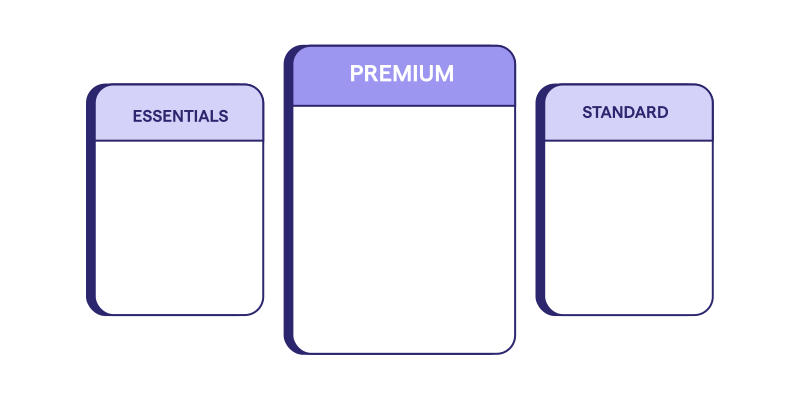
Bookkeeping retainers should reflect transaction volume, entity complexity, and reporting needs. Start by reviewing monthly transaction volume, then assess the number of entities and accounts involved. From there, identify the financial reports and level of support each client needs.
A basic tier may cover lower transaction volumes, simpler entities, and standard monthly bookkeeping. A growth tier supports higher volumes, more complex structures, and more frequent reporting. Add an advisory option for clients who need deeper analysis and decision support.
Reporting requirements help explain why higher-complexity clients belong in higher tiers. Small businesses rely on profit and loss statements to understand revenue and expenses, balance sheets to track assets and liabilities, and cash flow statements to monitor available cash. Producing, reviewing, and explaining those reports requires more work than recording transactions alone.
Avoid margin loss from scope creep
Scope creep is unplanned work outside the agreed package that quietly erodes margins when it goes unpriced. Clear proposal scope and immediate billing for extra work help prevent that loss.
Ignition Proposals lets you document each included service, deliverable, and responsibility before work begins, giving you a clear service boundary to reference when a client asks for something extra.
Instant Bill lets you charge for ad hoc or out-of-scope work without creating a new proposal. Extra work stays visible, billable, and protected.
Protect your margin from unpriced work.
See how scope creep affects agency pricing and cash flow.
Win clients faster with streamlined proposals
Faster proposal and onboarding turnaround helps solo bookkeepers convert qualified prospects before slow administrative follow-up costs them the work. When you're managing a full client roster, a delayed proposal gives a ready prospect time to move on.
Ignition Proposals creates a connected path from a branded online proposal to e-signature and payment authorization. Once the client accepts, billing can start automatically without a separate handoff between agreement and payment.
Cut turnaround time from quote to signature
A branded online proposal with built-in e-signature can move a qualified prospect from quote to acceptance without a week of document and email back-and-forth. Instead of revising Word files and tracking email attachments, you can send an Ignition proposal for same-day digital acceptance.
Clients get one place to review service packages, choose an option, and sign. That consistent process also helps you build healthy client relationships through clarity from the beginning.
Collect payment details at the proposal stage
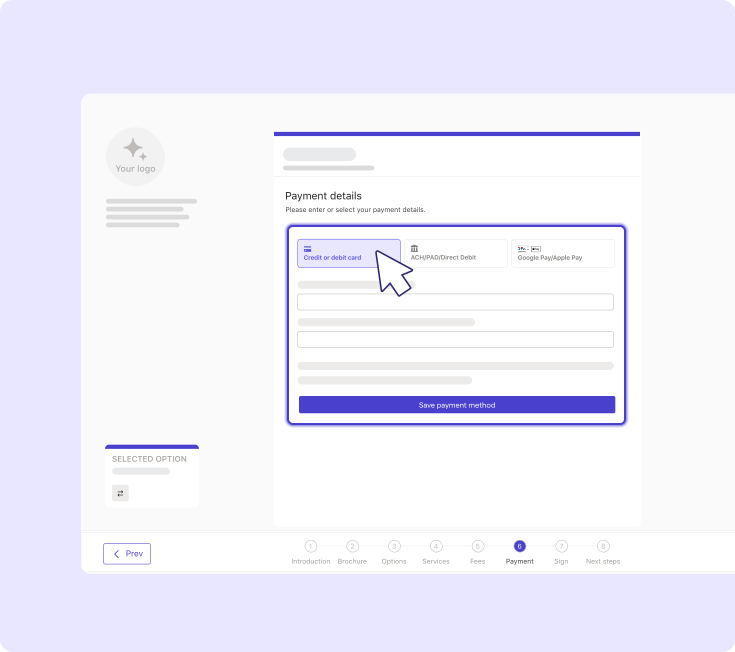
Collecting card or bank details when the client signs keeps payment setup from becoming a separate onboarding delay. Billing can start without another email or form.
With Ignition Proposals, the client reviews the service package, signs digitally, and authorizes payment in one online workflow. The accepted proposal then enters the billing workflow automatically.
The result is a smoother client experience and recurring billing that stays connected to the services the client actually accepted.
Trigger billing automatically from a signed letter
A signed engagement letter should trigger billing automatically rather than requiring a separate manual invoicing step. Ignition connects Contracts & Engagement Letters with billing and payments so the accepted terms can flow directly into billing.
Standalone contract tools often stop at e-signature, leaving you to transfer client and billing information manually. Closing that gap becomes more important as client volume grows.
Combine niche positioning with referral partnerships
A defined niche paired with complementary referral partners can produce more qualified prospects than broad marketing built around generic bookkeeping services.
Accountants, tax professionals, and payroll providers can refer clients whose needs match your niche and packages. Give each partner a clear summary of the clients you serve, the problems you solve, and the services included. These relationships can support a wider strategy for marketing advisory services to clients.
When a referral arrives, send the matching package through Ignition Proposals instead of rebuilding a proposal from scratch in Word. Standardized niche packages keep scope and pricing consistent, while built-in e-signature helps the prospect accept without extra email exchanges.
Make referrals easier by giving partners a simple description of your ideal client, including the business type, common bookkeeping challenges, and the point at which your services become a good fit. Review referral quality regularly to identify the partnerships producing clients who match your packages and arrive with clear expectations.
Scale billing and compliance at volume
Bookkeeping businesses managing mixed retainers and variable fees at scale need automated billing rather than spreadsheets. Connected workflows protect cash flow and keep each client's billing aligned with their agreement. Two workflows become especially important: automated billing calculations and efficient engagement letter renewals.
The Xero 2025 State of the Industry Report found that 56% of surveyed practices added clients through enhanced operational efficiency and expanded service offerings, driven partly by technology and a greater focus on client relationships.
Automate recurring, variable, and payroll-linked billing
Mixed recurring and payroll-linked fees need automated calculation rather than manual spreadsheets. Smart Billing automates variable and payroll-linked charges, while AutoPricing helps you apply systematic price increases across multiple clients. Removing that administrative work creates more capacity to grow your solo bookkeeping practice.
Smart Billing connects with Gusto, Xero, and QuickBooks Online to calculate variable charges using current data such as payroll, headcount, or usage. This keeps variable billing connected to client agreements rather than notes in a spreadsheet.
Before automating billing, separate fixed recurring fees, variable charges, project fees, and ad hoc work so each follows the right process. Check that every billing rule matches the signed client agreement, and use the Billing Hub to review upcoming invoices and identify missing details before they cause delays.
Bulk send and renew letters at tax season
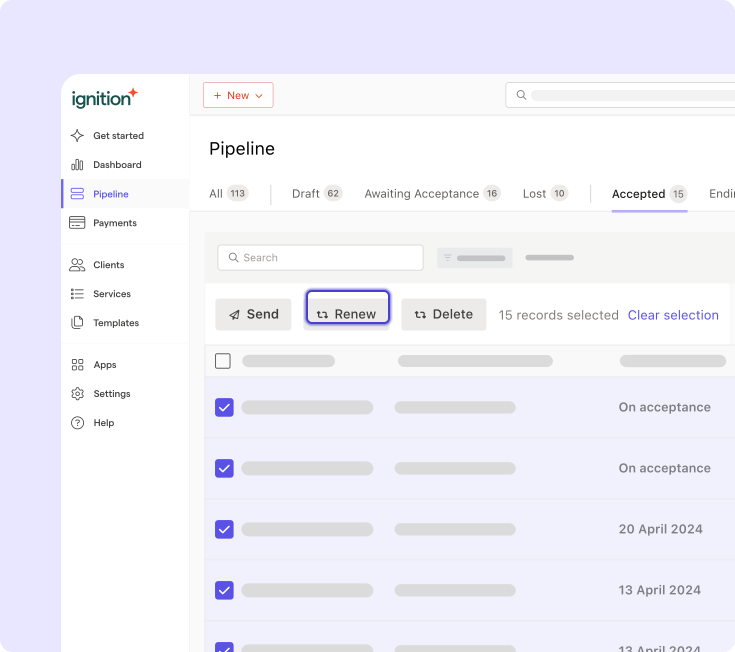
Bulk-sending standardized engagement letters before tax season saves high-volume businesses from preparing and chasing 100-plus client renewals individually. Send renewals as one coordinated batch, then track outstanding signatures from a central place.
Contracts & Engagement Letters provides pre-built templates, bulk delivery, and e-signatures to standardize this workflow. Update the approved template, select the relevant clients, and send the renewals together. This repeatable process supports scaling your accounting practice without multiplying document preparation and follow-up emails.
Clear engagement terms create consistency before seasonal work starts. Confirm the scope, fees, billing schedule, and client responsibilities in every template. Firms should also consult the relevant professional obligations in the ICAEW Code of Ethics.
Build processes you can delegate
Delegation works best after recurring tasks have clear steps, owners, and quality checks. Document the work before handing it off so someone else can complete it consistently.
Start with repeatable administrative tasks that don't depend heavily on your judgment. Proposal preparation, signature follow-up, billing reviews, and routine client requests are good places to identify where support could create capacity.
Track which tasks still require manual intervention after automation. Those remaining tasks can help you determine whether you need administrative support, additional bookkeeping capacity, or more senior client service skills. A simple handoff document outlining the trigger, required information, completion standard, and review point gives a new team member a consistent process to follow.
Make bookkeeping growth automatic, not exhausting
Growth compounds when proposals, billing, and payments run on autopilot, freeing you to serve more clients instead of spending limited hours managing signatures, invoices, and overdue balances.
Map packaged pricing, proposals, signed engagement letters, billing, and payment collection as one connected workflow instead of relying on disconnected tools or longer workdays.
Ignition connects the path from proposal to payment, reducing admin handoffs that slow growth. With those systems in place, you can add clients and revenue without adding the same amount of manual work.
Grow capacity without adding overload.
See how Ignition removes the administrative handoffs slowing down your practice.
Frequently asked questions
-
Most solo bookkeepers hit a capacity ceiling between 20 and 40 clients once manual proposal, invoicing, and reminder work consumes most of the week. That ceiling has less to do with skill and more to do with disconnected tools eating into billable hours. Automating proposals and recurring billing can raise that ceiling significantly without adding headcount.
-
A scaling bookkeeping business generally needs a proposal tool, an engagement letter system, and billing that syncs with Xero or QuickBooks Online. Running these as separate spreadsheets or standalone apps creates gaps where signed work goes unbilled or renewals get missed. Ignition combines all three into one workflow, so growth doesn't require juggling additional software.
-
Remote client relationships have become standard for growing bookkeeping businesses, since cloud accounting platforms already remove the need for in-person meetings. What matters more than location is whether onboarding, signing, and payment collection can happen entirely online without delays. A fully digital proposal-to-payment workflow makes remote client growth just as smooth as local growth.
-
A frequent mistake is adding new clients faster than admin systems can support, which leads to inconsistent onboarding and delayed invoicing. Growth that outpaces processes usually shows up first in scope creep and late payments, not in client dissatisfaction. Standardizing packages and automating billing before pursuing rapid client growth helps protect margins as volume increases.
-
Raising prices is typically overdue when a client's transaction volume, complexity, or scope has grown since the original engagement, but fees stayed flat. Reviewing engagement letters annually is a practical trigger point for revisiting fees across an entire client base. AutoPricing lets businesses apply systematic increases at renewal, removing the awkwardness of one-off pricing conversations.