How can accountants communicate value before raising fees?



 Copied to clipboard.
You've had a renewal email sitting unsent for weeks, knowing the fee no longer matches the workload and that the client will ask, “Why now?”
Knowing how to communicate value as an accountant means connecting your services to outcomes clients understand, then documenting the scope, benefits, and fee clearly before any price change. That framing lets clients judge a fee by its impact on their business, not by hours logged.
Build that habit into proposals, pricing data, and renewal conversations, and every fee increase can feel backed by evidence, not nerve.
Key takeaways
- Clear value communication helps clients connect accounting fees to business outcomes, not just time spent or tasks completed.
- Price increase conversations can feel fairer when accounting firms explain the reason, show added value, and avoid apologizing for sustainable fees.
- Strong proposals and engagement letters help accountants define scope, prevent scope creep, and make pricing easier for clients to understand.
- Data-backed pricing can give firm owners and new team members a more consistent way to explain fees with confidence.
- AI Price Insights can support value conversations by showing how a firm's pricing compares to peers within the proposal workflow.
Why value conversations feel so hard for accountants
Value conversations feel difficult because clients see the fee before they see the avoided risk, saved time, or better decisions behind it. Delivering great work and communicating that work are two different things. Discussing prices can put you on edge largely because of that gap.
Generic advice to “show your value” only goes so far. Accountants need a practical system for communicating value through proposals, engagement letters, renewals, and pricing benchmarks.
Open your last renewal email. Does it describe outcomes, or just list tasks and totals?

What price fairness psychology reveals about client pushback
Clients are more likely to accept a fee increase when the reason is clear, the value is visible, and the message sounds confident. An unexplained increase can feel arbitrary, so the client's first instinct may be to question it rather than assess it.
An apology-heavy notice, such as "We're so sorry, but unfortunately we have to raise fees," signals doubt and invites negotiation. A factual version, such as "Starting next month, fees reflect expanded advisory support and rising delivery costs," gives the client something concrete to evaluate.
Before sending any increase notice, remove unnecessary apologies, then confirm the message names both the reason for the change and the value the client keeps or gains.
The hidden cost of staying quiet about your value
Staying quiet about the value you deliver can lead to delayed fee increases, unbilled work, write-offs, weaker cash flow, unrecovered costs. Silence trains clients to judge the relationship mainly on price because the fee is the signal they consistently see.
The pattern is easy to recognize. Renewal conversations get pushed back another quarter while fees stay flat and wages and technology costs climb. Extra requests get done for free instead of scoped and billed, and write-offs quietly pile up heading into renewal season.
Partners end up absorbing the difference by working longer hours to cover margin the business never billed for.
See what silence costs
Check the 2025 Agency Pricing and Cash Flow Report for data on pricing and cash flow challenges.
Make your proposal and engagement letter do the talking
A proposal communicates value before the client reaches the fee line by connecting their needs to defined outcomes, scope, and change terms. That turns the document into a value-communication tool rather than paperwork for signatures.
Proposals and engagement letters can also discuss price upfront alongside outcomes and boundaries.
Pull up your current proposal template and check the order. Needs, outcomes, scope, and change terms belong before or beside the price, not buried after it.
Scope work clearly to prevent scope creep disputes
Clear scope prevents disputes by defining included work and requiring approval before the business delivers anything extra. When a client sees "additional work" spelled out in writing, there's less ambiguity about what's covered and what isn't.
Say a monthly bookkeeping client asks for a one-time payroll cleanup mid-engagement. Without a documented scope, that request can look like a reasonable add-on to existing work. With exclusions written into the agreement, it's clearly a separate project requiring its own approval and price.
Written change terms create that approval path: The client requests the extra work, the accountant identifies it as outside the signed scope, and pricing is confirmed before work starts.
Add an out-of-scope and change-approval clause to every recurring service agreement before the next request lands.
Frame fees around outcomes clients care about
Accountants can make fees easier to understand by connecting each service to outcomes such as fewer surprises, stronger cash flow, cleaner decisions, or less administrative work. Clients can grasp an outcome faster than a task list, especially when a fee changes and they're asking what they're paying for.
Translate the work using a three-part sequence:
- Name the task
- Identify the problem it solves
- State the outcome
Bank reconciliation becomes fewer month-end surprises. Quarterly tax planning becomes fewer year-end shocks. Cash flow forecasting becomes clearer decisions about hiring or spending, without promising a specific result.
Pull three current service descriptions and rewrite them this way. This guide to pricing and packaging services shows how to structure the language.
How to talk about a price increase without losing the client
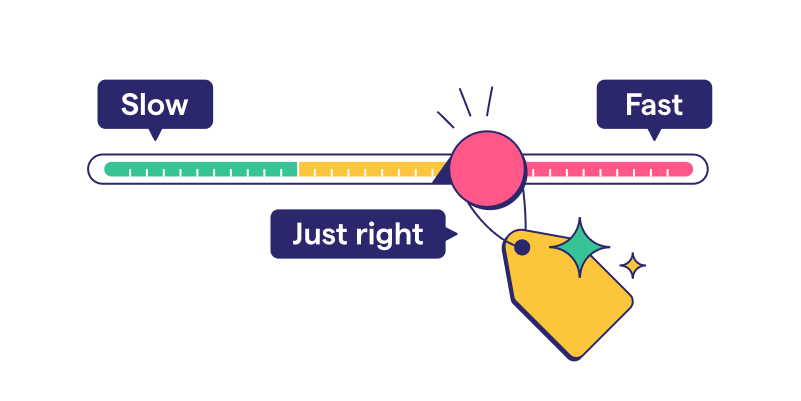
A price increase is easier for a client to assess when the accountant:
- Acknowledges the change.
- Explains the reason.
- Names the client benefit or value being maintained.
- States the new fee clearly.
For example: "Starting next month, your monthly fee is moving to $650 to reflect the expanded reporting and support you rely on."
Objective data makes that sequence even stronger.
Lead with data, not apology
Accountants can make a fee increase more defensible by presenting market benchmarks, documented scope changes, and rising delivery costs before discussing a concession. That evidence shifts the conversation from personal discomfort to an objective business decision.
Facts give the client information to assess instead of leaving them to react to the tone of the message.
Build that case in this order:
- Review market benchmarks for accounting firms offering similar services.
- Document any changes in scope or service delivery since the last renewal.
- Identify rising delivery costs, such as wages and technology.
- Present those facts to the client before discussing any concession.
Sequence matters here: data first, discussion second. For email templates and a full implementation walkthrough, use this guide to communicating a price increase.
Pricing new advisory and AI-enabled services with confidence
New advisory and AI-enabled services need clear pricing language before clients can understand their value. Frame them around the decisions and outcomes they improve, not the reports or production tasks they add.
For a closer look at value-based, fixed-fee, and hourly approaches, review this pricing model guidance.
Give new team members a defensible pricing framework
New team members need pricing guardrails rather than permission to guess under pressure. A set framework can help them evaluate service type, client complexity, expected outcomes, peer benchmarks, and renewal timing consistently, reducing the risk of underpricing complex clients or overpricing simpler engagements.
Walk through the framework in this order:
- Identify the service type.
- Assess client complexity.
- Define expected outcomes.
- Check peer benchmarks.
- Consider renewal timing.
Document this sequence in the firm's onboarding materials and pricing policy, not a partner's memory. That way, whoever handles a renewal conversation next quarter applies the same five factors a founding partner would.
How AI Price Insights takes the guesswork out of value conversations
AI Price Insights makes value conversations more defensible by turning real Ignition billing data into personalized recommendations built directly into the proposal and renewal workflow. Instead of guessing at a fee increase or defending a number based on gut feel, you get a benchmark tied to your own client base.
The recommendations draw on data from more than 8,500 Ignition customers, rather than a generic industry survey with broad ranges. Data-backed benchmarks replace guesswork with a market reference, giving you context for how your pricing compares with similar services.
Putting it to work follows a straightforward flow:
- Review the personalized benchmark for the client or service in question.
- Evaluate the recommendation against the scope, complexity, and history of that engagement.
- Apply the increase directly inside the proposal or renewal you're already sending.
- Use AutoPricing to carry the new figure through at renewal instead of rebuilding a spreadsheet every cycle.
That last step matters as much as the benchmark itself. A defensible number is only useful if applying it doesn't require manual updates across every client file.
AutoPricing removes that friction, so the recommendation from AI Price Insights can become the fee on the renewal without a separate administrative project.
See AI Price Insights in action
Explore how the feature surfaces benchmarks and connects directly to your existing proposals.
Turn pricing confidence into your firm's competitive advantage
Communicating value is an operational habit, not a one-off renewal script. It means reviewing scope regularly, identifying where work has grown, and using current pricing data instead of counting on last year’s invoice.
Before the next renewal, pull up the scope for a client whose workload has quietly increased and compare it with current benchmarks.
Ignition's AI Price Insights shows how a service compares with peer pricing, while AutoPricing helps carry those changes into future renewals without rebuilding the process each time.
Consistent scope, clear proposals, and benchmark-backed renewals can protect revenue while making pricing easier to explain. Put that process into the workflow with Ignition.
Price every renewal with confidence
Ignition's AI Price Insights and AutoPricing turn benchmark data into a consistent approach to renewals.
Frequently asked questions
-
Accounting firms should review client pricing at least annually, ideally before renewal season or any major scope change. Annual reviews give firms time to compare market benchmarks, rising delivery costs, and the actual work required for each client. AI Price Insights can turn that review into a repeatable workflow rather than a one-off pricing project.
-
Accountants should bring the conversation back to scope, responsiveness, risk, and outcomes when a client cites a cheaper provider. A lower fee may exclude advisory time, proactive communication, or clear documentation that helps prevent expensive surprises. Side-by-side service options can show the client what each price includes without immediately discounting the same workload.
-
Accounting firms should reinforce value on invoices with plain service descriptions tied to business benefits, not only task names. For example, a monthly management reporting description can reference cash flow visibility, decision support, and reduced guesswork. Keeping value visible after signing may reduce fee shock when the engagement reaches renewal.
-
Clients tend to understand value when they approve scope changes more readily, ask fewer price-only questions, and connect the firm's services to business outcomes. Proposal questions, renewal objections, and payment delays can reveal where the value story remains unclear. If the same objections recur, revise service descriptions and add clearer outcome examples before the next renewal.
-
Revisit the scope and show where the workload has grown if a long-term client refuses a fair increase. Offer an adjusted service level, such as a smaller package, rather than discounting the same volume of work. This protects the relationship while making clear that continued underpricing isn't sustainable.