How to re-sign clients faster in the renewal process



 Copied to clipboard.
A contract renewal process is the workflow a service firm uses to review an expiring client agreement, update its scope and pricing, obtain a new signature, and activate billing for the next service period before the current agreement ends. Done well, it protects recurring revenue instead of leaving it to chance.
Renewal season shouldn't feel like a scramble through old email threads and Word templates, trying to remember which client agreements expire this month and which ones have already slipped past their date. But that's exactly what can happen when 150 engagement letters are sitting unsigned before tax season without a system to catch them.
The steps ahead show how to build that workflow, set the right cadence for different engagement types, and raise pricing without losing clients along the way.
Key takeaways
- A clear contract renewal process helps service firms protect recurring revenue before client agreements expire or follow-up gets missed.
- Renewals, extensions, and auto-renewals need different workflows because each one affects pricing reviews, scope changes, and client re-signing differently.
- A practical renewal cadence gives Certified Public Accountant (CPA) firms and agencies time to review scope, update pricing, and prepare clients for new terms.
- Automated renewal workflows can support faster re-signing by generating updated proposals before the next service period instead of relying on manual calendar reminders.
- Non-renewal should trigger a clear offboarding process so firms can revoke access, finalize invoices, and archive client records without confusion.
What is the contract renewal process for service firms?
The contract renewal process for service firms moves each expiring agreement through scope review, updated terms, client acceptance, and billing activation before the next service period begins. One person reviews the current agreement against work delivered, contacts the client with updated terms, and confirms signed acceptance before the old period lapses. Once the client accepts, billing should follow the terms of the renewed agreement instead of waiting on manual follow-up.
This sequence applies whether it's a CPA engagement letter, an agency retainer, a project agreement, or time-and-materials work. Each just runs on a different clock.
Assign one owner per agreement type and track status until signature. Learn more about streamlining client renewals to protect recurring revenue.
Renewal vs. extension vs. auto-renewal: What's the difference?
A renewal starts a new service period and can introduce updated pricing or scope. An extension keeps current terms in place longer, while an auto-renewal continues the agreement unless someone intervenes.
Each one calls for a different workflow. A renewal is a natural point for a pricing review and a fresh client signature, an extension generally pushes out the end date, and an auto-renewal may continue without either step unless flagged. An actively re-signed agreement reflects current rates and scope, while an auto-renewed one can carry forward outdated pricing or scope.
Manage renewals at scale.
Get guidance on creating and renewing proposals without losing track of pricing or terms.
Why renewals lapse silently, and what it costs your firm
Renewals lapse silently when no one owns the next action. Weak reminders can let otherwise retainable clients drift away without ever saying they're leaving, while shared inboxes and scattered calendar entries create gaps where dates slip past unnoticed.
This isn't the same as deliberate churn. A client who wanted to continue may simply have never received the correct renewal on time, and that lost revenue was preventable.
Juro’s contract management research points to unclear ownership and manual workflows as common sources of inefficiency, reinforcing the value of a structured renewal process.
Setting a renewal cadence that fits your engagements
A useful renewal cadence fits engagement type, client volume, and pricing review frequency rather than a fixed calendar date. A four-part timeline keeps it manageable, with a review window, client notice, a re-signing deadline, and a billing start date.
Annual engagement letters for CPA and tax practices
CPA and tax firms should renew annual engagement letters before each service period starts, well ahead of the volume that hits during tax season.
Firms with 100 or more clients need standardized templates, a defined owner, and status tracking instead of scattered files and manual follow-up. A contract creator platform can help keep templates consistent and track outstanding agreements.
Work backward from the service start date to set review, notice, and signature deadlines with enough buffer before filing season hits.
Retainer and project agreements for agencies
Agencies should review retainers and project agreements when scope, margin, or revenue stability changes rather than only when a date on the calendar arrives. An annual cycle can work for a stable engagement, but a retainer often needs shorter review windows.
Watch for added deliverables, new channels, workload spikes, or a changed roster of client stakeholders. Any of these can quietly erode margin. An unchanged retainer absorbs the extra channels and deliverables at the original price, while a reviewed agreement reflects the new scope and updated pricing before it renews.
Before generating the renewal proposal, schedule a scope and margin review to confirm the current terms still hold up.
How do you raise pricing at renewal without losing the client?
A price increase is easier to explain when it's tied to delivered value, expanded scope, updated costs, and the natural renewal date. A clear explanation helps clients understand what the new fee covers.
Use a four-step talk track at renewal. First, recap the outcomes delivered over the current term. Second, explain how scope or costs have shifted since signing. Third, state the new fee and the specific package it covers. Fourth, give a clear renewal deadline.
Skip the apology. Present the updated package as an accurate reflection of the work already happening, and let the deadline move the decision forward.
A faster re-signing workflow: From expiring contract to signed renewal
A faster re-signing workflow moves an expiring agreement through six connected stages: expiry tracking, service review, pricing update, proposal send, e-signature, and billing activation.
Each stage hands off to the next without a manual restart, so proposals keep moving instead of sitting in an inbox. Choosing the right contract management system can determine whether that handoff is automated.
Automate the proposal and pricing update before expiration
Automated renewal workflows can reduce rework by reusing existing client and service details and applying updated pricing before the next service period. Ignition's renewal workflow builds on the same logic covered in contract automation, reusing existing details instead of rebuilding agreements from scratch.
The workflow runs in six steps:
- Filter accepted proposals in Pipeline.
- Select the proposals due for renewal.
- Create renewal drafts.
- Review dates, services, billing, and payment requirements.
- Apply the price increase using the price increase modal.
- Send for signature.
Turning on Require Payments captures payment details when the client accepts, so billing can follow the agreed schedule without another payment setup step.
Handle bulk renewals during peak season
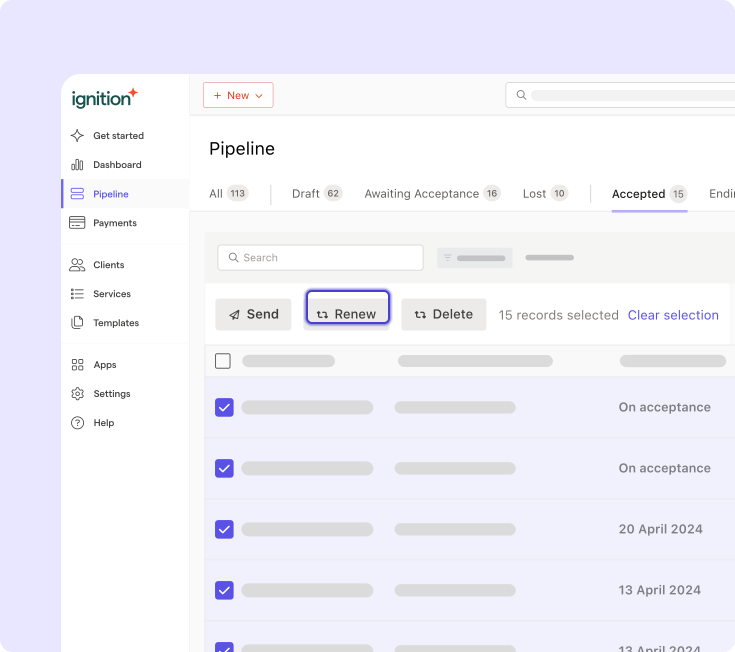
Bulk renewals become manageable by batching clients instead of rebuilding and sending each agreement one at a time. A CPA firm sending more than 100 engagement letters during tax season can't afford to open a fresh document for every client.
Standardized templates reduce the rebuilding work, and segmenting clients by the proposal they should receive keeps pricing and scope accurate across the batch. Ignition's customizable templates let a firm apply consistent language while still tailoring fee schedules to each engagement type.
Status tracking closes the loop. Watching each proposal move from draft to sent to viewed to accepted, with automated reminders following up on outstanding proposals, means no one has to manually chase multiple letters one by one.
What happens when a client doesn't renew?
A client who doesn't renew should move into either a recovery workflow if the renewal was simply missed, or a documented offboarding workflow if the client intends to leave. Start by confirming which one applies through a direct check-in call or follow-up email asking whether the lapse was intentional.
If it's a missed renewal, complete outreach and resend the proposal before treating the account as churned. If it's intentional, skip recovery and move straight to closing out the file.
Either way, record the final service date, stop recurring billing once that date passes, archive the agreement and client records, and log the churn reason. Documenting the reason helps surface patterns in pricing, scope, or service gaps that might otherwise stay invisible.
Why signing a renewal should also trigger billing automatically
A renewal workflow is complete only when billing reflects the signed terms. A signature confirms intent, but revenue only moves when billing catches up to it.
A standalone e-signature tool can stop at the signature and leave everything after it to a manual handoff. Someone still has to update the invoice amount, adjust the payment schedule, and post the change in the accounting system, and each handoff creates another opportunity for pricing to be missed or a service period to start on the wrong date.
Ignition connects accepted proposals to billing and payment collection, with integrations for Xero and QuickBooks. Once a client accepts updated pricing, billing can follow the agreed service and payment setup without requiring the same information to be entered again.
Audit what happens right now after a client signs. Every manual step between signature and invoice is a point where revenue can be delayed or misstated.
Turn renewal season into a revenue protection system with Ignition
A renewal that slips through the cracks rarely announces itself until the revenue is already gone. That's the cost of treating renewal management as a once-a-year scramble instead of a connected process for review, pricing, acceptance, billing, and payment.
Start by pulling up your next batch of renewals and identifying any gaps between updated pricing and an accepted, billed agreement. Those are the points where recurring revenue can leak.
Ignition brings renewal proposals, engagement letters, e-signatures, billing, and payments into one system, so pricing updates and client acceptance can move into invoicing without another manual follow-up. For firms managing dozens of renewals at once, that means less time chasing paperwork and more visibility into the renewal process.
Turn renewals into revenue.
Ignition connects pricing updates, e-signatures, and billing to keep renewals moving on schedule.
Frequently asked questions
-
The firm owner, operations lead, or client relationship manager is usually the one accountable person who should own the contract renewal process. That person coordinates the scope review, pricing input, client communication, and signed acceptance before work continues. In a high-volume firm, replacing a shared inbox or spreadsheet with automated ownership and status tracking can reduce gaps.
-
The data to review before sending a renewal proposal includes the engagement's margin, time spent, scope changes, payment history, and client responsiveness. This information helps the firm decide whether to keep the agreement as-is, adjust pricing, tighten the scope, or reshape the engagement. It also provides a clear basis for explaining updated terms to the client.
-
E-signatures are commonly used for engagement letter renewals when the platform captures consent, signer identity, timestamps, and document history. CPA firms should still align their templates and record retention practices with applicable professional requirements and internal risk policies. The signed engagement letter should remain connected to the accepted proposal, billing setup, and client record.
-
Moving renewals into a platform starts with standardizing renewal templates, service descriptions, pricing tables, and terms before transferring them over. Next, import client records, map renewal dates, assign ownership, and test the workflow with a small batch. Once the team confirms that the templates, dates, signatures, and billing setup work correctly, expand the process across the full client book.
-
Measuring whether your contract renewal process is working means tracking renewal rate, time to signature, late renewals, price increase acceptance, and whether billing begins on the correct date. These measures show whether the process protects revenue, reduces administrative work, and gives the team enough visibility before agreements expire. Connecting accepted renewals directly to billing and payments also helps measure whether signatures convert into cash flow quickly.