Standardize, bill, and renew: the CAS scaling formula



 Copied to clipboard.
Landing 10 to 15 client advisory services (CAS) contracts feels like proof the model works. Then growth stalls, and the culprit isn't demand. It's partner time, because you've built every engagement so far by hand.
CAS are ongoing, recurring finance and decision-support services, such as cash flow forecasting, management reporting, and fractional CFO work, delivered alongside bookkeeping or compliance work. Scaling CAS means turning that delivery into a repeatable system instead of a custom build for every client.
This isn't about whether to launch CAS offerings. That decision is already made and already paying off. The question now is how to scale CAS past the point where scoping, billing, and renewals still run through one person's calendar.
Fixing that means looking at the packaging, billing, and renewal habits your firm built during the early days, the same ones now capping your growth.
Key Takeaways
- Partner time is usually the real ceiling on client advisory services growth.
- Scoping every advisory engagement from scratch forces senior staff to renegotiate price and deliverables with each new client.
- Advisory billing that needs manual recalculation each month often scales admin work as fast as client count grows.
- Renewals tracked in spreadsheets often lapse quietly or force a full contract renegotiation right when a firm can least afford it.
- Advisory services only scale when a signed agreement automatically sets pricing, billing, and renewal dates together.
Spot the bottleneck stalling CAS growth
An established CAS practice usually stalls at one of three operational constraints:
- Ad hoc scoping
- Manual billing
- Manual renewals
Each one can eat away at capacity that should be going toward new clients.
The bottlenecks show up in the numbers. CAS practices that keep investing in technology serve a median of 100 clients, compared to 67 across all respondents, according to the Journal of Accountancy. Tooling raises the ceiling.
Use the three breakdowns below to find which constraint is creating the most partner or admin work in your firm right now.
Ad hoc scoping repeats on every client
Custom scoping caps CAS capacity because a partner must renegotiate deliverables and pricing for every new client. Without pre-set tiers, each prospect meeting turns into a full scope-and-price conversation that only a partner can run. That work doesn't scale with headcount, since junior team members can only sell what your firm has already standardized.
Here's how to self-diagnose: If pricing discussions still happen client by client, this bottleneck applies to your firm. A prospect selecting from a menu takes minutes. A prospect who needs a partner-led custom quote takes hours, and that time compounds with every client added. Packaging bookkeeping services into fixed tiers solves the same capacity problem CAS practices run into.
Manual billing eats admin hours monthly

Manual monthly billing makes administrative work rise in direct proportion to CAS client count. Each client added to the roster is another full billing cycle bolted onto the ones already running.
That cycle repeats the same tasks every month. Someone recalculates headcount-based fees against current payroll numbers, updates the invoice to reflect the new amount, then chases down approval before the bill can go out. Multiply that across a growing client list, and your partner or ops lead ends up doing the same math over and over, client by client.
Here's how to self-diagnose: Does adding one more CAS client mean near-zero extra billing work, or a whole new task set each month? If it's the latter, manual billing is the bottleneck. Growth should shrink marginal admin per client.
Manual renewals lapse without warning
Renewals tracked in a spreadsheet or in someone's memory expire silently, or resurface as a full contract renegotiation. Either way, your firm carries revenue risk and compliance exposure at the same time.
An engagement letter only limits liability while it's current. Once it lapses, your firm loses the protection it was designed to provide.
According to the New Jersey Society of CPAs, engagement letters, terms and conditions, and master service agreements are core liability-limiting tools for firms with growing client rosters. An expired agreement leaves your firm without that defense right when a client dispute is most likely.
The other failure mode is just as costly. Treating every renewal as a fresh negotiation means reopening scope and pricing conversations for every client, at the exact volume your firm can least afford to manage by hand. What worked for five clients becomes unmanageable at 15, and a partner ends up back in the weeds.
Here's how to self-diagnose: Can you say right now which CAS clients have a renewal due in the next 60 days without checking a spreadsheet or asking a team member? If not, this bottleneck applies. Manual renewal tracking works until volume makes recollection unreliable, and by then the cost doesn't show up as a missed task. It shows up as a lapsed engagement letter and no current agreement to stand behind when a client dispute arises.
Standardize advisory work into fixed packages

Fixed tiers turn onboarding from a bespoke negotiation into a structured selection. A client picks from a pre-built menu, and the partner's job shifts from negotiator to guide.
Build 2–4 tiers around client complexity, defined deliverables, and pre-set pricing. A basic tier might cover monthly reporting and a quarterly check-in, while a top tier adds forecasting, board prep, and unlimited advisory calls.
Every package still needs a defined exception path. Some client requests will fall outside the tier entirely, and how those get billed is a separate question worth answering deliberately.
Tiers only hold when your firm applies them the same way every time. Build each tier as a pre-built contract template in Ignition, then send it in bulk to new and renewing clients so nobody ends up rewriting the scope by hand.
Automate recurring billing so packages stick
Packaging only holds together when billing enforces it automatically, because manual invoicing reopens the door to one-off discounts and slow drift back to custom terms. A partner approves a small exception for one client, then another, and the fixed tiers stop being fixed.
This isn't a hunch. CAS growth is tied to firms standardizing processes and moving to fixed-fee, recurring billing.
The mechanic that makes this stick is billing tied directly to signed agreement terms. Fixed fees invoice on schedule with no manual entry, and variable components, like headcount-based fees, get calculated automatically. Smart Billing does this by syncing with Gusto, Xero, and QuickBooks to pull the numbers and generate the charge.
Price increases carry the same risk of manual drift: one client updated, another forgotten. Ignition AutoPricing applies fee increases in bulk, across the client base, so scaling isn't capped by how many invoices a partner can update by hand.
Proven strategies for scaling your CAS practice
Catch the webinar on packaging, billing, and renewals for client advisory services.
Automate renewals to stop manual renegotiation

Automated amendment workflows let your firm update scope or price on an existing signed agreement without restarting the full contract cycle for every qualifying change. Your firm sends a targeted amendment that updates only what changed.
This keeps the compliance value of the original engagement letter intact. A renewal handled through amendment stays current on record. It won't lapse silently or get settled through an informal email exchange that never makes it into the file.
The difference shows up hard at scale. Renewing 50-plus advisory clients through individual contract cycles means 50-plus separate scope and price conversations, each one competing for partner time in the same few weeks.
Handle those same renewals through amendments, and small scope or price changes go out in bulk. One workflow replaces 50 separate negotiations.
Connect packaging, billing, and renewals
CAS scales when one signed agreement connects package terms, billing execution, and renewal management in a single operating loop.
In a manual setup, a partner approves a package, someone else sets up billing, and a third step tracks the renewal date on a spreadsheet. With a connected system, one signed agreement carries those approved terms straight into billing and ongoing engagement management, with nothing re-entered.
That shift matters most for firms feeling the true costs of legacy billing. The mechanics below cover three pieces of that loop:
- Automatic billing activation
- Centralized billing visibility
- Immediate capture of out-of-scope work
Signed agreements trigger billing automatically
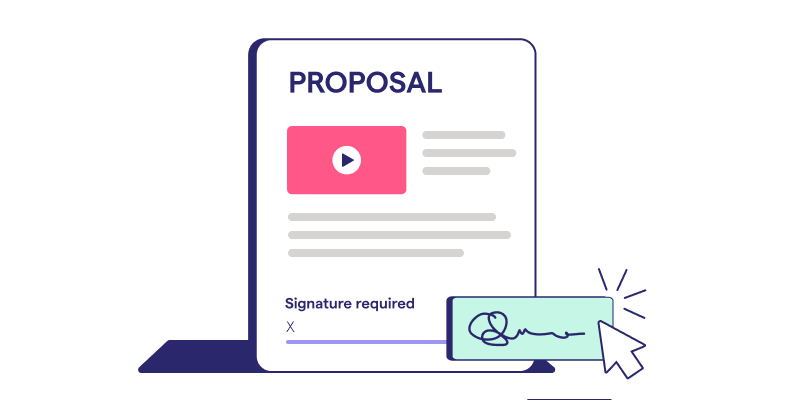
A signed CAS agreement should activate its billing schedule the moment a client accepts, with no separate setup step standing between the signature and the first invoice.
Most firms outgrow the familiar three-tool setup:
- A Word doc contract
- A separate e-signature tool for collecting the signature
- A separate invoicing platform for the actual billing
Each handoff between those tools needs a person to carry the details across. That’s fine for five clients. At 15, it’s where CAS growth quietly stalls.
In Ignition, the sequence runs in one motion. A client accepts a proposal or engagement letter, and the billing terms already built into that agreement (fixed fee, variable charges, or a mix of both) go live immediately. No one has to log the new client into a billing system, re-enter the fee schedule, or remember to set the first invoice date.
A billing hub tracks all clients
Centralized billing visibility replaces the spreadsheet tracking that stops working once a CAS roster grows past a handful of clients. Ten clients on ten different fee structures and renewal dates might fit in a tab or two. Beyond that, spreadsheets stop showing what's actually happening.
Ad hoc records lag behind reality. A spreadsheet only shows what someone remembered to update, so it's a snapshot of the last manual entry. Add a client mid-month, adjust a fee, or miss an update, and the whole sheet becomes unreliable exactly when accuracy matters most.
Ignition's Billing Hub solves this by pulling every client's billing status into one screen. It shows upcoming invoices, amounts, and timing across the full roster, so nothing depends on someone remembering to check a spreadsheet or chase down a fee change. If your firm manages dozens of advisory clients on staggered billing cycles, that centralized view is what makes growth manageable.

Out-of-scope work gets billed immediately
Billing out-of-scope advisory work the moment it happens is what stops scope creep from turning into unbilled labor. Wait a week to invoice for that extra cash flow analysis or one-off tax planning session, and the odds of ever recovering that fee drop fast.
Fixed-fee retainers make this risk especially sharp. The whole model depends on the scope staying fixed, so every unbilled extra request quietly erodes the margin that made the package profitable in the first place. Multiply that across 15 clients instead of five, and untracked scope creep becomes a real drag on revenue.
Ignition's Instant Bill feature solves this by letting your firm charge for ad hoc or out-of-scope work on the spot, right when the request comes in. There's no need to log it, remember it, and hope it makes next month's invoice.
Make CAS growth a system
CAS growth stalls the moment packaging, billing, and renewals live in three different places. Standardized packages only pay off if billing follows the agreement automatically, and renewals only protect margin if they're built into that same system.
The firms that break past a handful of advisory clients aren't the ones with better templates. They're the ones who stopped treating each new client as a fresh round of manual setup.
The choice at this point is straightforward. Keep adding manual work with every new client, or put a repeatable system underneath the packages you've already built. Ignition is the connective layer that links agreements, billing, and renewals, so every new CAS engagement follows the same process, whether it’s for client number three or 30.
Make CAS growth a system, not a project
Connect proposals, billing, and renewals so every new advisory client runs on the same automated track.
Frequently asked questions
-
Scaling CAS doesn't require proportional headcount growth if the underlying delivery system is automated. According to 2024 Journal of Accountancy benchmarking research, CAS practices that continually invest in technology serve a median of 100 clients, compared to 67 clients across all CAS practices. Tooling raises client capacity more than adding staff alone.
-
Firms rolling out fixed CAS tiers generally keep existing custom clients on their current agreement until natural renewal. At renewal, the firm can migrate that client into the closest matching package, or into a package plus an amendment covering the difference. This staged approach avoids disrupting client relationships while still moving the entire roster toward standardized pricing over time.
-
Most firms can move a single client segment onto automated billing within a few weeks. Migrating an entire roster of 50 or more clients usually takes longer, often a full renewal cycle, since legacy terms and dates are staggered. The timeline shortens considerably when a platform ties billing directly to signed agreements.
-
General practice management platforms typically handle task tracking and client communication, but treat billing as a separate step loosely connected to signed agreements. CAS-specific billing automation ties invoicing directly to what a client signed, so recurring fees, variable charges, and out-of-scope work all flow from one agreement. This distinction matters at scale, since disconnected tools force firms back into manual recalculation as their advisory roster grows.
-
Growing a CAS practice on pure hourly billing is possible, but it becomes harder to sustain as client count grows. Industry benchmarking from CPA.com and the AICPA ties CAS growth closely to firms standardizing processes and shifting toward fixed-fee, recurring billing instead of time-and-materials pricing. Firms that keep hourly billing at scale typically need heavier administrative support just to maintain the same margin fixed-fee models achieve with less overhead.