The fastest way to spot your most profitable clients



 Copied to clipboard.
One client's retainer clears the books every month without issue. The extra revisions, the drawn-out email chains, and the calls that run long never show up as a separate line item.
But they do show up in the math. Identifying your most profitable clients means calculating what each one actually costs to serve, in billable time, admin work, and unbilled scope creep, then comparing that cost against what they pay.
Most advice on finding a firm's best clients starts with revenue. This approach starts with the opposite: isolating the clients quietly draining margin, using the time and billing data already sitting in the practice.
Key Takeaways
- A client's cost to serve often includes senior staff quietly doing junior-level work, which erodes margin in ways a standard invoice never shows.
- Revenue rankings can mislead firm owners because a high-paying client may still generate thin or negative margin once delivery time is fully counted.
- Unbilled scope creep frequently hides inside a client's hours worked, making it the hardest cost driver to spot without comparing actual time against the original fee assumption.
- A client should only be labeled unprofitable when true cost to serve meets or exceeds revenue collected, not simply when margin dips below firm average.
- Low-margin clients aren't automatically bad clients, since some thin-margin accounts still deliver strategic value through referrals or pipeline potential worth protecting.
Calculate your true cost to serve per client
A client's true cost to serve combines the internal cost of billable hours, non-billable admin work, and unpaid scope creep. A high retainer can still mask thin margin once you count that full delivery cost.
Building this figure means adding up these cost categories in order before running the margin calculation:
- Billable hours
- Admin hours
- Scope creep hours
Price billable hours at their true cost
Billable hours only reveal their real margin impact when you cost each person's time at their fully loaded internal rate, not the rate you bill the client.
Pull time by client from whatever time tracking or practice management tool your firm already uses, then apply salary plus overhead to each staff member's hours, not the billed rate.
A client billed $400 an hour looks profitable on the invoice. That same engagement looks different once a partner earning $150 an hour internally spends six hours on data entry a junior could have handled.
Chronic under-logging makes this whole calculation unreliable, so treat missing or rounded time entries as a data problem to fix before trusting the numbers. This kind of pricing and selling services groundwork pays off well beyond one client review.
Add non-billable admin hours
Client-specific onboarding, emails, and document chasing are the non-billable hours to add, since they consume paid staff capacity without appearing on an invoice. They're also the cost driver most firms leave out entirely.
Estimate it anyway: Total up onboarding time for a new client, plus the recurring monthly effort spent on emails and chasing missing documents, then assign an hourly figure per client per month.
You likely have a client who emails constantly and never sends documents on the first request. That client feels demanding, but on a standard invoice, their account looks identical to a low-maintenance one. Without that admin-hour estimate, those hours stay invisible until they're already eating margin.
Include unbilled scope creep hours
Scope creep covers any work your team delivers outside the signed engagement letter without billing for it, and it's the most dangerous hidden cost to quantify because it never shows up as a line item. It hides inside a client's total hours.
To find it, compare what you scoped against what you actually delivered. Pull the same time data used for billable hours and look for the overage between the original fee assumption and actual hours worked.
That difference is unbilled scope creep, and it belongs in the client's cost to serve. Ignition's Instant Bill feature lets you charge for out-of-scope work the moment it happens, so those extra hours stop adding up.

Find each client's real profit margin
A client's real profit margin is revenue collected minus total cost to serve, divided by revenue, expressed as a percentage.
The percentage matters more than the dollar figure. A $10,000 retainer and a $2,000 retainer can't be judged on raw profit alone, but their margins tell you which one pulls its weight.
Take a bookkeeping retainer billed at $1,500 a month with $900 in total cost to serve: That's a 40% margin. An advisory client billed at $4,000 but carrying $3,600 in cost to serve, most of it unbilled scope creep, clears just 10%.
Profit concentrates faster than most firm owners expect. Client mix carries real weight: top-performing firms post net client fees per partner of $1,664,009 versus $711,784 across all respondents, according to the 2025 AICPA MAP Survey.
Set the threshold for calling a client unprofitable
A client is unprofitable once the true cost to serve meets or exceeds collected revenue, not simply whenever margin dips below your firm's average. That break-even point is the line, not a soft benchmark you eyeball from memory.
Set a firm-specific minimum margin, and flag any client who falls below it for review across two or three billing cycles, not after one slow month.
Not every low-margin client belongs on that list. A referral source or a pipeline account can justify thin numbers today if it's building toward stronger work tomorrow.
Culling underperforming clients is already standard practice: Sixty-two percent of accounting firms report culling clients, according to the AICPA. Revisit your threshold periodically. Costs shift, staffing changes, and a fair line drawn last year may need redrawing.
Match the fix to the number
Choosing between repricing, rescoping, and offboarding depends on whether weak margin comes from an inadequate fee, unpaid scope creep, or a client the firm simply can't serve profitably. An underpriced client needs a new fee. A client drowning in unpaid extras needs a tighter scope. A client that stays unprofitable after both fixes needs to go.
Reprice clients with room to grow
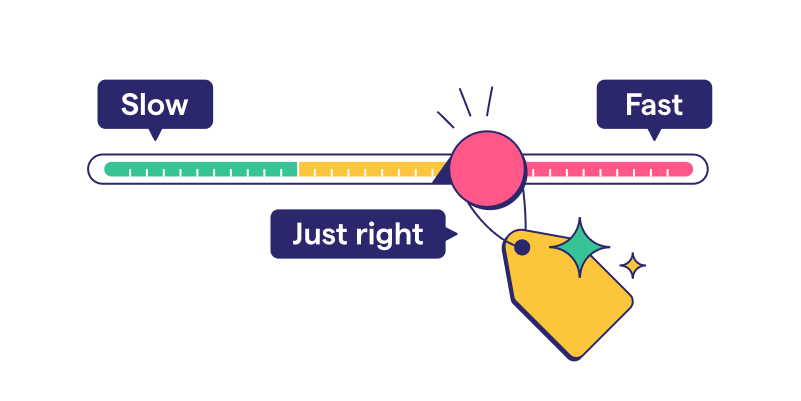
Repricing fits a client who's profitable and in scope, but whose fee sits too far below what the work is worth.
Check that admin hours and unbilled scope creep aren't the real culprits first. If those numbers stay low and the fee alone explains the thin margin, repricing is the fix, not a scope conversation.
Client mix also matters. Firms earning over half their revenue from a defined niche report 38% higher median client advisory services (CAS) revenue and 51% higher net revenue per client, evidence that focused expertise supports higher fees.
Ignition's AI Price Insights turns that diagnosis into action. It surfaces personalized pricing benchmarks and recommendations, drawn from real Ignition platform data, directly inside the proposal workflow and service library, so a fee increase reflects the market rather than a guess.
Rescope clients with unchecked scope creep
Rescoping fits clients whose margin problem stems from unbilled out-of-scope work, where the fix is redefining scope, not raising the base fee. If the scope creep hours identified earlier account for most of the margin shortfall, that's your signal to rescope rather than reprice.
Check the base fee against the original engagement letter first. If it still reflects fair value for the scope you originally agreed to, leave it alone.
The fix is to document the expanded work and start charging for it. Update the engagement letter to reflect what the client needs, then bill accordingly going forward.
Ignition's Contracts & Engagement Letters supports agreement amendments, so you can notify a client of a small scope change without requiring a full re-sign.
Offboard clients that drain your capacity
Offboarding fits a client who stays unprofitable even after a fair fee and a clear scope, because no correction is left to try. If repricing didn't fix the margin and rescoping didn't stop the extra hours, the account is the problem, not the number attached to it.
Every week that client stays on the roster, it ties up staff hours that never show a return. Once they're off it, those same hours shift to advisory clients who pay for the value they get, lifting your average margin instead of dragging it down.
This section covers only the decision to exit, not how to deliver that conversation. For the mechanics of shifting an entire client base toward better-fitting terms, see this piece on rethinking your billing model.
Make client profitability review a habit
A one-time profitability calculation decays fast because scope, staffing, and delivery costs keep changing under a client's fee. A client that was profitable last year can slip once a new hire touches the account or the client's business grows more complex.
Tie the review to a trigger already on your calendar. Renewal season and annual fee-increase planning are natural checkpoints, since you're already revisiting pricing and scope at that point anyway.
Firms that formalize this kind of planning see it pay off. Those with a written CAS plan report median average annual client revenue of $27,761, nearly $10,000 higher than the average. AICPA guidance backs a structured annual cadence too, pointing firms toward tools like the Client Evaluation Tool and Good Fit Client Tool each year.
Ignition's Business Insights Dashboard keeps revenue, cash flow, proposal performance, payments, and service revenue visible year-round, so this review doesn't require rebuilding a spreadsheet each cycle.
Turn client suspicion into a data-backed decision
A documented cost-to-serve figure turns "this client feels unprofitable" into "this client costs $X more to serve than they pay." That distinction is what lets a firm choose between repricing, rescoping, or off-boarding without second-guessing the call.
None of this requires a new tracking system. The hours already logged against that mid-tier retainer client and the invoices already sitting in the billing platform are the raw data; the math just needs a place to happen.
See your client margins in real time.
Ignition connects billing, pricing, scope, and reporting so margin decisions run on live data.
Frequently asked questions
-
A minimum of three to six months of billing and time data helps smooth out one-off spikes from onboarding or seasonal tax work. Firms with highly seasonal client mixes should stretch this to a full 12-month cycle to capture busy-season scope creep and slow-season admin drag. Shorter windows risk flagging a client as unprofitable based on one unusually heavy month rather than their true pattern.
-
A client can be unprofitable on paper but still worth keeping when strategic value outweighs a thin or negative current margin. A client who refers significant new business, anchors a target niche, or is early in a ramp-up toward a larger scope may justify short-term investment. The key difference from a truly draining account is a clear plan and timeline for that client to reach profitability, not an open-ended assumption that it will improve.
-
A client who disputes scope creep hours can be addressed with documentation gathered before the repricing or rescoping conversation happens. Comparing logged hours against the original engagement letter's assumed scope, with dated notes on what specific work fell outside it, gives the firm a factual basis rather than an opinion to defend. Firms using Ignition's Contracts & Engagement Letters can point directly to the signed scope language, which removes ambiguity from the discussion.
-
Utilization rate measures how much of a staff member's available time is billable, while client profitability measures whether the revenue collected from a specific client covers the full cost of serving them. A team can hit strong utilization targets while still serving a client at a loss if the billed rate doesn't cover the true internal cost of that time. Client profitability analysis is a more direct way to decide which accounts to reprice, rescope, or offboard.
-
Most firms already have the raw ingredients in their time tracking, billing, and payroll systems, so the fastest starting point is to consolidate what already exists rather than build something new. Ignition's Business Insights Dashboard pulls per-client revenue, billing, and payment data into one live view, which replaces a manual spreadsheet exercise with a continuously updated one. Starting a free trial is a practical way to see this per-client visibility in action before committing to a larger process change.