Year-end A/R cleanup: Audit, collect, and automate



 Copied to clipboard.
A managing partner pulls up the aging report in October and sees the number. Sixty, ninety, a hundred and twenty days out. Some of those balances are recoverable. Some are not. The difference comes down to what the firm does in the next sixty days.
That window is where year-end accounts receivable (A/R) cleanup earns its keep. The process includes auditing outstanding invoices, recovering unbilled revenue, collecting or writing off aged balances, and reconciling payment records before December 31, so the firm starts the new year with accurate books and funds in the bank.
Aging A/R is a cash flow problem as much as a bookkeeping issue, and it compounds quietly until it isn't quiet anymore.
This post walks through a concrete five-step process for auditing, collecting, and writing off balances before December 31, plus a prevention mechanism so the same backlog doesn't rebuild itself in the new year.
Key takeaways
- Unbilled out-of-scope work is often the largest recoverable revenue category in a year-end A/R cleanup, yet most firms overlook it entirely.
- An A/R aging report segments overdue balances into priority tiers, helping multi-client firms focus collection efforts where recovery is still realistic.
- Unapplied cash, payments received but not matched to invoices, can overstate a firm's A/R balance and distort year-end financial statements.
- Balances carried into January become harder to collect and may skew the financial data firms rely on for tax planning and partner distributions.
- Collecting payment details at proposal acceptance can eliminate the structural delay that allows invoices to age across dozens of client engagements.
What year-end A/R costs accounting firms
A year-end A/R backlog does more than delay cash. It distorts the financials your firm relies on for partner distributions and tax planning, and it signals to clients that payment terms are negotiable.
The exposure splits into two categories: out-of-scope work delivered but never invoiced, and billed balances that have aged past the point of easy recovery. Both get harder to address the longer they sit.
As Atradius confirms, high days sales outstanding (DSO) locks up working capital, increases borrowing costs, and limits a firm's ability to invest or absorb uncertainty.
Balances carried into January compound that pressure. Reconstructing context for aged transactions takes time your team could spend on billable work. Strong cash flow management starts with closing the year clean.

Step 1: Audit open engagements for unbilled work
Cross-reference every active client engagement against its signed agreement to surface delivered work your firm never invoiced, before any collection outreach begins.
Pull each client's signed agreement and compare it against time records, project notes, and delivery logs. Any completed work outside the agreed scope that went through without a change order is recoverable earned revenue.
Once you identify out-of-scope work, use Ignition’s Instant Bill to issue a supplemental charge immediately. It captures what your firm already earned, without creating a separate manual invoicing workflow or disrupting the client relationship.
Eliminate A/R for good
See the four-step process for getting paid without chasing invoices
Step 2: Pull and triage your A/R aging report
Your A/R aging report is the triage tool that tells you where to focus your year-end collection efforts. It groups every outstanding invoice into four buckets: 0–30, 31–60, 61–90, and 90-plus days unpaid.
Each bucket gets a distinct action:
- 0–30 days: Send a standard payment reminder.
- 31–60 days: Follow up directly by phone or email.
- 61–90 days: Open a conversation about payment terms or a structured payment plan.
- 90-plus days: Make a write-off or escalation decision.
For firms billing 50-plus clients across retainers and project engagements, sort by dollar value within each bucket. Prioritize recoverable balances by age and size, with highest-value balances up first.
Step 3: Send targeted collection outreach
Effective year-end collection outreach reflects invoice age and client relationship. A single reminder sent to every overdue account does neither.
Accounting clients are often long-term relationships. Framing outreach as a year-end account review protects that relationship while still moving the balance forward.
If payment details aren't on file, your outreach also has to ask for them before you can process payment. That extra step adds friction and delay, but collecting payment details upfront (covered later in this post) removes it.

Step 4: Write off uncollectible balances
A balance is uncollectible when one of three things is true:
- Recovery costs exceed the recoverable amount.
- The client relationship has ended.
- A 90-plus day balance has received no payment response.
Write-offs should be the final outcome of documented collection efforts. Once a balance crosses that threshold, record the entry by debiting bad debt expense and crediting accounts receivable. For accrual-basis firms, this also adjusts the allowance for doubtful accounts to reflect net realizable value on the balance sheet.
As Woodard's guide to cleanup projects explains, cleanup work means following up on overdue amounts as a structured engagement. A write-off decision closes that sequence. Document the decision before year-end, and confirm the specific tax treatment with your own advisor.
Step 5: Clear unapplied cash and reconcile
Unapplied cash is the most common source of A/R distortion at year-end. A payment received but not matched to a specific invoice inflates the gross receivable balance and produces inaccurate financials.
Clear it with this sequence:
- Match each unapplied payment to its corresponding invoice in the accounting system.
- Issue credit memos where a client overpaid.
- Compare the ledger's closing A/R balance against the total of all open invoices in the billing system.
If those two figures don't match, there's still an unresolved payment or an invoice recorded in the wrong period.
Firms relying on manual invoicing or disconnected billing and accounting systems are most likely to hit this problem repeatedly. Automating A/R workflows prevents mismatches before they accumulate.
Collect payment details upfront to stop A/R aging
Collecting payment details at proposal acceptance authorizes payment before work begins, removing the post-delivery chase that lets balances age in the first place.
That disconnect between invoice sent and payment received is where A/R balances accumulate. Across 50-plus client engagements, the delay compounds quickly into a year-end backlog.
When a client accepts a proposal through Ignition, the platform captures payment details at that moment. The accepted agreement then triggers invoices and collection automatically, so nobody needs to send a separate payment request after delivery. Upfront collection is the most direct answer to reducing accounts receivable.
Automate billing so this never repeats

Replacing billing that runs separately from client agreements with an automated agreement-led workflow is what prevents the same backlog from returning next year.
Automating billing through agreement-led invoicing, systematic fee updates, and variable charge automation removes the manual steps that create year-end A/R problems in the first place.
Agreement-led invoicing from accepted proposals
Agreement-led invoicing prevents year-end omissions by triggering accurate, timely invoices directly from the accepted proposal and its approved billing schedule. Ignition's invoicing automation connects the signed client agreement directly to its billing schedule, removing the separate invoice creation step where errors and omissions happen.
Firms that create invoices manually, outside their engagement agreements, are the ones that reach year-end and discover missed billing cycles, fees nobody updated, or out-of-scope work delivered without a corresponding invoice. Those misses are hard to recover.
Auto-updating fees before they become stale
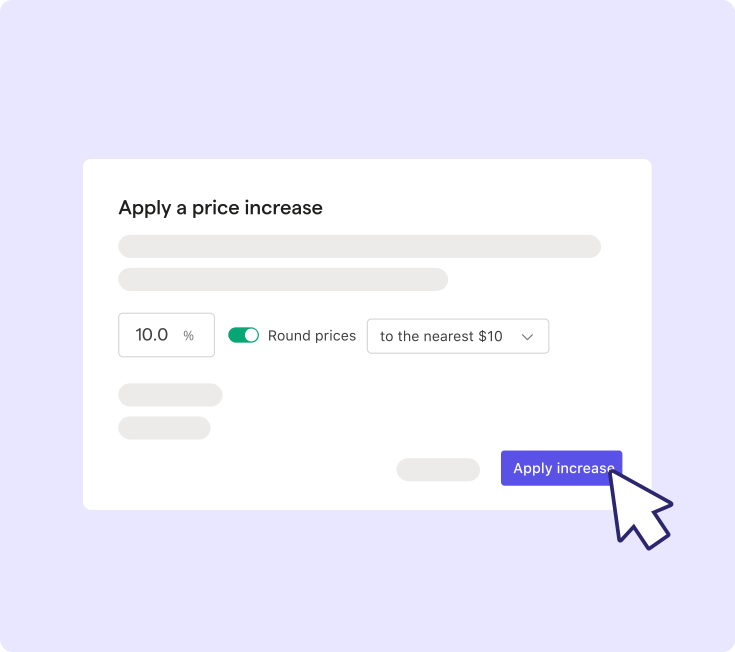
Stale retainer fees are one of the least visible sources of year-end revenue leakage for multi-client firms. A price increase agreed to in January may never make it into the billing schedule, and that gap compounds across every invoice sent afterward.
For a firm managing 80 retainer clients, updating fees one engagement at a time is unreliable. The team updates some clients and misses others, and the discrepancies only surface at year-end review.
Ignition’s AutoPricing applies fee increases across multiple clients at once, without revisiting each agreement individually. That makes systematic price updates practical at scale. AutoPricing handles the mechanics, but timing and framing still determine how to raise prices without losing clients.
Variable billing tied to payroll data
Headcount-based fees that nobody updated when a client's payroll changed create silent revenue leakage. That gap rarely surfaces until year-end, when the mismatch between what the firm billed and what it should have billed becomes impossible to ignore.
Smart Billing fixes that by syncing with Gusto, Xero, and QuickBooks to automatically calculate variable charges based on current payroll data. Nobody runs a manual headcount check or a spreadsheet reconciliation, and no billing cycle lets the numbers quietly fall behind.
When payroll inputs change, Smart Billing recalculates the charge and generates the invoice accurately without any manual touchpoint.
Start next year with zero A/R backlog
Year-end A/R cleanup is a revenue recovery deadline. The backlog sitting in your aging report right now represents work already delivered, expertise already applied, and revenue that belongs to your firm.
Stop repeating this cleanup every December
Collect payment details at proposal acceptance and let billing run from the signed agreement.
Frequently asked questions
-
Starting in October gives firms enough time to recover unbilled scope creep, work through aged balances, and still process write-offs before December 31. Balances that cross into January become harder to collect and may distort the financial data firms rely on for tax planning and partner distributions. Year-end cleanup also costs more and takes longer when the team must reconstruct context for old transactions from memory or fragmented records, so an earlier start is the lower-cost path.
-
Accrual-basis firms may be able to deduct genuinely uncollectible receivables as bad debt in the tax year they record the write-off, but the firm must formally remove the balance from the ledger before year-end for that recognition to apply in the current period. Cash-basis firms generally can't deduct unpaid invoices because they only recognize revenue when they receive payment, so there is no income to reverse. The specific tax treatment depends on the firm's accounting method and individual circumstances, so check the correct approach with a qualified tax advisor before filing.
-
Disputed invoices need a different path than balances that are simply aged or unpaid. The firm needs to determine whether the dispute stems from a billing error, a scope disagreement, or a client cash flow issue before deciding on next steps. A billing error warrants a corrected invoice; a scope disagreement may require referencing the original signed agreement to substantiate the charge. Firms that connect billing directly to accepted proposals, as Ignition's agreement-led invoicing does, can resolve most scope disputes by pointing to the signed engagement.
-
Renewal conversations with clients carrying an unpaid balance need careful sequencing. The firm should address and resolve the outstanding balance before issuing a new engagement agreement; otherwise, it inherits an unresolved A/R problem into the next engagement period. Linking payment of overdue amounts to the renewal process is a practical approach, since the client has a clear incentive to clear the balance to continue the relationship. Collecting payment details as part of the new proposal acceptance prevents the same pattern from repeating in the renewed engagement.
-
High DSO locks up working capital, increases borrowing costs, and restricts a firm's ability to invest or absorb economic uncertainty. These effects compound at year-end when balances have accumulated across a full billing cycle. For accounting firms specifically, an inflated DSO also signals to clients that payment terms are negotiable, which makes future collection harder. Reducing DSO structurally, by automating invoicing and collecting payment details at proposal acceptance, addresses the root cause.