How to Confidently Raise Fees Without Losing Your Clients



 Copied to clipboard.
You open your inbox, hover over a draft announcing your new rates . . . and hesitate. What if your best client replies with “we can’t afford this anymore”? What if they don’t reply at all?
That anxiety is normal. Raising your prices can feel like risking the very relationships you worked hard to build.
But a fee increase is a sign that your business is healthy, not greedy. Your experience has grown, and your results have improved, making your time more valuable than it was before. Staying underpriced can erode both your energy and the quality of your work.
The key is being intentional. Below, you’ll learn when to raise your prices, how much to increase them, and how to communicate these changes without damaging trust.
Key takeaways
- Raising prices regularly (at least annually) protects profit margins against inflation and signals confidence in the value delivered to clients.
- Tiered pricing structures give clients control over their investment level while naturally filtering out price-sensitive relationships that drain resources.
- Communicating price increases early, personally, and with a clear value narrative prevents surprise and preserves trust with long-term clients.
- Grandfathering loyal clients at current rates for a transition period builds goodwill and encourages contract renewals before new pricing takes effect.
- Automating renewals and billing at updated rates eliminates awkward manual conversations and ensures consistent revenue collection across the client base.
Why raising prices keeps your business healthy
It’s easy to delay a price increase. You tell yourself things are “fine for now,” or that you’ll revisit it next quarter. But in the background, your costs are moving—software, overhead, and the sheer amount of time each client requires.
While it often feels like clients will push back on higher fees, that assumption isn’t always accurate. Research shows that around 35% of consulting and accounting clients are open to paying more than their current fees when the value is clear.
Higher, well-calibrated pricing changes give you room to focus and deliver the level of service your clients expect. And clients paying fair rates tend to be more engaged and more invested in outcomes.
It’s natural to feel hesitant: Pricing conversations often feel awkward or risky. But when handled thoughtfully, a price increase creates a better, more consistent customer experience while also increasing your business’s long-term sustainability.
Signs it’s time to raise your prices

Business owners often don’t even think about raising their prices until the signs it’s time start piling up:
- Margins shrinking, even though revenue looks steady
- Peers charging 15-20% more for similar work
- Demand starting to exceed your capacity
- Scope creep becoming routine, not occasional
- No price increases in 12-18 months
Guessing isn’t enough at this point. Tools like Ignition’s Price Insights analyze proposal, scope, and client data to show where your pricing falls below market norms—or even below what similar clients already pay. They also surface inconsistencies across your own client base.
That clarity helps you set increases based on actual outcomes and value, not instinct, so pricing is proactive and easier to justify.
See where your pricing stands
Understand your pricing position & plan increases with confidence.
How to decide how much to raise the price
This is where the decision to increase prices starts to feel more concrete. The actual number you choose can be the difference between a productive conversation or unnecessary friction and pushback. Here are a few practical ways to figure out what that number should look like.
Analyze delivery costs and margins
Before deciding on higher prices, it helps to ground the number in what it actually costs you to deliver the work. That means looking beyond the obvious expenses, like labor and software, to get a clear picture of your true cost per client or project.
Factor in the costs that are easy to overlook, such as overhead and admin time, along with small tasks that rarely get billed directly. Once you have a realistic cost, you can work backward from there. A healthy target is usually a 30–50% margin, depending on your business model.
Benchmark against market rates
Once you have a handle on your own costs, zoom out and see how your pricing compares to the market. This gives you a better sense of whether your increase is in line with what clients are already used to seeing.
Talk to peers to get a real sense of what others in similar roles are charging, or check in with industry communities where pricing expectations and trends come up naturally in conversation. You can also review published rate data, like reports and surveys that show typical ranges across the field.
If your pricing sits well below the market, it can unintentionally suggest you’re less experienced or established than you really are, even when your work says otherwise. Tools like Price Insights can help you connect your internal data with market trends, showing how your real proposals compare across similar services and clients.
Are you pricing in line with the market?
See if your pricing strategy aligns with current market expectations.
Segment clients by value sensitivity
Not every client will react the same way to a price increase, so it helps to be a bit strategic about where you start.
A useful approach is grouping clients by relationship length, revenue level, overall fit, and scope predictability. A stable, well-defined retainer client who’s seen your value for years is typically very different from a one-off or constantly shifting engagement. This makes it easier to decide where to introduce increases first, instead of applying them all at once.
In many cases, the clients who are the most demanding and most focused on price are also the ones draining the most time, not to mention team morale. Moving away from those relationships can free up capacity, making the rest of your work more manageable (and profitable).
Step-by-step plan to raise prices without losing your best customers
A clear, structured approach centered around perceived value helps keep conversations calm and avoids unnecessary tension. With thoughtful timing and communication, clients will typically be far more receptive than you might expect.
Craft a clear value narrative
Before sharing a price increase, plan on framing it around what clients actually care about: what they’re getting, not what your business needs.
Rather than focusing on rising costs or internal pressures, lead with outcomes:
- Improvements in service quality
- Faster turnaround times
- Deeper expertise
- Added value
Highlight new features or services the increase will allow you to provide, like hands-on support, or your track record of consistent results. When clients understand the value they’re receiving, the conversation feels more like a reflection of growth than a price hike.
Repackage services into transparent tiers
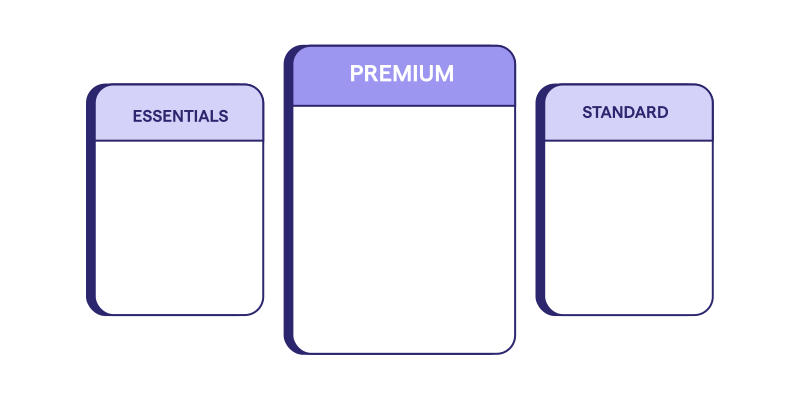
Rather than presenting clients with a single “take it or leave it” price, consider offering a few clear options. Pricing tiers, like Standard, Premium, or Priority, give clients flexibility while still guiding them toward the level of service that fits best.
This also takes some pressure out of the conversation. Price-sensitive clients aren’t focused on an all-or-nothing decision. Instead, they can choose a lighter option that meets their needs, while others opt for more comprehensive support.
Ignition’s proposal templates make it easy to present these tiers clearly. Each option has a defined scope, and clients can quickly understand what’s included at each level.
Communicate charges early and personally
Giving clients enough time to adjust helps set the tone for a smoother transition, so aim to share price changes 30–60 days in advance. It shows respect and gives them space to plan without feeling rushed.
When it comes to your most important clients, a quick call or video conversation works best. For smaller relationships, a clear, well-written email or price increase letter is usually enough.
Leading with the key details helps avoid confusion and keeps the conversation straightforward and professional. That means being upfront and not burying any important info. State the new rate, when it takes effect, and whether anything about the scope is changing.
Offer grandfather or transition options
Sometimes it helps to ease long-time clients into a pricing change rather than switching everything overnight. One option is grandfathering: keeping their current rate in place for a set period, often 6–12 months, while new customers move to the updated pricing.
You can also offer rate locks for loyal customers who commit to longer-term agreements or renew early. This gives them a sense of stability while rewarding commitment at the same time.
These options help create a natural sense of timing without coming off as pushy. Clients feel looked after, and you still move your pricing in the right direction.
Automate renewals and billing at new rate
Manual renewals often cause unnecessary friction, opening the door for delays, back-and-forth conversations, and sometimes even informal negotiations that pull you away from consistent pricing.
Automation keeps everything cleaner and more predictable. It indicates professionalism to clients while also making the experience easier for them—no surprise invoices or uncomfortable follow-ups.
Solutions like Ignition’s AutoPricing can help streamline this by updating contracts in bulk and applying new rates automatically, while automated billing ensures payments are collected on time every time.
Handling pushback and preventing churn
Some pushback is completely normal with rate increases. As long as it’s only a small percentage of your clients, it generally just means they aren’t adjusting well, not that you got the number wrong. The goal is to be ready for these conversations, so you can respond calmly and consistently:
- “This is too expensive now”: Offer a lower-tier option or adjust the scope, rather than discounting the same service.
- “We’ve been with you for years”: Acknowledge customer loyalty and consider a short transition period while keeping the new rate as the long-term baseline.
- “Competitor X charges less”: Bring the focus back to outcomes, reliability, and what’s actually included in your work.
- “We need to think about it”: Agree on a clear decision timeline and set a specific follow-up date so it doesn’t drag on.
Not every client will stay, and that’s OK. Tracking which ones push back can help you refine your pricing and attract better-fit work over time.
Tracking results and fine-tuning the next price increase
Once your new pricing is in place, it’s time to see how it performs in the real world. Look beyond top-line revenue and track metrics like:
- Retention rate
- Revenue per client
- Profit margins
- Proposal acceptance rates
These give you a clearer idea of whether the increase is strengthening your business or creating hidden pressure points.
You may also want to test new pricing on incoming proposals first to see how prospects respond before applying changes across your existing client base. This gives you room for scope or price adjustments if needed.
Over time, pricing should be something you revisit regularly, not just when it feels overdue. Reviewing it at least once a year helps normalize increases and keeps them smaller and more manageable.
Using tools like Ignition’s proposal analytics can also help you spot acceptance patterns and refine your approach with greater confidence.
Confidently raise fees with Ignition
Raising your prices gets much easier when you have a consistent process in place. Instead of managing renewals, proposals, and billing separately, Ignition gives you one centralized platform where everything works together in one flow, from the first agreement to ongoing payments.
Features like Ignition’s AutoPricing let you update rates across multiple client contracts in bulk, while tiered proposal templates offer clear options with defined scope for clients. Automated renewals apply updates rates without repeated outreach, and integrated payments handle billing seamlessly in the background.
Both you and your clients get a better experience with more consistent delivery timelines, fewer billing issues, less back-and-forth, and clearer expectations from the start.
Ready to simplify your billing?
Handle updates, proposals, and payments in one place to boost your bottom line.
FAQs
-
Assess whether the relationship is sustainable at the old price; if it isn’t, offer a reduced-scope option or end the engagement professionally to free capacity for better-fit clients.
-
Review pricing at least once a year, ideally timed to renewal cycles, so your fees keep pace with rising costs and current market rates.
-
Yes, piloting updated pricing with new proposals provides real market feedback and helps you roll out changes to existing clients with more confidence.