What should a social media proposal template include?



 Copied to clipboard.
A prospect just asked for pricing on the call, and you need to send something professional before the conversation goes cold. Scrambling to edit an old proposal at midnight, hoping the platforms and pricing still match what you offer, is no way to close a deal.
A social media proposal template is a reusable document that lays out a prospect's goals, the recommended channel strategy, deliverables, timeline, pricing, and payment terms. A strong one also defines how approval triggers billing and onboarding, so a signed proposal turns into an active, paying engagement instead of a stalled inbox thread.
Get the structure right, and you'll have a document you can customize quickly for the next prospect who asks.
Key takeaways
- A strong social media proposal template sets the tone for the client relationship by defining goals, deliverables, pricing, and expectations from the start.
- The best social media proposal templates include an executive summary, audit insights, key performance indicators (KPIs), timeline, and terms, so prospects can quickly understand the plan.
- Clear scope language in a social media proposal template can help agencies prevent scope creep by spelling out channels, deliverables, revisions, and reporting frequency.
- A social media proposal template becomes more useful when it supports retainer pricing, payment terms, and recurring billing instead of leaving budget details vague.
- Many social media proposal templates stop at signature, but the real handoff happens after acceptance, when onboarding, invoicing, and payment collection need to start.
Why your proposal template is the foundation of every client engagement
A social media proposal becomes the foundation of the engagement when it defines both the service expectations and the workflow that follows acceptance. It sets platform mix, content cadence, and community management boundaries before a single caption gets drafted, a kickoff call gets booked, or an invoice goes out.
Vague terms cost money later. Undefined revision limits or approval steps invite scope creep, and unclear billing details delay that first payment.
A signed Word document still leaves the agency chasing payment details, building an invoice, and emailing intake forms separately. A connected proposal captures the signature, collects payment details, and moves the client into onboarding.
Check your current template now. Does it define the offer, and what happens the moment it's accepted?
The core sections every social media proposal template needs
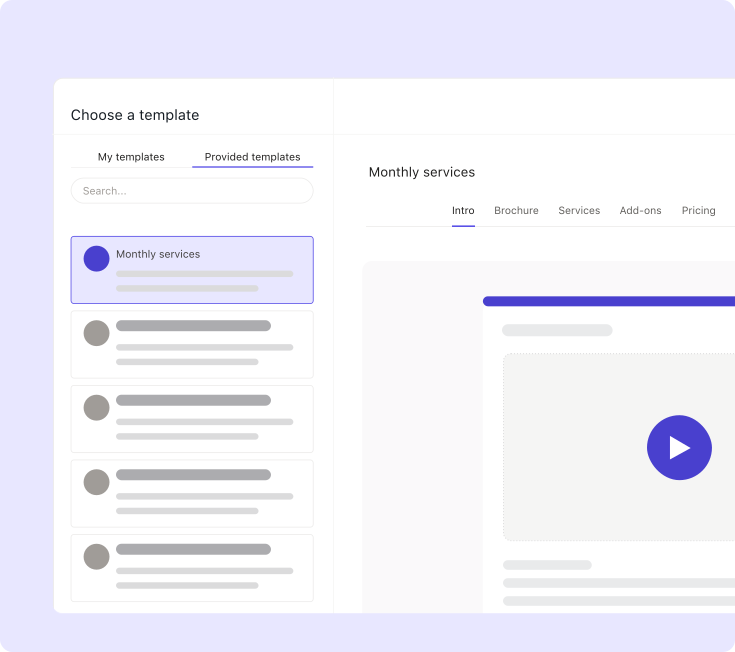
Every section in a social media proposal template should clarify the strategy, remove delivery ambiguity, or make approval easier. If it does none of those, cut it. You're often customizing this document mid-conversation, and a prospect reading it needs each part to move them toward a decision.
Eight components carry that weight, including the executive summary, audit findings, goals and KPIs, scope of work, timeline, pricing, payment terms, and closing terms.
Executive summary
The executive summary should connect the prospect's current social media challenge to one focused recommendation and a business outcome that matters to their bottom line. A prospect posting inconsistently across three platforms with no content calendar doesn't need a list of services. They need a defined platform strategy that drives qualified website traffic.
Pull in specifics, including the prospect's business model, target audience, current posting habits, and stated growth goal. That detail signals a custom proposal.
Template sample: [Client Name] currently posts on [platforms] without a consistent schedule, limiting reach among [target audience]. [Agency Name] recommends a focused content and platform strategy to increase qualified website traffic by [target] within [timeframe].
Social media audit and competitive research
A social media audit should include only the channel and competitor findings needed to justify the recommended plan. Organize each finding as current condition, business implication, and proposed response.
Review platform performance, check posting consistency, identify audience gaps, and scan visible competitor patterns. Then tie every observation to an action.
Sample: Instagram posting has dropped to twice monthly (condition), causing reach and engagement to stall (implication), so the plan restores a weekly cadence with Reels prioritized (response).
Repeat that format for each platform and one competitor observation, and the audit does its job in under half a page.
Goals and KPIs
Social media proposal KPIs should measure progress toward the client's business goal rather than report attention metrics without context. If the goal is more qualified leads, the KPI is lead volume from social rather than post count.
Separate decision metrics from vanity metrics before the proposal goes out. Follower counts and likes describe attention. Qualified website traffic, engagement rate, share of voice, and leads describe business impact and are more useful for monthly reporting.
Build the template with four columns, including business objective, KPI, measurement method, and monthly reporting cadence. Example row: the objective is to grow qualified leads, the KPI is leads from social, the method is UTM-tagged link clicks, and the cadence is monthly reporting.
Scope of work
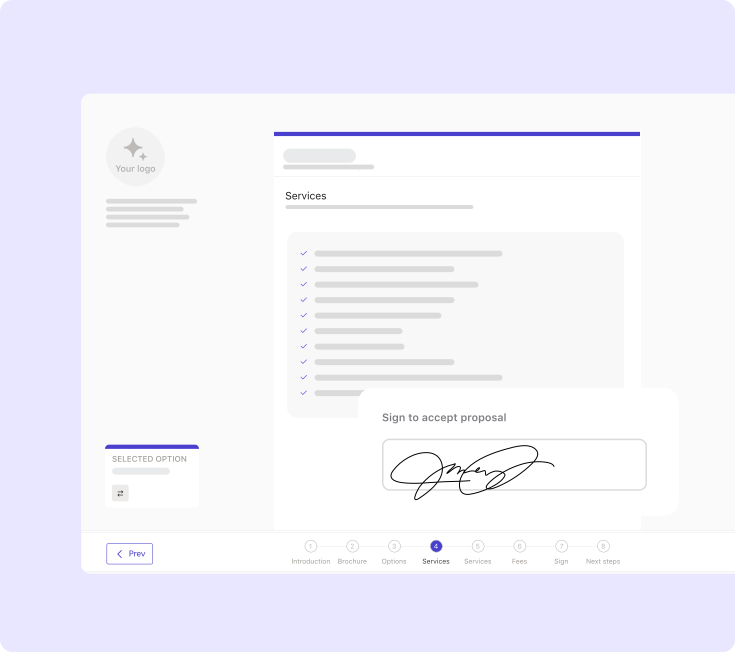
A social media scope of work should quantify the platforms, posting frequency, content formats, community management hours, approval steps, reporting cadence, and revision rounds. Skip vague language entirely. "Social media management" tells a client nothing about what they're paying for.
Clients may assume a three-platform retainer covers a fourth or expect unlimited revisions and after-hours comment replies that were never quoted. Exact quantities close that gap before signature rather than after the first invoice dispute.
A workable scope sample looks like this:
- Platforms: Instagram, Facebook, LinkedIn
- Posts: 12 per month across platforms
- Formats: Static graphics, one short-form video monthly
- Community management: Business-hours comment and direct message replies, weekdays only
- Approvals: Client sign-off within two business days
- Revisions: Two rounds per content batch
- Reporting: Monthly performance summary
- Excludes: Paid media management, after-hours response, additional platforms
Timeline and deliverable schedule
A social media proposal timeline should map the first 60 days from discovery and access collection through launch and initial reporting.
- Discovery and access collection (days 1–5)
- Audit and strategy development (days 6–15)
- Strategy approval (day 20)
- Content launch (days 21–30)
- Initial reporting (day 60)
Each milestone unlocks the next because strategy work can't start until account access arrives, and launch waits on client sign-off.
State dependencies plainly.
Sample: "Client provides platform logins and brand assets by day 5. Agency delivers strategy by day 15. Client approves by day 20 or launch shifts accordingly."
Pricing and retainer structure
Ongoing social media services work well as a clear monthly retainer tied to a defined workload and outcome, not a lump sum for vague "management." State the platforms covered, posts per month, and the business result the client is paying for.
Multiple packages only help when each one represents a materially different workload and outcome rather than the same service with extra features or follower-count promises. Name them around results, like "Visibility Builder" or "Lead Generation Retainer," so the prospect chooses based on need rather than comparing feature checklists.
Ignition's proposal package options let you present two or three options side by side in one document, so the prospect can select a tier directly from the proposal.
Sample: Growth Retainer, $1,800/month: three platforms, 12 posts, monthly reporting. One-time setup: $500 (audit, brand assets, content calendar). Add-on: paid promotion management, $400/month.
Payment terms
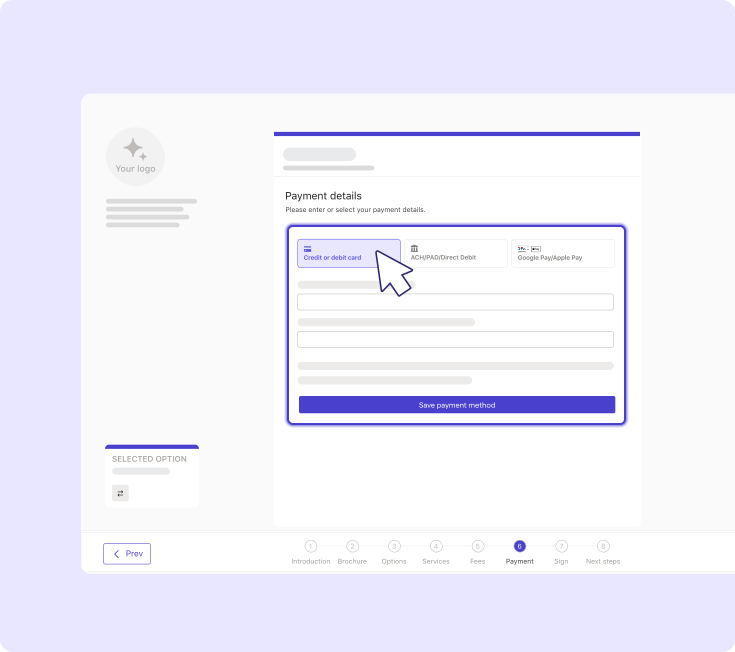
Payment terms should state exactly when recurring billing begins, how the agency will collect payment, and what happens if a payment fails or arrives late. Spell out the invoice date, the accepted payment method, any autopay requirement, the service start date, and whether an initial or setup fee applies.
Collecting payment details at acceptance removes the gap between a signed proposal and a working retainer. Without it, delivery can stall while someone chases down card or bank account details through a separate finance step.
The flow should run in order, with the client accepting the proposal, the agency collecting payment details immediately, billing activating on the agreed start date, and payment recurring automatically each cycle.
Sample: "Services begin [date]. Monthly fee is billed via autopay on the 1st. Payments five days past due may pause work until resolved."
Terms, conditions, and next steps
The closing terms of a social media proposal should spell out termination notice, content ownership, approval rights, confidentiality, and communication boundaries before the client signs anything. These points don't need full contract detail at the proposal stage. For the fuller legal treatment, including liability and indemnification language, use this agency contract resource as the reference.
A vague close leaves the client with only "sign and return." A defined close gives them an exact sequence: proposal acceptance, a kickoff call within a stated window, onboarding forms sent immediately, access credentials collected before day one, and billing activated on the agreed start date.
Sample: "Upon signing, expect a kickoff call within three business days. Onboarding forms and platform access requests follow within 24 hours. Billing begins on the service start date listed above."
How to write a scope of work that prevents scope creep
Scope language prevents margin loss when it quantifies recurring work, limits revisions and response obligations, and defines how the agency will charge for extra requests. Scope creep rarely arrives as one big ask.
It shows up as a "quick add" in a Slack message, an extra graphic requested on a call, or a comment left on a report. Each request seems small, but unbilled hours pile up quickly and eat into margin.
Strong scope language protects the client's expectations as much as the agency's time because both sides know exactly what's included.
Write it in numbers rather than adjectives. State posting frequency as an exact count, cap revisions to a fixed number of rounds, and set community response windows in specific hours. Give client approval deadlines with a stated turnaround, using the same precision shown in the scope sample above.
List exclusions explicitly so requests like paid promotion, after-hours moderation, or influencer outreach trigger a separate charge rather than folding into the retainer.
Any request outside that list can trigger a change order or one-off charge rather than quiet absorption into the retainer. Document the added scope, then bill it using Instant Bill so the agency gets paid for the extra work.
How to structure retainer pricing in your proposal
A social media retainer should separate recurring delivery, one-time setup work, and optional add-ons, showing the client exactly what each fee buys. The monthly retainer covers ongoing content and community management. A one-time setup fee applies to onboarding, brand voice documentation, or initial channel audits. Add-ons cover paid promotion, influencer outreach, or extra platforms added mid-contract.
Build each package by starting with platform mix and content cadence, then layer in community management workload, reporting frequency, and the outcome the client is paying for. A three-platform package with daily posting and same-day community responses costs more to deliver than a single-platform package with weekly posts. The price should reflect that difference in labor.
State renewal terms clearly, including whether pricing holds steady or adjusts at the next contract period. For structure, review this guide on writing a marketing proposal. Ignition's Price Insights and AutoPricing tools can help support more consistent pricing as your client list grows.
What happens after a client signs, and why most proposals drop the ball
A signed social media proposal should immediately trigger payment collection, recurring billing activation, intake, onboarding tasks, and a confirmed internal handoff. Nothing about acceptance should wait on a separate finance step or follow-up email.
Static workflows fail right here. Manual invoicing sits in a queue, intake forms arrive days late, tools don't talk to each other, and no one on the team is clearly responsible for kickoff.
The reliable sequence runs: record acceptance, collect or confirm payment details, activate invoicing and recurring billing, send intake materials, create onboarding tasks, and confirm the handoff internally.
Ignition connects proposal acceptance with billing and payment workflows, helping reduce the delays between signatures and getting paid. Read the full breakdown in this guide to writing proposals that win clients.
Turn your signed proposal into a paying client with Ignition
A retainer scope that lists deliverables month by month only earns its keep once the client has signed and the first invoice has cleared. That's the gap between a well-written proposal and a paid engagement, and it's where most agencies can lose days chasing a signature or manually processing a first payment.
If there's one thing to change this week, it's how the proposal closes. Build the acceptance step so scope, pricing, and payment terms lock in together, with payment collection built into the workflow rather than handled through a separate follow-up.
Ignition brings e-signatures, upfront payment collection, and recurring billing into the proposal workflow. Smart Billing can also sync invoices with QuickBooks or Xero, reducing manual steps between acceptance and payment.
Stop chasing signatures and start collecting payments automatically.
Connect proposal acceptance and billing so payment starts moving when a client says yes.
Frequently asked questions
-
A strong social media proposal includes an executive summary, audit findings, goals, KPIs, scope of work, timeline, pricing, payment terms, conditions, and next steps. That structure shows the client what the agency will deliver, how it will measure success, which responsibilities belong to each party, and when billing starts. Clear scope and payment language can also help support a more manageable retained client relationship.
-
Start with the prospect's business goals, audience, and current channel performance, then connect those findings to a focused recommendation. A brief audit and competitive snapshot demonstrate context, while specific deliverables, KPIs, pricing, and reporting cadence make the engagement easier to evaluate. The proposal should feel customized to the client without becoming too long or difficult to approve.
-
Define every recurring task, channel, deliverable, revision limit, approval step, response boundary, and reporting frequency in plain language. State what’s not included, how the agency will price additional requests, and when a change order or separate bill applies. This level of detail can reduce misunderstandings and keep the retainer aligned with the workload the agency priced.
-
Price ongoing social media management as a monthly retainer tied to a defined scope, reporting schedule, and approval process. Use tiered packages only when the differences are meaningful, and list optional add-ons separately so clients can compare value without confusing recurring and one-time work. If the engagement includes setup or strategy, show that fee separately from the monthly retainer and state when each charge begins.
-
Acceptance should trigger payment collection, intake, onboarding tasks, billing activation, and the internal delivery handoff. A signed document alone doesn’t ensure that the agency has the account access, client inputs, payment details, or assigned responsibilities needed to begin work. Connecting these steps in one proposal-to-payment workflow can reduce delays between approval and the start of the engagement.