Importance of engagement letters for CPAs: 8 reasons to stop skipping them
Everything you need to know about engagement letters for accounting — plus a free template you can start using today.


 Copied to clipboard.
Tax season arrives the same way every year, and so does this problem: A client assumes their bookkeeping fee covers the amended return they just requested, work is already underway, and there's nothing signed that says otherwise. That's the moment the importance of engagement letters stops being abstract.
For CPA firms managing dozens or hundreds of clients, unsigned or vague engagement letters aren't just a compliance gap. They're an operational one. Scope disputes, delayed invoices, and unpaid work tend to surface after the engagement is already underway, when they're hardest to resolve.
This post breaks down eight reasons engagement letters matter for accounting firms, what a complete letter should include, and how to manage renewals and amendments without turning them into a seasonal fire drill. By the end, you'll have a clear picture of whether your current process can handle the volume and what to fix before tax season ramps up.
Key takeaways
- An engagement letter defines scope, fees, and responsibilities before work begins, protecting your firm and your client.
- Working without one exposes your firm to scope disputes, unpaid work, and billing delays.
- A complete engagement letter includes billing terms, liability limits, and an unanticipated services clause.
- Engagement letters need annual renewal and mid-engagement amendments, not just a one-time signature.
- When a signed letter triggers billing automatically, client acceptance becomes the start of your revenue workflow.
What is an engagement letter?
An engagement letter is a formal agreement that confirms scope, fees, responsibilities, and terms before any work begins. It turns an informal understanding into a documented record both parties have reviewed and signed.
In accounting and tax work, skipping this step creates unnecessary risk. A tax preparer who starts return work before the client has agreed to the filing scope and payment terms has no written record to rely on if a billing dispute arises.
Ask yourself: Does your current Word or PDF document capture scope, fees, responsibilities, and a client signature before work starts?
Engagement letter vs. proposal: What's the difference?
A proposal is a sales document. An engagement letter is a legal agreement. Treating one as if it does both jobs is where billing disputes and scope creep begin.
Consider a CPA selling monthly bookkeeping through a proposal. The proposal wins the client, but the engagement letter should spell out what's excluded, such as cleanup work, tax planning, and audit support. Without that clarity, clients may assume it's all included.
Action to take: Review your current engagement letter and confirm it defines exclusions, billing triggers, and payment terms, not just the service being provided.
8 reasons engagement letters matter for CPAs
Beyond the definition, engagement letters solve real operational problems, especially when tax season compresses your timeline and client volume spikes.
1. Scope clarity before work starts
A vague scope clause is where unpaid work begins. If your engagement letter doesn't explicitly state what's excluded, clients can reasonably assume all requested services are included.
A monthly bookkeeping engagement, for example, should state that catch-up work, tax planning, and audit support are out of scope unless separately agreed.
Action: Pull one active client letter and confirm it lists specific exclusions—not just what you do, but what you don't.
2. Compliance with professional standards
Most professional accounting bodies expect firms to document the scope of services before work begins. For a firm starting recurring tax engagements, that means having a signed agreement on file instead of relying on an email thread.
Requirements vary by practice and license type, so review the guidance that applies to your firm. For a practical starting point, see engagement letter compliance in the U.S.
3. Protection against scope creep
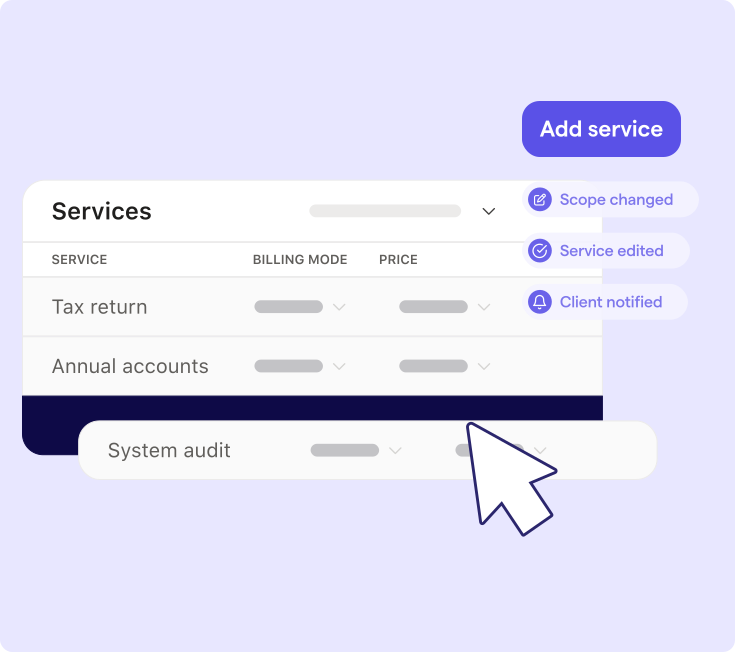
Scope creep is a margin problem before it becomes a dispute. When the original engagement isn't clearly defined, extra requests go unbilled and quietly cut into revenue.
Think about a tax client who asks for help responding to an IRS notice or filing an amended return. Without an engagement letter defining the original scope, there's no agreed baseline to reference when billing for that additional work.
Action: Identify one service line where post-kickoff requests are common, then document exactly what's excluded in your engagement letter.
4. Clearer billing expectations
Vague payment terms create delays at scale. A high-volume tax firm with 80+ active clients can lose weeks of cash flow simply because engagement letters never specified whether payment was due on signing, on filing, or on delivery.
Check that every engagement letter states the billing cadence, due dates, and accepted payment method in plain language. When those terms are clear upfront, clients know what to expect, and automated payment collection can begin the moment the agreement is accepted.
5. Reduced risk of disputes
When a client questions a charge, the conversation is much easier when both parties can reference the same signed document. Say a client disputes a fee for bookkeeping cleanup they assumed was included. A signed engagement letter showing the original scope helps resolve that conversation quickly.
A shared written record matters most when memories differ. Keep the signed letter accessible so you can reference it as soon as a disagreement surfaces.
6. Limitation of liability
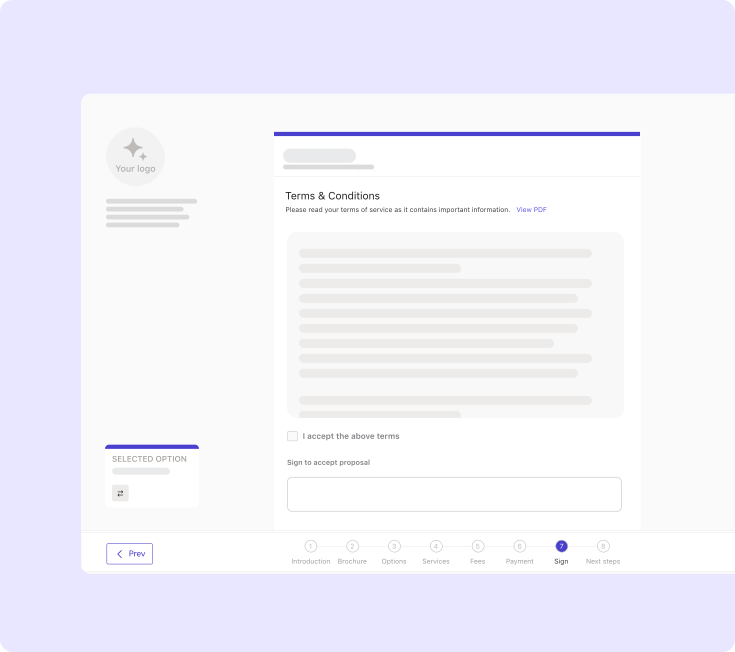
A limitation of liability clause caps your firm's financial exposure if a dispute becomes a formal claim. If a client provides incorrect or late information and an error results, this clause defines the boundaries of your responsibility. Confirm any attorney- or association-reviewed template you use includes this language before putting it into use.
7. Stronger client onboarding
86% of people say they’re more likely to stay loyal to a business that invests in onboarding content that welcomes and educates customers after purchase. A clear engagement letter is where that investment starts.
When a new bookkeeping client receives an online agreement covering services, responsibilities, and next steps before kickoff, they arrive informed and confident. That clarity eliminates clarification emails, signature chasing, and first-impression friction before work even begins.
8. A cleaner path from acceptance to payment
When payment terms live inside the engagement letter, a client's signature doesn't just close the agreement. It starts the billing process. No separate invoice setup. No manual follow-up.
For a firm renewing 100+ tax engagements, that distinction is significant. Acceptance should roll directly into billing. Every extra admin step between signature and payment delays cash flow.
What happens if you skip the engagement letter?
Without a signed engagement letter, scope disputes become difficult to resolve fairly. A client assumes tax preparation includes bookkeeping cleanup; you assumed it didn't. By the time that disagreement surfaces, the work is already done.
Think about your last filing season. Were unsigned engagement letters scattered across Word templates, email threads, and PDF folders? That disorganization creates consequences: delayed payments, unclear responsibilities, and clients who genuinely don't know what they agreed to.
Self-audit prompt: Identify one client engagement that started before terms were signed and note what had to be clarified afterward.
What to include in an engagement letter
A complete engagement letter covers scope, fees, timing, and an unanticipated services clause to protect your margin when work expands.
Scope of services
The scope clause defines exactly what your firm will deliver and what it won't. Without that boundary, clients assume everything is included, and you absorb the cost.
A strong scope clause names the service, frequency, deliverables, and exclusions. For example, a monthly bookkeeping engagement might cover bank reconciliations and standard financial reports while explicitly excluding historical cleanup and advisory work unless separately approved.
If your current language says "bookkeeping services," tighten it. Vague scope is an open invitation to unpaid work.
Client and firm responsibilities
This clause defines what each party must deliver for the engagement to stay on schedule. For tax preparation, specify that the client must submit all source documents (W-2s, 1099s, expense records) by a stated date for the return to be completed as planned.
Spell out exactly what you need, when you need it, and what happens if deadlines slip. Shared accountability removes ambiguity before it becomes a delay.
Fees and billing terms
Billing terms set payment expectations before work begins, protecting cash flow rather than simply documenting it.
Your engagement letter should specify:
- Fee structure and billing cadence
- Payment due dates and collection method
- How out-of-scope work will be billed
Consider a firm agreeing to a recurring monthly fee upfront. Once the client accepts, billing runs automatically, eliminating the need to create and chase invoices after the work is already done.
Timelines and deliverables
Tie every deadline in your engagement letter to document receipt rather than a calendar date. If a client submits their records two weeks late, your obligation to meet the filing deadline shifts accordingly.
If tax returns are due April 15 and your letter requires client documents by March 1, state explicitly that late submissions release the firm from on-time filing guarantees. That single clause shifts accountability where it belongs.
Limitation of liability and confidentiality
A liability clause caps your firm's exposure if something goes wrong, such as a missed deadline tied to incomplete client-provided data. Without it, disputes over damages have no defined boundary.
Confidentiality language sets clear expectations around sensitive financial records. When a client shares tax documents, this clause reassures them their information stays protected while spelling out exactly what obligations your firm holds.
Unanticipated services
Out-of-scope requests can quickly erode profitability without a clear process for approving and billing additional work. An unanticipated services clause defines how that work gets identified, approved, and billed before it's performed.
A bookkeeping client who later requests prior-year cleanup, amended filings, or ad hoc advisory support should trigger a new fee or a formal engagement amendment before that work begins.
Confirm your engagement letter includes an explicit approval mechanism for extra work. If it doesn't, you're absorbing those hours.
When to send an engagement letter
Send an engagement letter before any work begins. No exceptions. The signed letter is the green light.
Issue a new or updated letter for:
- Each new client engagement
- Annual tax season renewals
- Mid-year scope changes (e.g., a bookkeeping client adds payroll)
- Fee restructures
If a client expands the scope in July, pause and send an updated letter before taking on the additional work.
Managing renewals and amendments
Most accounting bodies recommend re-engaging clients at least annually, and for firms with large client portfolios, that means renewing engagement letters before filing season even opens.
Treat full annual renewals and mid-year scope changes as two separate workflows. Recreating a complete engagement letter every time a client adds a service wastes hours your team doesn't have.
Ignition's agreement amendment feature handles smaller in-year changes without requiring a full re-sign. A client expands from tax preparation into advisory services? Amend the existing agreement rather than starting over.
Keeping engagement letters accurate over time is what separates firms that scale from those buried in admin.
The problem with disconnected tools
Most firms manage engagement letters across four or five separate tools, using Word for drafting, email for delivery, a standalone e-signature app for signing, and a separate system for billing. Each handoff is another opportunity for something to get lost.
Picture tax season with 150 clients. Signed letters live in inboxes and shared drives. Unsigned ones sit unnoticed until work is already underway. Follow-up is manual. Billing doesn't start until someone checks the signature status—if they remember to check at all.
Quick self-check: Count how many tools your firm touches between drafting an engagement letter and sending the first invoice. If the answer is three or more, you have a visibility gap that compounds as your firm grows.
Best practices for managing engagement letters at scale
The right processes can eliminate many of these bottlenecks before they affect your team or your clients.
- Use standardized templates. Build one master template per service line so every letter starts from the same approved language.
- Review scope annually. Update templates before tax season to reflect current service offerings and pricing.
- Get signatures before work starts. No signed agreement means no billable work. No exceptions.
- Define billing terms explicitly. State payment due dates, late fees, and accepted payment methods inside the agreement itself.
- Document client responsibilities. Specify what the client must provide and by when to avoid scope disputes.
- Send renewals in bulk. A 100-client firm can't afford to send renewals one at a time in January. Batch them in November.
- Use amendments for scope changes. Avoid rewriting full agreements for small additions.
- Connect agreements to billing. Signed letters should trigger invoices automatically, not manually.
How Ignition connects engagement letters to your client lifecycle

Ignition embeds engagement letters directly into proposals, billing, and payments, turning a client's signature into the start of a revenue workflow.
When a tax practice manages renewals at scale, Ignition lets you send templated engagement letters in bulk, collect e-signatures, and capture payment details in one pass. Once a client signs, billing starts automatically, removing the need to create invoices manually or follow up on payments separately.
Ignition is the only engagement letter platform where a signed agreement can automatically trigger billing. That eliminates the manual handoff between your contracts tool and your invoicing process.
Tax professionals also benefit from Ignition's partnership with NATP, which provides pre-built, professionally reviewed templates designed specifically for tax practices.
The operational result is one connected workflow from proposal to signed agreement to payment instead of three separate tools and the errors that come with them.
Engagement letters are your firm's operational foundation
For firms managing large client portfolios, engagement letters do more than satisfy compliance requirements. They organize how work gets scoped, accepted, and billed. The practical question isn't whether your firm has engagement letters. It's whether they're current, signed, and connected to how you get paid.
Audit your engagement letter workflow before tax season starts. Confirm every active client has a signed, current letter and that client acceptance automatically triggers billing. Ignition links proposals, engagement letters, payment collection, and automated billing into a single workflow so nothing falls through after client acceptance.
Simplify engagement letters from signature to payment
Ignition helps you keep client work moving in one connected workflow.
FAQs
-
Requirements vary by jurisdiction and professional body, so there’s no single universal rule. Engagement letters are widely expected as a standard of professional practice for CPAs and tax professionals across the US, and firms should check the guidelines that apply to their practice.
-
Engagement letters should be reviewed and reissued at the start of each new engagement period and annually for ongoing clients. When scope, fees, or responsibilities change mid-engagement, a documented amendment can keep the agreement current without requiring a full re-sign for every small change.
-
An engagement letter is a type of contract specific to professional services, confirming engagement terms in plain language with the same binding function as a formal contract. For accounting firms, engagement letters are more practical to issue, sign, and manage at scale than traditional contract documents while still creating a clear, documented agreement between the firm and the client.
-
Yes, if you are using the right platform. Sending engagement letters one by one through email or Word is time-consuming and error-prone, especially for firms managing hundreds of clients before tax season. Platforms like Ignition allow firms to send engagement letters in bulk using pre-built templates, track acceptance, and collect e-signatures without manually preparing each document.
-
Out-of-scope requests should be handled through a documented amendment or a new engagement letter covering the additional services, fees, and terms. Ignition's agreement amendment feature allows firms to notify clients of small scope changes without requiring a full re-sign, keeping the process efficient while maintaining a clear paper trail.