Value-based pricing for accounting firms: Step-by-step guide



 Copied to clipboard.
The billable-hour model assumes an accountant's greatest asset is their time. But advisory and consulting work now takes priority over traditional bookkeeping and compliance tasks. Clients seeking accounting services care less about minutes logged and more about expertise, insight, and measurable business impact.
Replacing hourly billing with a value-based pricing model shifts the focus from inputs to outcomes. Firms adopting value-based pricing often report stronger margins, deeper client trust, and freedom from the constant pressure of tracking hours.
Moving away from the hourly rate can feel daunting, but the transition becomes far more manageable with a structured approach. Clear pricing frameworks, defined scope, and automated workflows help build a more profitable, outcome-focused practice.
Key takeaways
- Value-based pricing aligns fees with client outcomes rather than hours worked, helping accounting firms better capture the value of their expertise and advisory services.
- Transitioning from hourly billing requires clearer communication and a more intentional pricing structure, often supported by packaging services into tiered bundles clients can easily compare.
- Clear scope and engagement letters protect margins by preventing scope creep and setting expectations upfront.
- Platforms like Ignition help automate proposals, contracts, billing, and payments, reducing administrative work and supporting more consistent cash flow.
- Firms that implement value pricing often see more predictable revenue, stronger client loyalty, and greater capacity for high-impact advisory work instead of time tracking.
What is value-based pricing for accounting firms?
Value-based pricing is a model where fees reflect the benefit or outcome a client receives rather than the time spent delivering the service. Instead of billing by the hour, accounting businesses price their work based on the expertise required, the scope of the engagement, and the value delivered to the client.
The billable hour has long been the go-to standard for accounting firms, used as a yardstick for measuring everything from revenue to employee performance. But many firms are shifting toward value-based pricing as advisory services take on a larger role in modern accounting work.
Value-based pricing treats price as subjective. Rates vary based on the client's business goals, the complexity of the work, and the potential impact of the outcome.
For example: Strategic tax planning for a growing business operating in multiple states holds far more value than basic bookkeeping for a sole trader. While both are important services, the latter carries lower risk and complexity. A sole trader's needs can often be met with a smaller package of services, while a multi-state business may require deeper expertise and more strategic guidance.
Learn how accounting firms are pricing services
Explore benchmark data, trends, & cash flow insights.
Value pricing vs. hourly and fixed-fee models
To understand value-based pricing, it helps to compare it to other common models. While every approach comes with trade-offs, this model is unique because it aligns your financial incentives with client success.
- Hourly billing: You charge for the time it takes to complete a task. This often penalizes efficiency, because the faster and more experienced your team becomes, the less revenue you generate for delivering the same result. It also creates unpredictable invoices for clients, which can strain trust and make budgeting difficult.
- Fixed fee pricing: Charging a flat rate per task creates more predictability for clients, but pricing is still anchored to scope and internal costs rather than outcomes. If the scope shifts or pricing assumptions are inaccurate, profit margins can shrink fast. In fact, fixed-fee projects can produce margins 15–20% lower than expected when scope creep and underestimated complexity consume unbudgeted hours.
Value-based pricing starts with the client's goals and the business impact your expertise can create, rather than internal costs or market rates. This model supports the broader shift from task-based accounting work toward advisory services, where strategic insight often matters more than time spent completing the work.
Guidance on corporate structure, tax strategy, or growth planning may deliver significantly more value to a client than the hours required to produce it. Value-based pricing lets you charge based on that impact rather than the time logged, while also rewarding innovation and efficiency as technology improves delivery.
Comparison of accounting pricing models
| Feature | Hourly billing | Fixed-fee pricing | Value-based pricing |
| Based on | Time spent | Scope of work/tasks | Outcome and perceived value |
| Predictability for the client | Low | High | High |
| Firm incentive | Work more hours | Complete tasks efficiently | Deliver maximum impact/results |
| Best suited for | Unpredictable, one-off projects | Standardized, repetitive compliance work | Strategic advisory and high-impact work |
Benefits for firms and clients

Rolling out value-based pricing is more than an administrative change. Billing based on results instead of hours creates stronger alignment between your growth and your clients' success.
Three clear benefits follow this shift:
- Predictable margins: Fixed upfront fees reduce revenue volatility and simplify forecasting because revenue is no longer tied directly to billable hours. Value-based billing also protects your margin by allowing your business to remain profitable as your team becomes more efficient. That shift can support stronger financial performance, with 72% of tax firms using innovative pricing models reporting an average revenue increase of 24%.
- Stronger client relationships: Hourly billing can create friction because clients know every call or email may increase their invoice. Value-based billing shifts the conversation from hours logged to outcomes achieved, while upfront pricing reduces invoice surprises and lowers the risk of disputes.
- Administrative relief: Time tracking consumes valuable team capacity. Reducing reliance on timesheets and manual tracking frees your accounting professionals to spend more time on advisory work and other high-impact client activities.
5 steps to roll out value-based pricing
Making the shift to value-based pricing requires a structured approach. These five steps can help you move through the transition with more clarity and consistency.
1. Pinpoint client value drivers
Unlike hourly pricing, which can be calculated with a spreadsheet, value-based pricing requires a deeper understanding of what each client values most. Start with discovery conversations that uncover business priorities and desired outcomes.
Value is subjective, and those priorities will vary from client to client. Some firms may prioritize growth and expansion support, while others place greater value on compliance assurance and reduced financial risk. One client may prioritize audit readiness and risk reduction, while another may focus more heavily on ongoing strategic advisory support tied to growth.
Document these insights carefully and use them to shape your value-based prices, service packaging, and pricing strategy.
2. Package services into tiered bundles
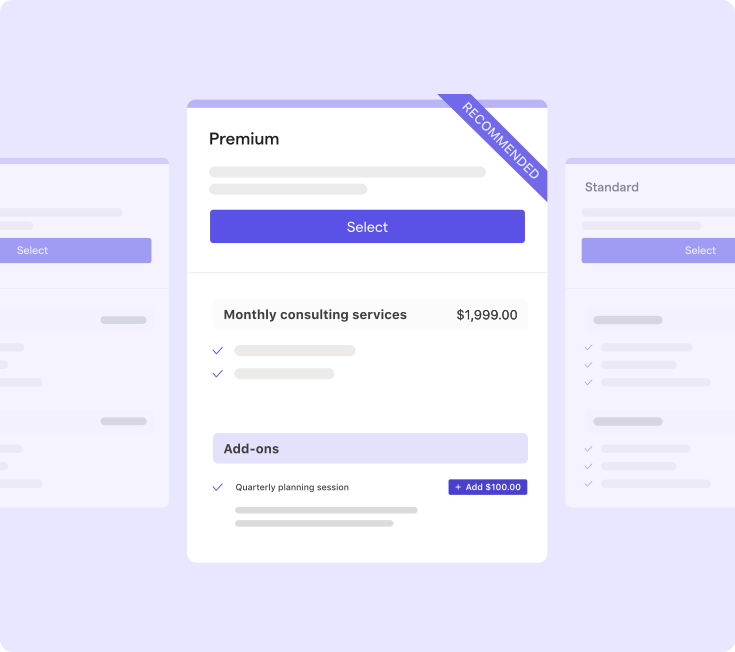
Once you've identified your value proposition for each client, develop a set of pricing tiers based on the level of support and expertise your firm provides. For example:
- Tier 1 - Essential: Basic compliance, tax filing and reporting, and annual reviews
- Tier 2 - Growth: Monthly bookkeeping, performance reporting, and quarterly advisory services
- Tier 3 - Premium: Fully outsourced CFO services, strategic tax planning, and unlimited support
Offering tiered services helps anchor the value of each package while giving clients straightforward options that allow them to self-select the level of support they need.
Using a platform like Ignition makes it easier to present these options in an interactive proposal that simplifies the client's decision-making process.
3. Set fixed fees that match value
With your tiered model defined, set a fixed price per client based on the value each package delivers. Resist the urge to anchor your new pricing to hourly rates, internal costs, or competitor benchmarks. If a client saves $50,000 through your expertise, a $10,000 fee may still represent a strong return on investment, even if the work only took a few hours.
Test your new pricing with a small group of clients first, then adjust rates based on feedback, close rates, and profitability.
At this stage, many businesses underestimate the value they provide. If every client immediately accepts your pricing without hesitation, there's a good chance your services are underpriced.
4. Formalize scope in engagement letters
“Scope creep” can quickly undermine a value-based pricing model when unplanned or unbilled work starts cutting into your margin. Set expectations upfront by clearly defining what’s included and what falls outside the agreed scope in written agreements.
Creating these agreements doesn’t need to be a fully manual process. Ignition offers industry-vetted templates that help streamline engagement letters, improve consistency, and reduce administrative work.
5. Automate billing and renewals
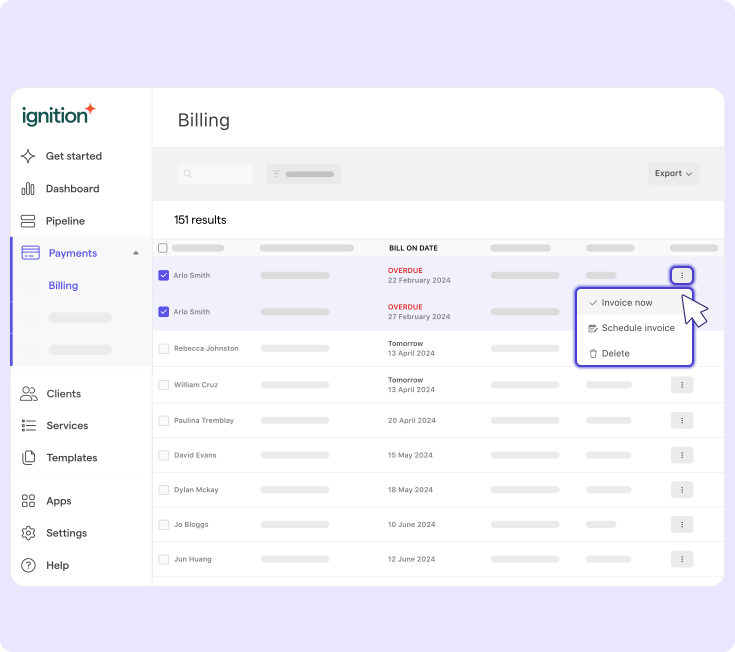
If you’re still sending manually generated invoices each month or chasing down payment paperwork, you risk losing the efficiency gains that value-based pricing is designed to reward. A sustainable pricing model needs a system that connects client agreements directly to cash flow.
One of the biggest challenges in value pricing is updating fees as a client’s business grows. Ignition’s bulk renewal features give businesses a fast, scalable way to update pricing across entire client segments, whether that means applying annual increases or rolling out new service tiers, without revisiting every engagement individually.
Because proposals, contracts, and billing are connected, pricing updates apply automatically. These changes can be built directly into client agreement cycles, so updated pricing reflects evolving client needs when agreements come up for renewal.
Once a client accepts the updated agreement, billing and payments follow without additional setup. This consistency reduces errors and removes much of the administrative burden that prevents firms from updating pricing regularly.
How automation powers sustainable value pricing
Moving from a value-based pricing strategy to day-to-day execution is where many businesses struggle. Without the right infrastructure, even strong pricing models can become difficult to manage at scale.
The biggest risk during this transition is revenue leakage: businesses agree on value-based pricing in theory but fail to consistently capture that value in practice.
Without an end-to-end workflow linking contracts, billing, and payments, disconnects quickly appear between agreed scope, invoicing, and cash collection. Engagement terms may live in a PDF, invoices are generated separately in an accounting platform, and payments still depend on manual follow-up. These gaps create opportunities for out-of-scope work to go unbilled while invoices become delayed, overlooked, or disputed.
This friction undermines the clarity and confidence that value-based pricing is meant to create. Ignition brings proposals, contracts, billing, and payments together through automated pricing workflows designed to support scalable, value-based billing.
Ignition delivers:
- Scope control and instant billing: Because your proposal becomes the contract, billing can begin the moment a client signs, reducing manual work and missed revenue opportunities.
- Engagement insights for pricing tweaks: Pricing performance insights help identify which packages perform best so your pricing decisions can evolve alongside profitability goals.
- Integrated payments for faster cash flow: By collecting payment details upfront, firms create faster, more consistent cash flow. Once work is approved, payments follow automatically, so teams can stay focused on clients instead of collections.
Turn value pricing into predictable revenue
Value-based pricing aligns profitability with client success by shifting the focus from hours worked to outcomes delivered. Instead of tying revenue to time tracking, businesses can charge based on the expertise, insight, and strategic value they provide. The result is stronger margins, clearer client expectations, and more capacity for high-impact advisory work.
Sustaining this model at scale requires the right systems behind it. Ignition helps businesses operationalize value-based pricing by connecting client agreements, billing, payments, and renewals in one automated system, reducing administrative overhead, automating recurring processes, and supporting more consistent cash flow as pricing evolves.
Build a stronger value-based pricing model
See how Ignition helps simplify day-to-day operations, scale value-based pricing, and create a smoother client experience.
FAQs
-
Yes. Tax services often deliver significant value through savings, compliance assurance, and peace of mind, which can be packaged into fixed-fee outcomes instead of hourly engagements.
-
Frame the change as an upgrade centered on predictability and outcomes. Offering a short pilot period can also help clients experience the new model before fully transitioning.
-
Track average revenue per client, client retention rates, and time saved on billing administration. Improvements across these metrics often indicate that value pricing is working effectively.