What should a great marketing proposal include?


 Copied to clipboard.
Most agencies already know how to write a marketing proposal. The problem is everything that happens around it: the Word doc emailed as a PDF, the DocuSign link sent separately, the invoice created manually a week after the client says yes, and the payment that still hasn't landed by day 30.
That fragmented workflow is where retainer revenue gets delayed and scope starts to drift. A client signs on a Friday, but billing doesn't start until someone remembers to set it up on Monday. By then, the engagement is already underway and the commercial terms feel like an afterthought.
Understanding how to write a marketing proposal that solves this means treating the document as the start of a billing workflow rather than a sales tool. Scope, pricing, and terms aren't just persuasion. They're the operational foundation that determines whether the agency gets paid accurately, on time, and without manual follow-up.
This post walks through every section of a high-performing marketing proposal, with specific guidance on structure, pricing, and terms that protect agency margin and connect signing directly to payment.
Key takeaways
- Most marketing proposals fail due to vague scope, pricing disconnected from payment, and fragmented tools, not poor writing.
- A clearly defined scope of work is the primary defense against scope creep and billing disputes in retainer engagements.
- Transparent pricing in a marketing proposal can enable payment authorization at signing, removing the payment ask from the client relationship.
- Strong terms and conditions protect agencies from scope disputes and may help reduce days sales outstanding over time.
- The moment a client signs a marketing proposal can trigger automated billing, making signature the start of the revenue cycle.
Why most marketing proposals fall short
The typical agency proposal workflow has at least three points of failure before a client ever pays:
- Vague scope. When deliverables aren't defined precisely, clients interpret gaps in their favor. A retainer signed for "social media management" becomes twelve revision rounds and weekend Slack messages.
- Pricing disconnected from payment. A client signs a PDF, then waits for a separate invoice. That gap creates delayed cash flow and leaves you chasing follow-up on your own dime.
- Fragmented tools. Word for the proposal, DocuSign for the contract, QuickBooks for billing. Nothing talks to anything else. When a retainer closes, someone still has to manually create the invoice and chase payment authorization.
These aren't proposal problems. They're operational problems that compound across every client you onboard.
Know your client before you pitch
The strongest marketing proposals are built on discovery, not assumptions. Before writing a single line of scope, confirm who signs off on the budget.
Run through this checklist before drafting:
- Talk directly to the decision-maker
- Confirm measurable goals and how success is defined
- Map current channels, tools, and competitors
- Clarify budget range and internal approval steps
Consider an agency pitching an SEO and content retainer where three internal stakeholders each have veto power and no clear KPIs exist. Without that discovery, scope and pricing become guesswork, and guesswork invites disputes.
This groundwork makes your business proposal specific enough to protect your agency when the terms are questioned.
How to structure a marketing proposal
Vague proposal structure is where scope creep starts. Without a clear sequence connecting client goals to deliverables, pricing, and payment terms, clients question costs mid-project and sign-off stalls.
For a website redesign proposal, that sequence matters. Define objectives first, then scope, then pricing, then terms. Reversing that order creates pricing confusion before the client understands what they're buying.
Step 1: Write the executive summary
The executive summary is a commercial preview, not a mission statement. It should tell the client what problem you're solving, how you'll solve it, and what it costs before they read another word.
For a monthly paid media retainer, that means opening with the client's growth gap, naming the service model (retainer, fixed-fee, or project-based), stating the monthly fee, and confirming payment terms upfront.
Cover four things in this section:
- Client problem
- Proposed solution
- Service model and pricing
- Next steps for signing
Clients who understand scope and cost from the first paragraph sign faster and dispute less.
Step 2: Clarify client objectives and goals
Vague goals create scope exposure. When a client says "grow brand awareness," that phrase means nothing until it's translated into specific channels, deliverables, and reporting cadences.
Before writing a single line of your proposal, convert each objective into a measurable input:
- Channel: Instagram and LinkedIn only
- Deliverable: 12 posts per month
- Reporting: Monthly reach and engagement summary
That specificity defines the boundary of what you're promising and gives you grounds to bill for anything outside it.
Step 3: Define scope of work
Scope determines what the client is buying and what you can bill without dispute. Document included services, exclusions, and billing triggers in clear terms.
For a content marketing retainer, that means specifying strategy, monthly deliverables, and reporting as included while explicitly excluding ad management and new landing pages. Those exclusions become your billing leverage when requests expand.
What lives here: Phases, deliverables, timelines, and responsibilities. Clarity here prevents scope creep.
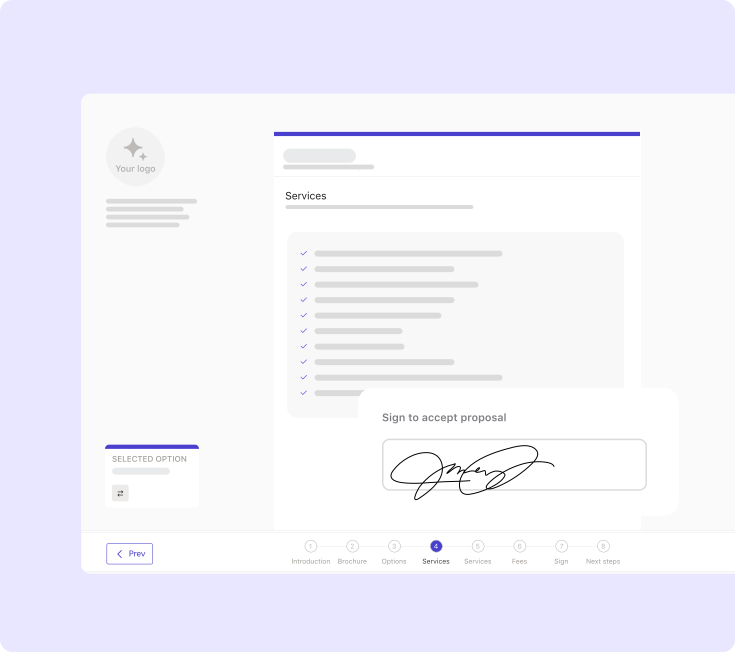
Deliverables, timelines, and responsibilities
Every scope section should name what gets delivered, who owns it, and when it's due.
Client dependencies belong here, too. If a campaign launch requires brand assets by a specific date, state that explicitly. If monthly creative production can't start without client approval, say so. When delays trace back to the client, your billing timeline stays protected.
Example: "Brand assets due by the 1st. Creative production begins on the 5th. Late delivery shifts the launch date accordingly."
How clear scope prevents scope creep
Vague deliverables are the fastest way to erode margin on a retainer. When scope isn't documented precisely at signing, clients naturally expand expectations and agencies absorb the cost.
Say a client adds LinkedIn ads or requests two extra revision rounds mid-retainer. Without a documented baseline, that work is absorbed silently.
Ignition Proposals handles this directly. When out-of-scope work comes up, you issue a change order inside the same platform, adjusting price and scope without drafting a new proposal from scratch.
Step 4: Prove strategic ROI
Your strategy section does two jobs: demonstrates value and sets a contractual boundary.
Write it tightly enough that the client understands exactly what's included and what isn't. An SEO retainer might cover keyword research, on-page recommendations, and monthly optimization. State that explicitly, then note it excludes a full website rebuild.
That specificity protects you. When a client requests something outside that scope, you have a clear baseline to reference and a straightforward reason to bill for the additional work.
Step 5: Identify key KPIs and success metrics
Match your KPIs directly to the scope you've defined. For a paid media retainer, that means tracking cost per lead, conversion rate, and qualified pipeline, not vanity metrics like impressions.
Specify reporting cadence in the proposal itself: monthly reporting for a social retainer, weekly for active paid campaigns.
Defined metrics give you documented proof of value at renewal, making the conversation about continuing the engagement rather than justifying it.
Step 6: Align budget and pricing
Vague pricing creates scope creep. Precise pricing prevents it and makes automatic billing possible the moment a client signs.
With Ignition Proposals, payment details are collected at signing, so your billing cadence begins immediately, with no manual follow-up. That only works if your fee structure is specific enough to trigger it correctly.
A practical example: A client on a $4,000 monthly retainer and a separate $6,000 campaign launch project needs two distinct line items with different billing cadences and different payment terms. Bundle them and you lose visibility into margin on each.
Retainer profitability depends on honest hour and deliverable estimates tied directly to your fee. Agencies that skip that discipline routinely over-service engagements and erode margin before they notice.
Pricing transparency builds trust
Clients hesitate when pricing feels ambiguous. Tiered retainer options eliminate that friction by letting clients compare what they get at each investment level.
For example, present three tiers: basic reporting and one channel, mid-tier with multi-channel management, and a full-service tier with custom analytics. Clients can self-select without back-and-forth, which shortens the time between proposal delivery and signature.
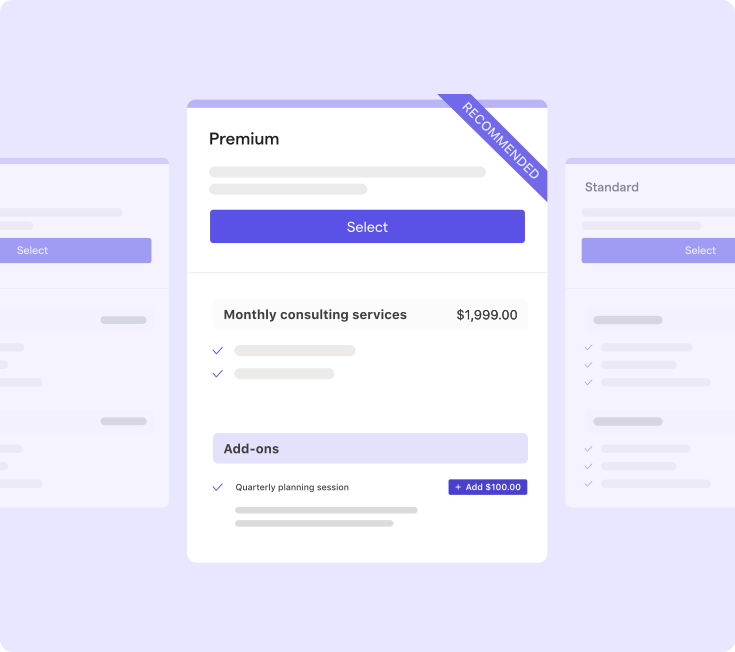
Clear pricing enables payment at signing
When pricing is defined inside the proposal, signing becomes the moment payment is secured, not a starting gun for invoice chasing.
With Ignition Proposals, a client selects a service tier, enters ACH or card details during acceptance, and triggers recurring billing automatically. No separate invoice. No follow-up email.
The payment ask disappears from the client relationship entirely because it's already handled at the point of commitment.
Step 7: Build trust in your firm
Your proposal is evidence before the engagement begins. A branded, well-structured proposal that arrives within hours signals that your firm is organized and ready to deliver before a single conversation about scope.
Specificity builds credibility faster than any testimonial. Include a brief case study from a similar retainer client at the same niche and growth stage with a concrete outcome like revenue recovered or hours saved.
The proposal experience itself differentiates you. Clients notice when the process is smooth.
Step 8: Include terms and conditions
Terms and conditions convert a proposal into a working agreement. Define payment terms, scope boundaries, and approval rules directly in the proposal so there's no ambiguity once work starts.
For a creative retainer, that means specifying capped revision rounds and turnaround windows before the client signs, not after the third round of feedback.
Ignition lets you attach T&Cs to every proposal so clients accept them at signing. For deeper guidance on scoping, check out this consulting proposal guide.
Protect against scope creep and disputes
Your terms should define exactly what falls outside the retainer and how additional requests get billed. Without that, ambiguous payment terms drive delayed payments.
Say a client asks for an extra landing page or custom reporting mid-month. Explicit terms make that request billable immediately, not a negotiation. Spell out your change request process, approval steps, and rates before work begins.
Electronic acceptance at scale
Ignition Proposals captures a legally documented e-signature at the moment a client accepts scope, pricing, and terms, creating a clear record before billing starts.
For an operations lead managing a dozen active retainers, that record is the checkpoint. No accepted proposal in Ignition means no billing trigger. Disputes about what was agreed become easy to resolve because the signed document is always one click away.
What happens after a proposal is signed
Signature is not the finish line. It's the trigger. When a client accepts a retainer on a Friday afternoon, Ignition Proposals automatically collects payment authorization, schedules recurring billing, and kicks off onboarding steps without a single follow-up email from your team.
That means no chasing payment details on Monday. No manual invoice creation. The operational sequence runs on its own.
The result: Faster time-to-cash and a cleaner client experience from day one.
Payment authorization collected upfront
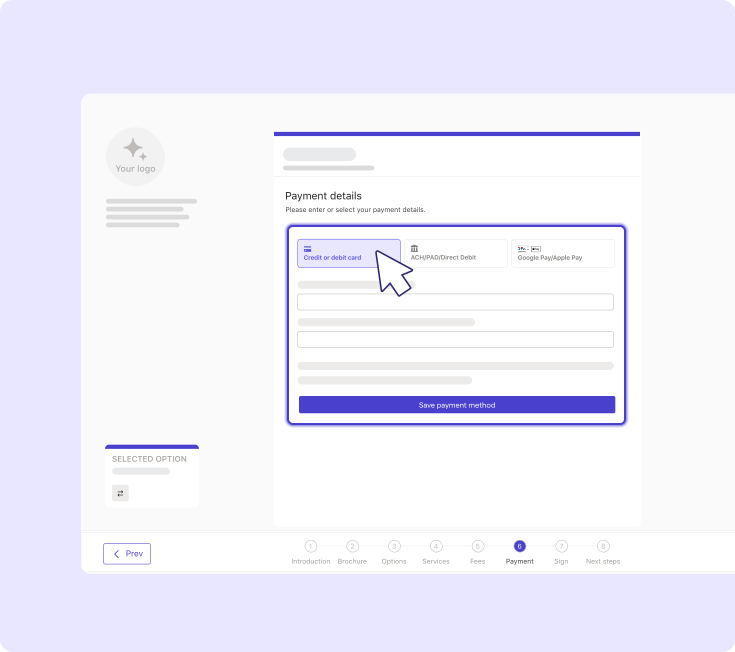
When a client signs a proposal in Ignition, they enter their payment details at that same moment. A first-month retainer or upfront deposit is authorized during acceptance—no separate invoice email required. That eliminates the gap between "signed" and "paid" without any manual follow-up on your end.
Stop sending proposals that delay payment
The traditional flow—Word doc, DocuSign, then a separate invoice—creates a gap between signing and billing that costs you time and cash flow.
Ignition Proposals collapses that into one step. When a client accepts, payment authorization starts immediately. No follow-up email. No manual invoice creation.
Turn every signed proposal into faster payment
Create professional proposals, collect payment details at signing, and start billing automatically with Ignition.
FAQs
-
A strong marketing proposal covers an executive summary, client objectives, scope of work, strategy, KPIs, pricing, and terms and conditions. Each section builds on the last, creating a documented foundation for scope, deliverables, and billing. Skipping or leaving vague any section increases the risk of scope creep and delayed payment.
-
A marketing proposal outlines the recommended solution, scope, pricing, and timeline to win the client's agreement. A contract formalizes those terms as legally binding commitments once both parties accept. In practice, the gap between the two should be as small as possible: proposals that include clear terms and electronic acceptance can function as the starting point for a formal engagement.
-
Retainer pricing should reflect an accurate estimate of the services, hours, and deliverables included in the engagement, not just a round number that feels reasonable. Profitability in retainer models depends on disciplined scope definition at the proposal stage, because under-scoped retainers lead to chronic over-servicing and margin erosion. Transparent, itemized pricing in the proposal also makes automated billing possible: when pricing is clearly defined, payment authorization can be collected at signing.
-
Length should follow scope, not convention. A proposal for a short project engagement may need only a few focused sections, while a retainer covering multiple service lines warrants more detail across scope, strategy, and terms. The goal is enough specificity to protect both parties from disputes, not a document that impresses by volume.
-
Specificity is the clearest differentiator: proposals that reflect genuine discovery, name the client's challenges, and define deliverables precisely signal operational maturity. A professionally delivered, branded, digital proposal that clients can review and sign in one step also reduces friction at the decision moment. Platforms like Ignition make that experience possible without design overhead, connecting proposal acceptance directly to billing and payment collection.