How to create a business proposal for a client in 7 steps



 Copied to clipboard.
An agency owner puts the finishing touches on a retainer proposal in Google Docs, exports it as a PDF, and emails it to the client for signature. Once the client signs, those same terms get typed into a separate invoicing tool from scratch. That gap between signature and invoice is where delays, scope confusion, and unpaid work tend to start.
A business proposal is a document that recommends services, defines scope and deliverables, sets pricing and payment terms, and establishes the path to client acceptance and payment. When it stops at acceptance without connecting to billing, payment becomes an afterthought.
This guide walks through seven steps to build a proposal that defines scope, pricing, and payment terms in one place, and connects client acceptance directly to billing.
Key Takeaways
- A proposal, quote, contract, and engagement letter each serve a different purpose in client onboarding.
- Confirmed client information, like budget and timeline, makes a proposal stronger than one based on assumptions.
- Defining services, deliverables, a schedule, and exclusions helps both sides confirm when work is complete.
- Agreeing how extra work gets approved and billed gives you a documented path to handle scope creep.
- Collecting payment authorization at signing can shorten the gap between winning work and getting paid.
What's the difference between a proposal, quote, contract, and engagement letter?
A proposal recommends services, a quote centers on price, and a contract or engagement letter records the terms both parties agree to follow. Each document performs a distinct job in client onboarding.
When these roles overlap, onboarding slows down. A client who receives a quote expecting a scope recommendation asks follow-up questions. A proposal that doubles as a contract invites legal review before signature. Every clarification email adds days to the process.
When each document has a clear role, the sequence moves cleanly: recommend, price, agree, sign. There's no back-and-forth or ambiguity about what the client is approving.
Note: The distinctions here are operational guidance to help streamline client onboarding, not legal advice. Consult a qualified attorney for advice specific to your jurisdiction and engagement type.
Get to the proposal faster
See how AI turns client meeting notes into clear, customized proposals in minutes.
7 steps to create a client-ready business proposal
A client-ready proposal follows a connected sequence: confirm what the client needs, define the scope, set pricing and payment terms, then move to signature and follow-up.
These seven steps apply whether you're structuring a retainer, a fixed-price project, or a time-and-materials engagement. Each step builds on the last, so skipping one creates gaps that slow down acceptance or complicate billing later.
1. Gather the client's information before you write anything
Proposal drafting starts only after you've confirmed the client's core engagement details. A proposal built on assumptions creates scope gaps, pricing mismatches, and rework before the engagement even begins.
Before you open a blank proposal, confirm these seven details:
- Desired outcome: What success looks like for the client
- Current challenge: The specific problem driving the engagement
- Stakeholders: Who is involved and who has final sign-off
- Budget: The range they're working within
- Timeline: When they need work to begin and key milestones
- Decision process: How and when they'll approve the proposal
- Existing systems: Tools, platforms, or workflows already in place
Say you're an agency owner scoping a potential content retainer. The client hasn't confirmed which channels they want covered, who approves deliverables, or what budget they're working with. Without those answers, any scope you write is a guess, and a guess is a liability once the engagement starts.
2. Confirm the client's problem and desired outcome
A strong proposal opens by restating the client's problem in the client's own words. This shows you were listening during discovery and builds immediate trust that you understand what they're dealing with.
Once the problem is clear, connect it to an observable outcome: what the client will be able to see or do differently once the engagement is complete. Keep that outcome grounded in reality. Don't promise a guaranteed result.
A bookkeeping firm might capture this as: "Your monthly reconciliation is currently running two to three weeks behind close, which limits your visibility into cash position. This engagement is designed to bring your books current within five business days of month end."
That framing describes the before state, names what the work addresses, and sets a measurable benchmark without promising a specific financial outcome. It’s a big part of creating proposals that sell.
3. Detail the scope of work, deliverables, and exclusions
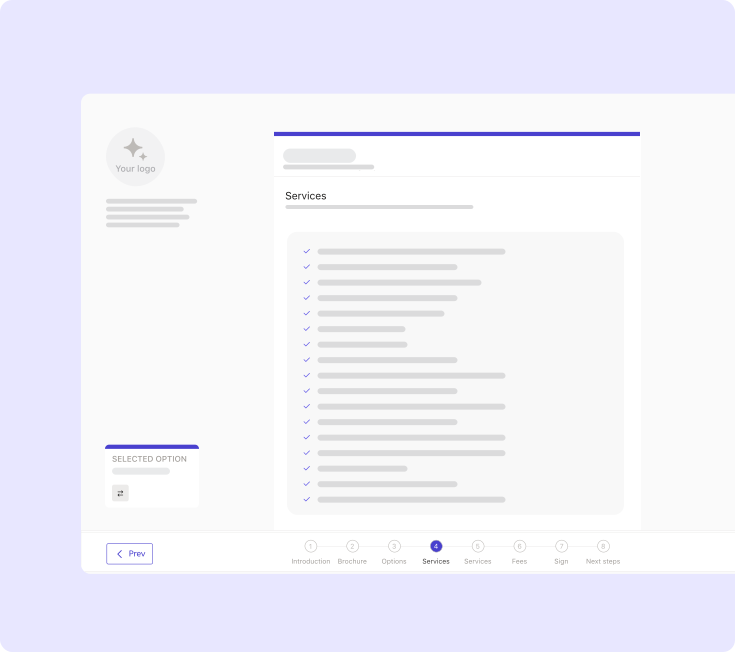
Clear scope combines five elements: included services, deliverables, schedule, client responsibilities, and exclusions. Together, they give both parties a shared definition of what completed work looks like.
For a digital marketing agency retainer, that structure might look like:
- Included services: Google Ads management, monthly SEO reporting, and social media scheduling across two platforms
- Deliverables: One performance report delivered by the 5th of each month
- Schedule: Campaign updates every two weeks, with a quarterly strategy review
- Client responsibilities: Approving ad creative within three business days and providing brand assets before kickoff
- Exclusions: Website development, influencer outreach, and ad spend outside the agreed monthly budget
Any extra request outside those boundaries goes through a separate approval process before work begins. That single line prevents scope creep before it starts.
The same structure applies to accounting engagements. Included services might cover monthly bookkeeping and financial report preparation. One-time work, such as a prior-year cleanup, gets listed separately with its own deadline.
Client responsibilities there might include providing bank statements by the 3rd of each month, while exclusions spell out what the engagement doesn't cover, such as payroll processing or tax planning.
Specific deliverables are what make scope enforceable. A deliverable like "reconciled accounts delivered by the 10th of each month" tells both parties exactly when the work is done. A vague phrase like "ongoing bookkeeping support" tells neither party anything useful.
If you want to go deeper on scope, these consulting proposal template tips cover the key elements in practical detail.
4. Price the engagement and offer service packages
Offer one recommended package when the right scope is clear, or two to three packages when clients have meaningful service choices.
Every package should connect three things:
- The scope it covers
- How and when billing occurs
- What falls outside the agreement
Separating these creates ambiguity that leads to disputes later.
A consulting firm scoping a process improvement engagement might offer two packages. The first covers discovery and a written recommendations report, billed in two installments at project start and delivery.
The second adds implementation support through a defined number of advisory sessions, billed monthly over the engagement period. Both packages state explicitly that additional stakeholder workshops fall outside scope and require a separate agreement.
On pricing structure, fixed fees give clients cost certainty and reduce friction at sign-off. Hourly rates protect you when scope is genuinely unclear, but they shift the risk of open-ended work onto the client relationship. The right model depends on how well-defined the deliverables are at the time you send the proposal.
Are you charging what you're worth?
Get the guidance to price your services and packages with confidence.
5. Set payment terms and commercial details
Vague terms create disputes, while specific terms prevent them. Before a client signs anything, your payment terms should spell out four things:
- The billing trigger
- The amount or billing frequency
- The due date
- The payment methods you accept
Match the billing structure to how the engagement actually runs. A project with upfront costs warrants a deposit. Ongoing work like bookkeeping or a monthly retainer calls for recurring payments tied to a fixed date. A one-time deliverable gets a single invoice.
Work billed at completion needs a clear trigger, such as final file delivery or client sign-off, spelled out in the proposal itself.
For payment methods, specify what you accept: cards, direct debit or automated clearing house (ACH), Apple Pay, or Google Pay. Listing accepted methods removes ambiguity and sets client expectations before the first invoice arrives.
Also, state the due date clearly. Net 30 means something different to every client. "Due on the 1st of each month" or "due on acceptance" leaves no room for interpretation.
Have appropriate professional advisors review your payment terms before you finalize them. The right language protects the commercial relationship, so getting there is worth the extra step.
6. Send the proposal for digital review and signature

A unified digital acceptance flow lets the client review scope and commercial terms, sign the proposal, and provide payment authorization in one step.
The client receives a single link. From there, they review the full scope of work, any service packages or add-ons, and the agreed commercial terms. They sign digitally, then authorize payment where that step is configured for the engagement.
Billing behavior after acceptance depends on how the engagement is configured, whether that’s upfront payment, a deposit, or a recurring schedule tied to project milestones.
With Ignition Proposals, an agency client approving a new project proposal moves through this entire flow in one session. They confirm the deliverables, accept the terms, apply their e-signature, and provide payment details before closing the browser. The whole thing happens without back-and-forth or a separate contract tool.
7. Follow up until the client decides
Follow up on the decision timeline you agreed on. If the client said they'd decide by Thursday, send a note Wednesday afternoon.
Each follow-up message needs four elements:
- A direct link to the proposal
- A brief restatement of the client's desired outcome
- An answer to any open question they raised
- One specific requested action, such as signing or scheduling a call
A consultant following up on a cash flow advisory engagement might write: "Hi Sarah, linking the proposal here for easy access. The goal is a 90-day cash flow forecast in place before your next funding round. Happy to clarify the scope on a quick call. Could you confirm whether you're ready to move forward?"
One link, one outcome, one ask. That structure respects the client's time and makes a decision easy.
How to handle work that falls outside the signed scope
Get written approval before any out-of-scope work begins. That means documenting the added service, its price, and the billing trigger in a revised scope or paid add-on, then getting the client's sign-off before delivery starts.
The process is the same whether you're an agency fielding a request for an extra landing page or an accounting firm asked to tackle unexpected cleanup work. Without documentation, that extra landing page ships unpaid, and the cleanup absorbs hours that never get billed. With a written record, both sides agree on what's being added and what it costs before anyone does the work.
This protects the client relationship by removing ambiguity, and it protects your billing accuracy by creating a paper trail that connects every invoice to a signed agreement.
How Ignition helps you move from proposal to payment
Ignition connects branded proposals, digital signatures, payment authorization, billing, collection, and accounting reconciliation in one client workflow, replacing the disconnected combination of Word documents, DocuSign, and separate invoicing tools.
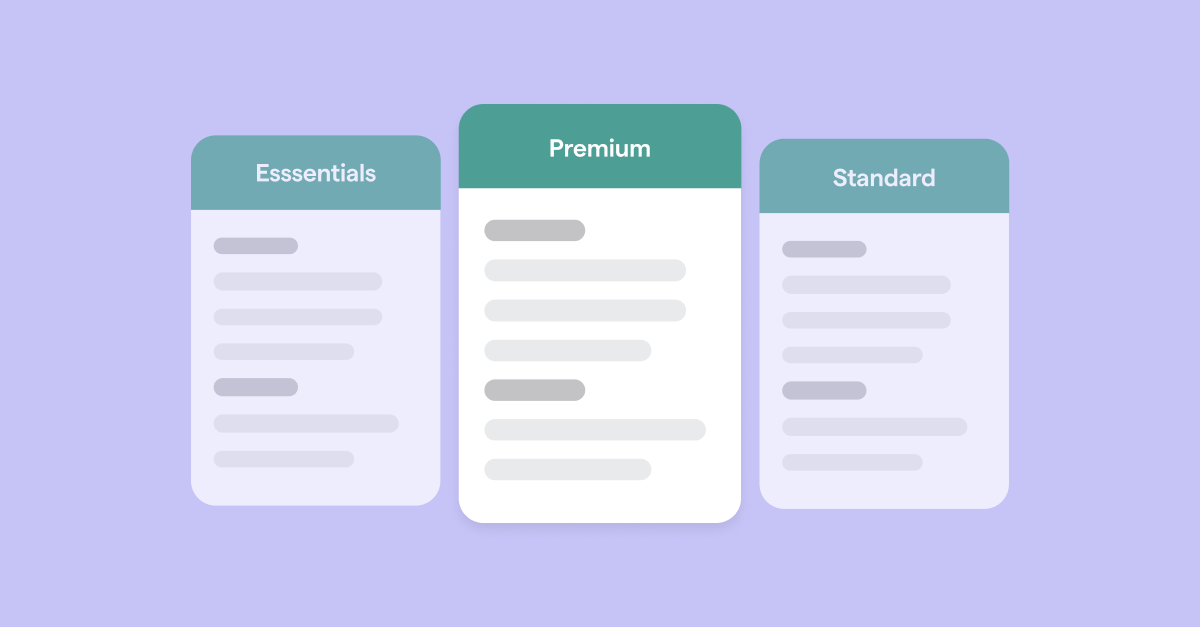
With Ignition Proposals, you build a polished, branded proposal your client reviews and signs online. Service packages let you present two or three scope options at different price points, and proposal add-ons let clients pick additional services during acceptance.
Every choice a client makes ties directly to the billing configuration, so scope and price are always in sync from the moment the proposal goes out. When a client accepts, Ignition Payments collects payment authorization as part of that same step.
Depending on how billing is configured, this supports recurring payments, upfront deposits, or completion-based billing, without requiring a separate follow-up to gather card or direct debit details. Supported payment methods include cards, direct debit or ACH, Apple Pay, and Google Pay.
On the back end, Ignition connects with Xero and QuickBooks to handle invoice creation and reconciliation. Invoices flow through to your accounting platform based on the billing schedule, reducing the manual work of matching payments to client records.
Results depend on how each integration is configured, but the connection removes a significant layer of manual reconciliation for most firms.
Create a smoother path from proposal to payment
A proposal that confirms scope, locks in pricing, and sets clear payment terms protects the engagement, but it also removes the friction that slows everything down after the client says yes.
When those elements are in place before work begins, the handoff into billing is a formality. Connecting proposals, agreements, and payment collection in one workflow is what makes that possible.
Connect your proposals, agreements, and billing in one place
Remove the gap between client sign-off and getting paid with Ignition's connected workflow.
Frequently Asked Questions
-
A client-ready proposal covers client context, scope, deliverables, timeline, responsibilities, pricing, payment terms, exclusions, and acceptance. Adjust the level of detail to the engagement, and treat this as operational guidance rather than a legal checklist.
-
Length depends on the complexity of the engagement. Include enough detail to define scope, pricing, payment terms, and acceptance without adding material that doesn't help the client decide.
-
A proposal recommends services and presents the commercial case, while a contract or engagement letter records the agreed terms after acceptance.
-
Collecting payment authorization during proposal acceptance can reduce the gap between signing and billing. Whether billing begins automatically depends on the selected setup and configuration.
-
Set a short cadence based on the decision timeline agreed with the client. Each message can restate the desired outcome, answer open questions, and request a specific decision.