How to re-engage clients: a 7-step process for service firms


 Copied to clipboard.
Somewhere in your client list right now, there are names you haven't invoiced in months. A few of them still owe you money. Others went quiet after a project wrapped, and you never quite got around to following up.
Meanwhile, the proposals you sent them are outdated, the agreed scope no longer reflects what the work actually looked like, and there's no current agreement in place if they came back tomorrow.
Re-engaging with inactive or former clients means reconnecting and assessing whether a renewed, commercially sound working relationship is possible, then resetting scope, pricing, agreements, and payment terms before any work starts.
Former clients can be one of the most underused revenue opportunities a service firm has. But reaching back out without a clear process tends to produce vague conversations, stale pricing, and work that restarts on shaky terms.
This seven-step process gives agency owners and operations leads at accounting firms, bookkeeping practices, consultancies, and creative agencies a structured way to do that: Screen former clients, make contact with purpose, reset pricing, resolve outstanding balances, and formalize everything before a single hour of work is logged.
Key Takeaways
- Not every former client deserves a second chance; score profitability, payment history, and scope risk first.
- Naming the real reason a client went quiet makes your re-engagement message more credible.
- Time outreach using the 45–90-day window, or a real trigger for older relationships.
- A returning client doesn't automatically deserve a discount or your old price.
- Resolve outstanding invoices before restarting work to avoid repeating old payment problems.
What client re-engagement actually means
Client re-engagement succeeds when an inactive relationship returns to agreed, profitable work. Getting a reply from a former client is only a starting point.
Winning a new client starts from scratch. Sending a routine renewal notice with an inflation adjustment is maintenance. Re-engagement sits between the two. You're reconnecting with someone who already knows your work, with the goal of restarting a commercially sound relationship on current terms.
Why clients go quiet in the first place
Clients disengage when something shifts: their priorities change, budgets tighten, or the value of your work stops feeling obvious to them.
For professional services firms specifically, two causes get overlooked: Billing friction that erodes trust, such as confusing invoices or missed payment follow-up, and missed deadlines or unaddressed scope misunderstandings that do the same.
When you have an inactive retainer client who never complained but stopped responding, the reason is rarely personal. Before you reach out, naming the likely cause makes your message feel relevant, and that difference often determines whether you get a reply.
Stop small gaps from becoming silence
Learn how a repeatable renewal process keeps scope, approvals, and follow-up clear before clients drift.
A 7-step process to re-engage clients profitably
Profitable re-engagement starts with qualifying the right clients before writing a single email. The steps below move from selection and research through outreach, pricing, payment resolution, and a signed, current agreement. Chasing every former client dilutes the effort. Working through a selective, ordered process protects your margins from the start.
1. Identify which clients are worth re-engaging
Not every former client deserves the same outreach effort. Score each one against six criteria before investing time in personalized contact.
Use this scorecard to compare candidates consistently:
Former client | Relationship history | Likely service need | Profitability | Payment history | Scope risk | Strategic fit |
| Client A | ||||||
| Client B |
Rate each criterion on a simple scale, low to high, then total the scores. The clients with the strongest combined scores are where personalized re-engagement effort is most likely to pay off.
This approach keeps prioritization objective rather than based on who you remember most fondly.
When a former client isn't worth re-engaging

Some former clients should stay former. Chronic late payments, repeated scope creep, poor margins, unresolved disputes, disrespectful behavior, or a business that has simply moved beyond what your firm offers are all hard stops.
Apply these filters after your initial scoring, and don’t let a high score in one area offset a serious risk in another.
Capacity spent chasing overdue invoices or renegotiating scope is capacity that can’t go toward profitable, respectful relationships. Knowing when to walk away is just as valuable as knowing when to reach back out.
2. Research each account before you reach out
Reviewing the account history before you contact an inactive client gives your outreach a specific, credible reason to land.
Work through this sequence for each account:
- Prior services delivered and the results achieved
- Any unresolved delivery issues or client feedback
- Former contacts and whether the decision-maker may have changed
- Likely shifts in the client's business needs since they went quiet
- Any outstanding invoices (flag these for the payment-risk decision in step six)
What you find shapes the message you send. A relevant outreach references shared history and a real client outcome.
3. Verify the right contact and time your outreach
Sending a re-engagement message to the wrong person at the wrong time is the fastest way to get ignored. Before reaching out, confirm who currently holds the decision-making role. Contacts move on, and a former champion may have left the business entirely.
For clients who went quiet recently, reach out within 45–90 days. The relationship is still warm, and the context is still fresh.
For older relationships, wait for a trigger, like a renewal cycle, a leadership change at their business, or a new service launch on your end. Each creates a credible, timely reason to reconnect.
4. Write a re-engagement email that earns a reply
A strong re-engagement email has four parts:
- Shared context
- A credible reason to reconnect
- A relevant outcome
- A low-friction ask
Each part does specific work without manufacturing urgency or defaulting to a vague "just checking in."
Shared context anchors the message in your real history together. The credible reason explains why now makes sense. The relevant outcome connects your work to something the client actually cares about. The low-friction ask makes it easy to say yes without committing to anything large.
Example:
Hi Sarah, we worked together on your year-end close and tax filings through 2022. I've been working with a few similar businesses on cash flow forecasting this quarter and thought it might be worth a conversation. Would a 20-minute call next week work for you?
Specific reason, one easy next step, and no invented deadline.
5. Price the renewed relationship with confidence
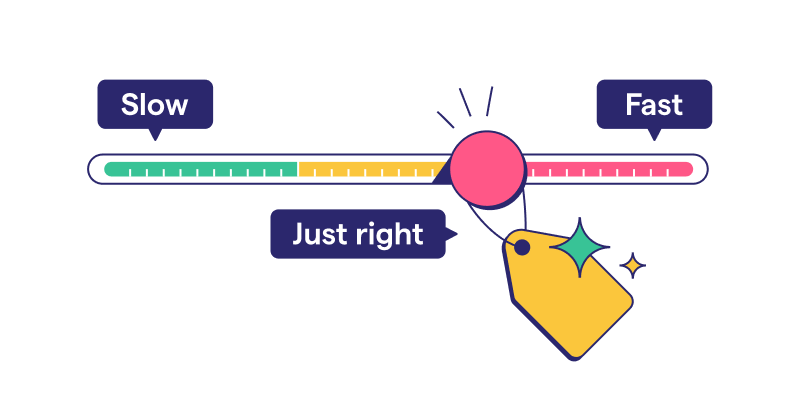
A returning client deserves pricing that reflects the current scope and current value. Renewed work should never default to what you charged two years ago.
Three commercial options apply here, in order of how much the engagement has changed:
- Reduced scope at the same fee. When the client needs less work than before, keep your fee and trim the deliverables to match.
- Same scope at a higher fee. When the work is unchanged, price it at what it's worth today.
- A newly scoped offer. When their situation has shifted, build a fresh engagement from the ground up.
Each option is a deliberate commercial choice. None of them is a concession made under client pressure.
6. Resolve outstanding balances before work restarts
Any overdue invoice uncovered during account research needs to be addressed before you agree to new work. Restarting without resolving it recreates the same collection risk that existed when the client went quiet.
Decide what must be paid, on what timeline, and whether a payment plan is appropriate. Then document it, so that decision becomes part of the renewed engagement terms.
The renewed proposal or engagement letter should spell out what the client owes, when it will be paid, and what billing terms apply going forward. A clear written record protects both sides and removes any ambiguity before work begins
7. Formalize the renewed relationship with a clear agreement
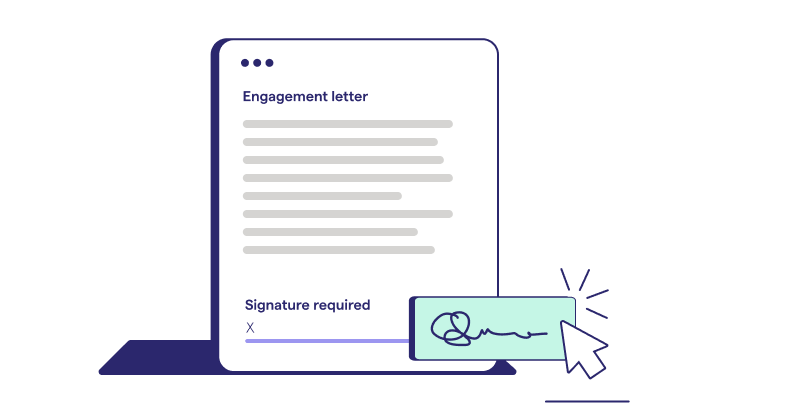
Renewed work should begin only after current scope, fees, timelines, and billing terms are documented and accepted by both sides. A returning client represents a new commercial arrangement that needs its own paper trail and onboarding process.
Where compliance obligations require it, refresh the engagement letter. A current letter reflects the actual scope being delivered, which matters if questions come up later.
For minor scope additions, an agreement amendment lets you document the change without requiring a full re-sign. At signing, request payment authorization upfront. That single step removes the need to chase invoices later, before the work has even started.
Re-engaging clients at volume: A note for firms with 100+ clients
Firms managing more than 100 clients need a standardized re-engagement process. Rebuilding from scratch at that scale during renewal or tax season creates inconsistencies and missed steps.
Consistent agreement templates, bulk sending, and e-signatures are the practical levers here. They let your team move through a large client base without slowing down for manual document prep on every account.
Standardization also reduces the risk of a client restarting work without a current, signed agreement. A full client engagement checklist makes that discipline repeatable at any volume.
How to measure whether re-engagement is working
A re-engagement effort is commercially successful when it produces signed engagement value, reactivated recurring revenue, payment authorization, and recovered overdue balances. Reply rates tell you almost nothing on their own.
A campaign that generates 20 responses but zero signed agreements, no payment authorization, and no recovered debt hasn't improved your firm's position.
Track these four metrics instead:
- Signed engagement value: Total contract value from newly signed agreements
- Reactivated recurring revenue: Monthly or annual fees from returning retainer clients
- Payment authorization rate: Percentage of renewed clients who authorized payment upfront
- Recovered overdue balances: Outstanding amounts collected before work restarted
Together, these tell you whether re-engagement improved both revenue and payment quality.
How Ignition helps you restart client work on clearer terms
Ignition connects every commercial step required to restart client work on current terms, from proposals and agreements through to billing, payments, and reporting.
Contracts and engagement letters
Ignition's Contracts & Engagement Letters product gives firms a faster path to formalizing renewed work. Pre-built templates eliminate manual document preparation, and bulk sending means you can get agreements out to multiple returning clients at once.
Clients sign electronically, and a signed agreement automatically triggers billing, so the administrative gap between agreement and payment closes immediately.
When scope shifts after the engagement starts, agreement amendments let you document the change without asking a client to re-sign the entire agreement. That keeps the relationship moving without unnecessary friction, while still maintaining a clear written record of what changed and when.
Payments and collections
Ignition reduces renewed collection risk by securing payment authorization at the point of proposal signing, before any work begins. The client provides payment details upfront, so future charges process automatically without a follow-up email or an awkward conversation.
If a returning client carries outstanding balances in QuickBooks Online or Xero, AutoCollect brings those invoices directly into Ignition's collection workflow. You can resolve them alongside the renewed engagement, in one place, under agreed terms.
Business insights dashboard
The Business Insights Dashboard gives firms real-time visibility into the commercial progress of renewed client relationships, all in one place. As former clients sign proposals, projected revenue updates automatically, so you can see pipeline building without digging through spreadsheets.
Collected and pending payment statuses show exactly where each re-engaged account stands financially. Sent and accepted proposal metrics let you track whether outreach is converting into signed work, or stalling at the review stage.
That combination of projected revenue, payment progress, and proposal activity means you can spot a re-engagement that has gone quiet and act before it slips away entirely.
Restart client relationships on clearer terms
Re-engaging a lapsed client only pays off when the relationship is rebuilt on solid commercial ground. Review the account first, then formalize the terms before any work begins.
Put your next re-engagement on solid footing
Connect proposals, agreements, and payment authorization before work restarts.
Frequently asked questions
-
For clients who recently went inactive, reach out within 45–90 days. For relationships that have been dormant longer, wait for a real reason to reconnect, such as a renewal cycle, a leadership change, or a new service launch.
-
A discount isn't required and can undercut future pricing conversations. Instead, use a three-tier approach: reduce scope at the same fee, keep the same scope at a higher fee, or propose a newly scoped offer based on current needs.
-
Resolve outstanding balances before restarting work. Reopening a relationship without addressing overdue invoices recreates the same collection risk. Payments & Collections and AutoCollect can bring outstanding QuickBooks Online or Xero invoices into one collection workflow.
-
Scope, fees, and terms should be reconfirmed in a current agreement. Firms with compliance obligations should refresh engagement letters as part of the restart, though this does not guarantee compliance on its own.
-
Watch for chronic late payment, unresolved disputes, repeated scope creep, and thin margins. These signals suggest a renewed relationship would be commercially unsound, even if the client would respond to outreach.