Building a consulting contract template, clause by clause


 Copied to clipboard.
Imagine a client approves extra work over email, the work begins the same day, and the agency has no clause to record when it started, what it covers, or how to bill for it. That’s the moment a contract stops protecting revenue and starts creating disputes.
Whether you call it a consulting agreement or a consulting contract, the terms are interchangeable. What matters is what’s inside: A reusable structure covering scope, payment terms, and responsibilities for the engagement, with client-specific details like fees, dates, and deliverables filled in per project.
Most templates stop there, signed and filed away, with no connection to the billing that should follow the client’s approval.
This piece breaks down a consulting contract template clause by clause and shows which terms should trigger billing automatically. That’s the difference between a contract that protects cash flow and one that just sits in a drawer.
Key Takeaways
- A vague scope-of-work clause is often the root cause of unbillable scope creep, not the amendment process itself.
- Retainer, project, and time-and-materials engagements each need distinct payment clause language, since one generic payment section cannot serve all three.
- A contract amendment can document and bill for added scope without requiring a full contract redraft or re-signature.
- A static downloaded template ends its usefulness at signature, leaving client and scope data to be re-entered manually into billing.
- Bulk sending and renewal management matter most for firms handling 100 or more client engagements during peak compliance periods.
Choose a contract template built for billing
A free downloadable form is static. Nothing automatically happens after a client signs it. A template connected to billing carries that same client, scope, and payment data straight into invoicing. That distinction matters more than which document looks more polished.
For agencies billing on retainer, project, or time-and-materials terms, a static Word file or PDF means someone retypes the agreed fee, scope, and schedule into a separate billing system after signature. That’s where errors creep in and where hours of admin get lost every month, especially across dozens of active client contracts.
Ignition’s Contracts & Engagement Letters are designed to address that. A signed agreement carries its terms forward automatically, so billing setup reflects exactly what the client agreed to, with no re-entry required.
Browse Ignition’s templates built to connect signed agreements directly to billing.
Draft scope-of-work and relationship clauses
The scope-of-work and relationship clauses need to identify the parties, establish the working relationship between your agency and the client, and define exactly what work the engagement covers. Draft them in that order. Your template should include placeholder fields for both party names and the effective date. If your agency operates as an independent service provider rather than as a member of the client’s staff, include language to that effect. It protects both sides from potential misclassification risk.
Once the relationship is settled, list the categories of services, deliverables, and turnaround windows your template covers, with placeholder fields for client-specific details like project names, fees, and exact deadlines. Note any exclusions, and add client-specific details like software access or reporting formats the work depends on.
A scope this specific gives you a baseline to measure against later. If a request falls outside what’s written, you’ll spot it immediately, which is what makes the amendment clause enforceable.
Agencies building this section from scratch can find a structured approach in this guide to writing a business proposal, which covers how to frame deliverables clearly before they ever reach a contract.
Structure payment terms for billing model
Payment clauses must match the engagement’s billing model, because retainers, projects, and time-and-materials work each create different fees, schedules, and billing triggers. A generic payment paragraph can’t govern all three.
You’re likely running some mix of these models across your client base right now. The clauses below cover the amount, frequency, method, and late fees for each structure. For the mechanics of setting invoice payment terms or building out a consulting invoice template, that’s a separate step from the contract language itself.
Retainer payment terms
A retainer clause must state the recurring fee, the billing cadence, and exactly what scope or hours that fee covers each period. Vague language here is what causes disputes three months into an engagement, once the client assumes “ongoing support” means unlimited requests.
The clause also needs to resolve what happens to unused hours. State plainly whether they expire at the end of the period or roll over, and for how long, since this is one of the most common flashpoints between agencies and retainer clients.
Work above the retainer cap needs its own line: either billed at a stated hourly rate or subject to the amendment clause covered later in this guide.
Once those terms are set, they should carry straight into recurring billing setup. The fee, cadence, and included scope written into the signed retainer become the actual billing schedule, so the numbers a client agreed to are the numbers they get charged.
Project-based payment terms
Project-based payment terms tie a fixed fee or staged payments to named deliverables and clear completion triggers. Each payment needs a defined event that makes it due.
State the deposit percentage upfront, then list milestone amounts or percentages against the deliverables that trigger them, followed by the final balance due on delivery.
Every milestone must point back to a deliverable named in the scope-of-work clause.
“Payment due on project progress” gives a client nothing to check against, so a late payer can argue the milestone was never truly met. “Payment due on delivery of the approved final design file” gives both parties the same trigger and removes the argument entirely. That precision is what separates a contract that gets paid on schedule from one stuck in a dispute over what “complete” means.
Time-and-materials payment terms
Time-and-materials terms must state the applicable rates, billing frequency, role-based differences, and any cap that triggers approval for more work. Start by listing the hourly or day rate for every role on the engagement. A senior strategist and a junior associate should never bill at the same rate, so the contract needs to spell out each one by title.
Next, set the invoicing cadence: weekly, biweekly, or monthly, so the client knows exactly when a bill is coming and what period it covers.
Then add a not-to-exceed amount or budget cap. This single line does more to protect an agency than any other clause in a time-and-materials agreement, since open-ended hourly work tends to carry the highest exposure to scope creep of the three billing models.
Finally, require written approval before hours cross that cap. That approval step is what turns the amendment process into the mechanism for billing any work beyond the threshold.
Add an amendment clause for scope creep
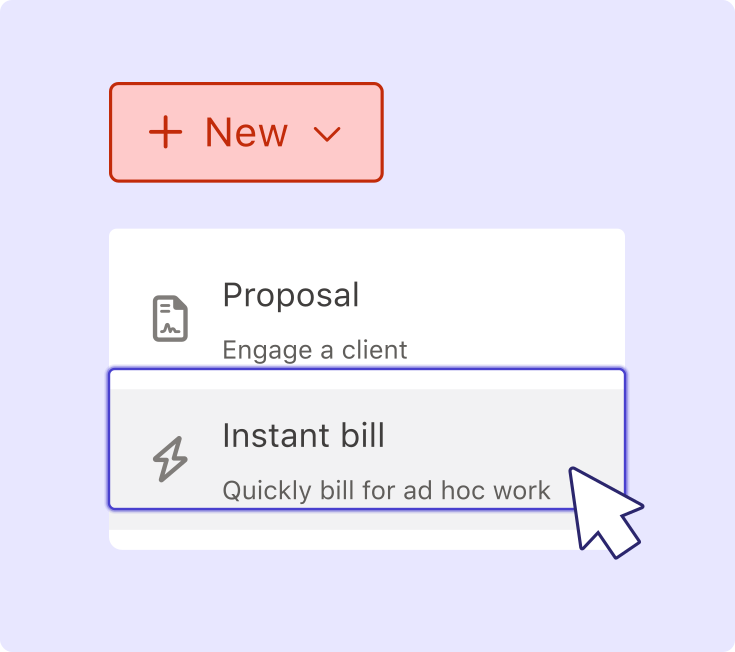
An amendment clause must let you document and bill for added scope through a lightweight approval step, without redrafting the whole contract. That step can be as simple as written or email confirmation from the client before the new work starts.
The approval record needs three things:
- What the added scope is
- What it costs
- When the new terms take effect
Skip any of these, and the added work becomes hard to bill cleanly, since there’s no fixed record of what the client agreed to and from what date.
Most consulting contract templates don’t account for it at all. Standard eSign templates, Contractbook, and Umbrex templates all define the original scope but say nothing about billing for work outside it, which is exactly where scope creep slips through.
Ignition’s Agreement Amendments capability solves for that, letting you notify clients of small scope changes and get sign-off without a full re-sign.
Agencies that build a lightweight amendment process into the contract from the start typically avoid the standoff where a client refuses extra charges after the work is already done, since approval happens before work begins.
Set term, renewal and termination clauses
Term, renewal, and termination clauses must define the engagement period, how it renews, and how either party can end it. Together, they set the contract lifecycle:
- A start date
- An end or renewal event
- An opt-out notice window
- A termination trigger
- What happens to payment after the relationship closes
Start with auto-renewal. State whether the contract renews automatically at the end of the term, and specify the notice period and method required to opt out, such as 30 days’ written notice by email.
Termination language needs the same precision. Name the causes that allow either party to end the agreement early, whether that’s a payment default or failure to deliver agreed work.
Then close the gap:
- Outstanding invoices remain due.
- Incomplete deliverables get addressed.
- Any client materials or data get returned within a set number of days.
For firms managing compliance obligations, this ties directly into what an engagement letter needs to cover.
Cover responsibilities, confidentiality, and liability clauses

These clauses allocate each party’s duties, protect confidential information, and set enforceable limits around legal and financial exposure. Skip them, and a dispute over who dropped the ball or who leaked what has no contract language to fall back on.
The responsibilities section spells out the consultant’s obligations and the client’s duties in return. That means timely access to financial records, prompt answers to information requests, and sign-off on deliverables within a stated window. Delays on the client’s side shouldn’t become the consultant’s liability.
Confidentiality language protects the proprietary and financial data exchanged throughout an engagement, and liability terms need to match the real exposure. For CPA firms, that exposure is concentrated. Tax services accounted for 77% of professional liability claims against CPA firms in 2024.
Engagement terms should cap damages, define indemnification, and set a claims period, following published guidance on limiting liability through engagement letters and terms and conditions. Personalizing these clauses to the actual scope is covered in this guide to personalized engagement letters.
Trigger billing automatically after signature
A signed contract in Ignition automatically triggers billing setup, addressing an issue that competing document solutions leave open once the client puts their name on the page. The client accepts a proposal through Ignition’s Contracts & Engagement Letters product, and the fee, scope, and billing schedule they agreed to carry straight into an invoice or payment schedule.
But none of this works without a valid signature to begin with. Under the Electronic Signatures in Global and National Commerce Act (ESIGN Act), an electronic signature carries the same legal weight as a signature on paper, which is exactly why a signed agreement can safely flow straight into billing without a second, physical step. For a practical look at setting this up, see Ignition’s guidance on creating an Instant Bill.
Manage bulk sending renewals at scale
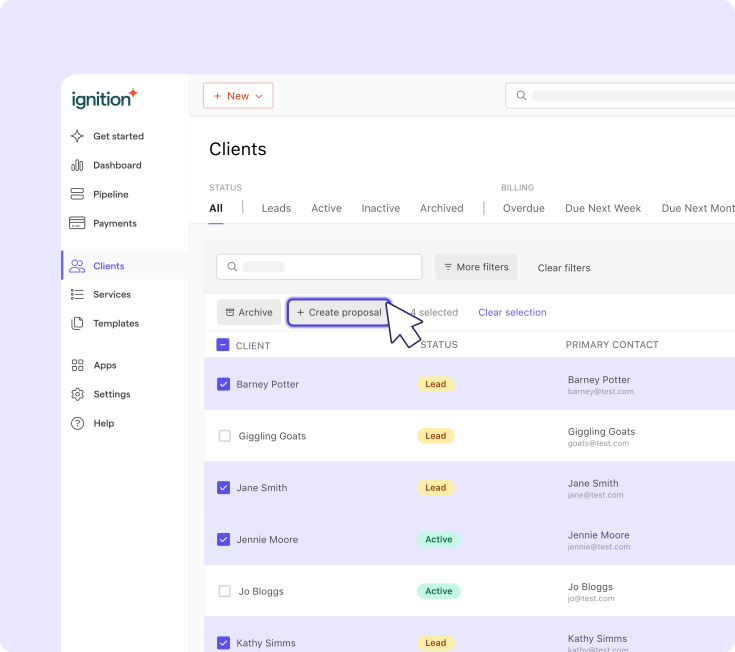
Firms managing 100 or more client engagements need bulk sending and renewal management from a single reusable agreement structure. Drafting each engagement letter one at a time doesn’t scale once a practice crosses that client count, and tax season exacerbates the issue fast.
Compliance raises the stakes further. Under SSARS AR-C 60, CPAs must obtain a signed written engagement letter for each nonpublic-entity engagement, which means a missing signature is a compliance failure.
Bulk sending from a pre-filled document solves the pressure point directly. Ahead of a filing deadline, your firm can send the same structure to every client at once, pre-filled with their specific terms. That reduces drafting hours and cuts the risk of a client entering tax season without a signed letter on file.
Close the gap between signing and payment
A scope clause only earns its place in the contract if it can actually stop out-of-scope work from slipping through unbilled. The same goes for payment terms and amendments. None of it matters if the agreement goes quiet the moment it’s signed.
The practical move this week is simple. Stop treating the signed contract as the finish line, and start treating it as the trigger. Ignition builds engagement letters and contracts that connect directly to billing and payments, with Xero and QuickBooks Online integrations closing the loop between a signature and cash landing in the account.
When scope, terms, and amendments feed billing automatically, there’s less duplicate entry, fewer payment delays, and far less scope leakage to chase down later.
Connect your contracts to billing
Scope, terms, and amendments feed billing automatically when they start from the same signed agreement.
Frequently asked questions
-
A consulting contract is legally binding once both parties sign it, provided it includes clear terms, mutual consideration, and legal capacity. Electronic signatures carry the same legal weight as handwritten ones under the federal ESIGN Act, which underpins most modern consulting contract workflows. This means a contract signed through a connected platform is just as enforceable as one signed on paper.
-
Hiring a lawyer isn't strictly required to draft a consulting contract, especially for standard engagements using a clause-by-clause document as a starting point. Complex liability exposure, like the tax-related claims that accounted for 77% of professional liability claims against CPA firms in 2024, may warrant legal review. For most agencies and firms, the bigger risk is a contract that never connects to billing.
-
If a client refuses to approve an added-scope amendment, the original contract's payment terms still apply. The extra work legally goes unbilled unless it was captured in writing before the work started, which is why a strong scope-of-work clause matters upfront. Firms that build a lightweight amendment process into the contract from the start typically avoid this standoff, since approval happens before work begins.
-
A master service agreement (MSA) sets broad, ongoing terms for a client relationship. A consulting contract typically governs a single, defined engagement with its own scope and fee structure. Firms sometimes pair the two, using an MSA for standing legal terms and a shorter contract for each new project.
-
A contract outlines the terms of the engagement itself (scope, payment structure, term, and liability) before any work begins. A consulting invoice template documents the actual charges for completed work, referencing the rates and milestones the contract already established. Ignition's Contracts & Engagement Letters product connects the two directly, so a signed contract feeds straight into billing instead of a separate invoice build.