4 client retention strategies for accounting firms



 Copied to clipboard.
Most client retention advice borrows from subscription software: churn dashboards, cancellation flows, win-back email sequences. Accounting firms, CPA practices, and agencies don't lose clients that way. They lose them through a fee that never got revisited, a scope conversation that never happened, or a renewal date nobody tracked.
That's the difference between subscription churn and professional services retention, which runs on pricing, communication, scope management, and renewal practices built around engagement letters.
Firms managing 30, 50, or 100+ recurring clients feel this pressure first. A spreadsheet or a partner's memory can track a handful of renewal dates. Neither holds up across a full client roster.
Four practices help address the retention struggle:
- A communication cadence built around active engagements
- An annual pricing review
- A clear path for turning scope creep into billable work
- A renewal process that doesn't depend on anyone remembering a date
Two of those four can run largely on autopilot, leaving more time for the pricing and scope conversations that need your team’s expertise.
Key Takeaways
- Client retention in professional services often runs on renewable engagement letters and scope management, not subscription-style churn dashboards.
- Anchoring pricing reviews to a fixed annual date can turn fee conversations into routine practice instead of a reactive, uncomfortable ask.
- Documenting scope changes as billable work can protect both profitability and the client relationship, rather than absorbing extra work silently.
- Manual renewal tracking can become unreliable as a client roster grows, leaving engagements exposed to missed renewals and unbilled work.
- Connecting contracts, billing, and renewals into one workflow can close the handoff gaps that let client relationships quietly lapse.
Why client retention beats new acquisition
Winning a new client takes real work: a pitch, a pricing conversation, a negotiation over scope, a new engagement letter, and a ramp-up period before the work actually runs at the margin you expected. A client you've had for three years already trusts the process, fits predictably into your capacity, and doesn't need handholding through onboarding. That difference in overhead doesn't show up as a line item anywhere, but it shows up in margin.
The math gets sharper the more clients you're managing. Lose a handful out of 30 to 100+ recurring clients in a given year and you're rebuilding engagement letters, renegotiating fees, and restarting trust from scratch, all while that freed-up capacity earns nothing while you replace it.
The clients most worth retaining also tend to be the hardest to replace: they're priced at fair value after multiple renewals, they send referrals, and the work has grown into something that fits your firm's strengths.
Client retention strategies for professional services firms rest on staying ahead of renewal dates and pricing conversations, not reacting once a client has already decided to leave.
Top retention practices for service firms
Engagement-based firms retain profitable clients through four connected practices: proactive communication, annual pricing reviews, billable scope changes, and reliable renewals.
Each one has a place in the operating calendar.
- Communicate throughout the engagement.
- Review pricing on a fixed schedule.
- Document scope changes as they happen.
- Complete renewals before the next cycle starts.
Pricing reviews and renewal administration can run on autopilot. Communication and scope conversations need a person behind them.
Build a proactive communication cadence
Active engagements need a defined outreach cadence tied to deliverable milestones or scheduled reviews. A tax engagement might warrant a check-in at filing, mid-year, and year-end. A bookkeeping retainer might call for a quarterly business review instead.
Each of those touchpoints should do more than confirm status. Use them to ask what's changed on the client's side and flag anything shifting on the firm's, so both parties stay ahead of scope or pricing gaps before renewal forces the conversation.
When you’re managing dozens of active clients, there's no way to notice quiet dissatisfaction without a structure that forces the check-in to happen. A missed cadence looks identical to a satisfied client, until the renewal doesn't come through. For clients already showing distance, you may need more direct outreach.
Run annual pricing reviews every year
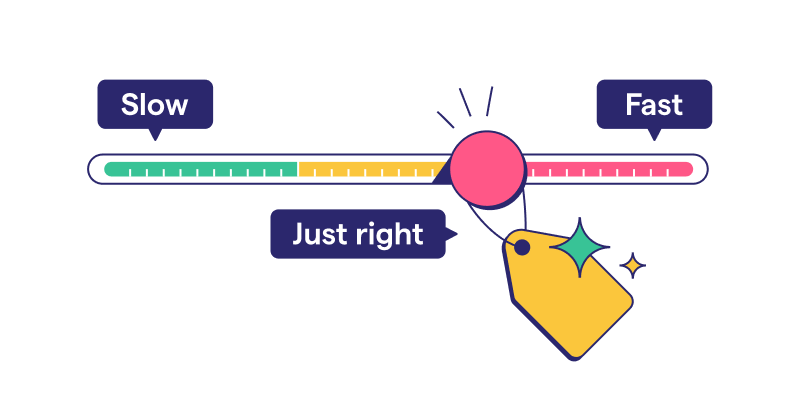
A fixed annual pricing-review process makes fee decisions consistent and turns pricing into a scheduled operating task.
The payoff shows up in the numbers. Client advisory services (CAS) practices with dedicated staff and standardized workflow and pricing processes report higher net client fees and stronger retention.
Building that process starts with three moves:
- Pick a consistent review month.
- Frame the conversation around delivered value.
- Flag stale pricing before it erodes profitability.
Pick a consistent annual review month
Anchor every pricing review to one fixed month or engagement milestone.
Start by choosing the trigger that fits your firm's own operating rhythm. Some firms tie the review to each client's engagement anniversary, checking fees on the same date the letter was signed. Others prefer fiscal year-end, right after year-end close wraps up. A fixed calendar month, say every January or every July, works just as well if it lines up with billing cycles or tax season demands.
Whichever trigger you choose, apply it the same way across the entire client roster. That consistency is what protects the process.
Once one date governs every account, pricing no longer depends on a client complaining loudly enough or a partner recalling who's overdue for an increase. Profitable accounts stop drifting on outdated fees simply because no one flagged them.
Frame the conversation around delivered value
A pricing conversation should open with the outcomes and value delivered over the past year. Leading with results gives the client context for the number that follows. Back that conversation with documentation. Pull together the specific deliverables completed, the deadlines met, and any changes in the scope of the engagement before the meeting or email goes out.
Firms that build this discipline into their pricing tend to make sharper calls across the board. Top-performing firms are far more likely to proactively cull unprofitable clients and lean on value pricing, at 73% versus 62% for other firms, and that discipline tracks with stronger fee growth.
Only after the value is on the table should the revised fee appear. At that point, the increase reads as a natural consequence of the work. For a deeper look at building this into ongoing advisory relationships, see this guide on client advisory services best practices.
Flag stale pricing with automated insights
A systematic account-review method identifies which clients still sit on outdated pricing, so nothing depends on a partner's memory. Pick a threshold, whether that's 12 months or 18 months since the last fee change, and apply it consistently across every active engagement.
Once that threshold is set, the accounts sitting past it become a priority list ahead of the annual review month. Instead of scanning every client file to figure out who's overdue, the review starts with a defined queue of accounts that actually need attention.
See how your pricing compares
Benchmark your firm's rates against the market in Ignition's 2026 pricing webinar.
Turn scope creep into billable work
Scope expansion becomes profitable relationship growth the moment your firm decides to document it and bill for it. When a client keeps asking for work outside the original engagement, that pattern signals the relationship has outgrown its scope.
The engagement letter is what makes this conversation easier. It exists as a risk-management tool that sets scope limitations and dispute-resolution procedures, so pointing to the original agreement gives both parties a clear reference point for what's changed.
From there, the fix isn't a renegotiation from scratch. Ignition's Contracts & Engagement Letters lets you issue an agreement amendment that captures the new billable work and gets client sign-off, without a full re-sign of the entire contract.
That keeps friction low for the client and revenue accurate for the firm. Every added task gets documented and priced, so the scope stays current and nothing extra goes out the door for free.
Automate renewals instead of tracking dates

A repeatable renewal process protects active engagements from lapsing because a date was missed in a spreadsheet or calendar. Before, renewal dates live in a separate tracker, disconnected from the agreement itself, and follow-up depends on someone remembering to check it. After, the renewal is tied directly to the signed engagement, with terms and follow-up built in from the start.
Three things make that shift possible:
- Removing reliance on manual date tracking
- Defining renewal terms upfront
- Connecting follow-up actions to the signed letter
Each is covered below, and together they show how to streamline client renewals without adding admin work.
Stop relying on manual date tracking
Spreadsheets and calendar reminders for renewal dates fail at scale, leaving firms exposed to lapsed engagements and unbilled work. A firm managing a handful of clients can rely on a partner's memory or a shared tracker without much risk. Once that roster grows to around 30 recurring clients, the same system becomes a liability.
One missed row in a spreadsheet means an engagement that quietly expires without anyone noticing. Work continues, the team keeps delivering, but there's no active agreement covering it or billing tied to the new period.
That gap is where profitable clients slip through, because the admin behind the relationship broke down.
The fix isn't a better spreadsheet or a more diligent reminder system. It's removing the manual step entirely by building renewal terms directly into the agreement and tying billing actions to the signed letter itself.
Set auto-renewal terms in the agreement
Auto-renewal language belongs in the engagement letter itself at signing, so continuation never depends on a later follow-up conversation. Once the terms for renewing an engagement are written into the original agreement, both sides already know what happens when the current term ends.
That clarity replaces the annual scramble of drafting a fresh proposal and chasing a new signature before work can continue. The client isn't guessing whether the relationship continues, and the firm isn't relying on someone remembering to send a new document on time.
Skipping this step carries real risk. According to The Tax Adviser, about 75% of 2023 claims against CPA firms in the AICPA Professional Liability Insurance Program stemmed from tax services, and over half of those firms had no engagement letter in place at all.
Ignition's engagement letters let you build renewal terms directly into the signed agreement, and rollover automation carries those terms into the next cycle without a fresh proposal.
Trigger reminders from the signed letter
The signed engagement letter itself should trigger the next billing step.
Keeping renewal follow-up tied to the original agreement removes the manual handoff between "the letter got signed" and "billing continued on schedule." That handoff is exactly where work keeps running without the paperwork or the payment to back it up.
In Ignition, a signed engagement letter can automatically trigger billing and renewal reminders, so the workflow stays connected to the agreement that created it.
Keeping documentation and billing this tightly linked matters most where the exposure is highest. Tax services accounted for 77% of claims asserted against CPA firms in AICPA's Professional Liability Insurance Program in 2024. A renewal process that runs straight from the signed letter closes addresses the issues those claims tend to expose.
Unify contracts, billing, and renewals
Contracts, billing, and renewals function as one connected lifecycle in Ignition. When a client signs an engagement letter, that signature starts billing immediately, with no separate handoff to a billing team or a second system.
That single connection surfaces where engagements or charges quietly lapse. A missed handoff between a signed letter and an invoice is where active work drifts away from what was actually agreed (and paid for).
The risk of skipping that connection is documented. In 2024, more than half of tax claims against CPA firms in AICPA's Professional Liability Insurance Program lacked an engagement letter tied to the service.
Standalone contract tools and practice management platforms rarely resolve the problem. They store the signed letter, then leave billing and renewal as separate steps someone still has to remember to trigger.
Make client retention systematic, not accidental
Retention stops being a scramble the moment it becomes a rhythm: a check-in before problems surface, a pricing review that happens every year instead of every few, a scope change that gets documented in minutes instead of relitigated over email.
None of that requires a bigger team or a better memory. It takes a system that connects the pieces.
That's the gap Ignition's Contracts & Engagement Letters closes.
Stop chasing renewals. Start automating them.
Connect engagement letters to billing so every renewal runs on schedule, not on memory.
Frequently asked questions
-
There's no single universal benchmark, but many high-performing accounting firms and agencies aim for retention rates well above 90% among recurring clients. Firms that use value pricing and proactively manage underperforming accounts tend to report stronger fee growth and retention outcomes. Rather than chasing an arbitrary number, track whether retention is trending upward and whether the clients you keep are also becoming more profitable.
-
Automated renewal reminders don't replace the personal relationship; they simply remove the administrative chase that often gets overlooked. In Ignition, a signed engagement letter can trigger a reminder or invoice automatically, while the pricing conversation still happens directly between firm and client. In practice, automation frees up time for proactive check-ins that strengthen the relationship, rather than leaving renewal to a rushed, last-minute email.
-
Most firms start seeing measurable retention improvements within one full pricing and renewal cycle, typically 6 to 12 months. Annual pricing reviews and automated renewal reminders need at least one cycle to establish a consistent pattern clients recognize. Firms with 30 or more recurring clients often notice the operational time savings faster, sometimes within the first quarter of implementation.
-
Renewal automation isn't limited to ongoing retainers; it can also apply to project-based or time-and-materials engagements that include a defined review or extension point. A signed agreement can specify when a project scope should be revisited, triggering a reminder even if the engagement isn't a recurring monthly fee. This makes the renewal conversation part of the original agreement, not a separate task someone has to remember to schedule.
-
If a client pushes back on a price increase, point to the specific value delivered over the past year rather than defending the number itself. Firms that document outcomes and scope changes ahead of the review have concrete examples ready, which makes the conversation feel earned rather than arbitrary. If a client still won't accept the new pricing, that may signal the engagement no longer fits the firm's ideal client profile.